Showing posts with label bananaquit. Show all posts

Monday, March 9, 2020

Antigua and Barbuda trip -Feb 27-Mar 1, 2020

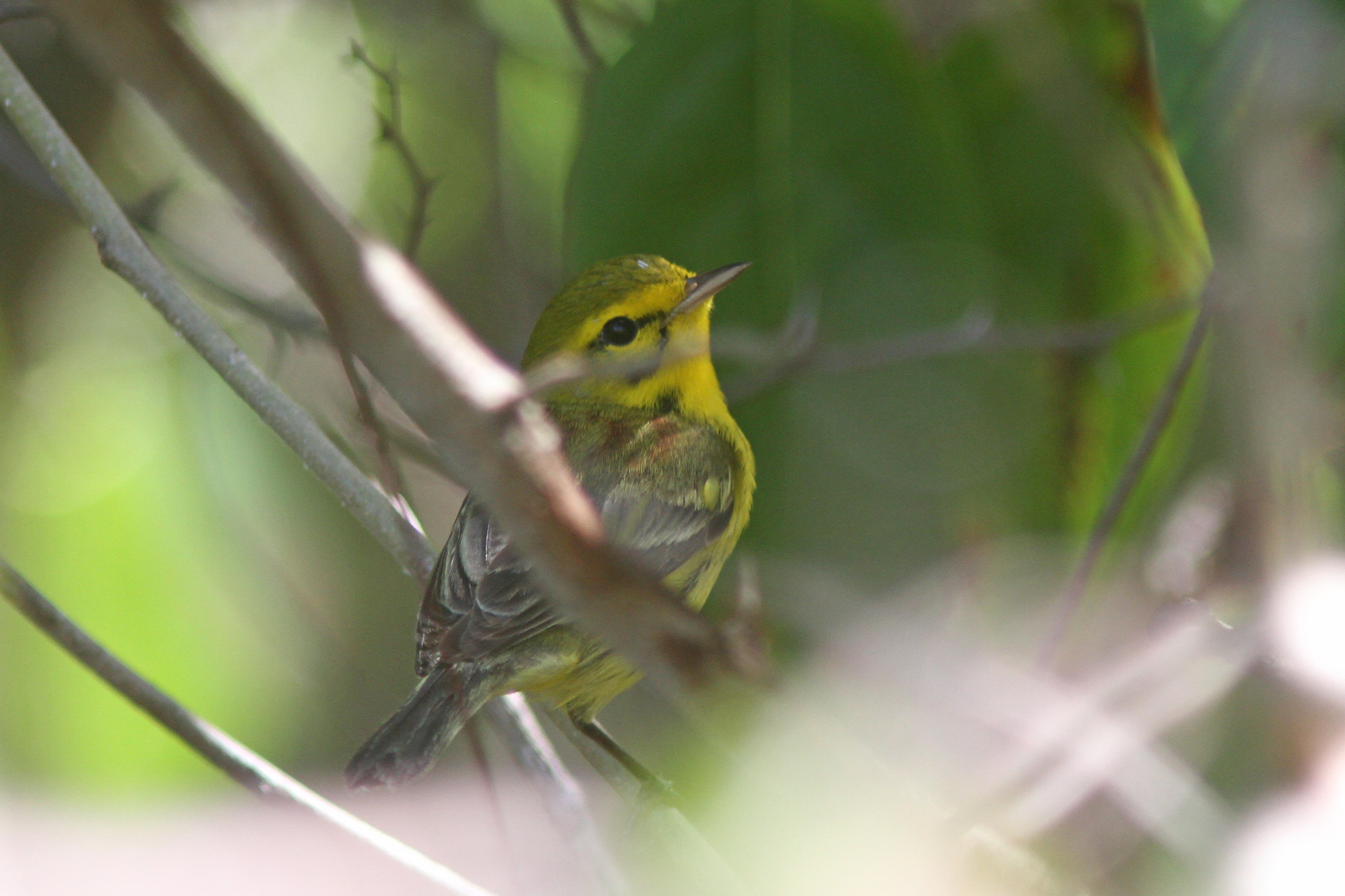
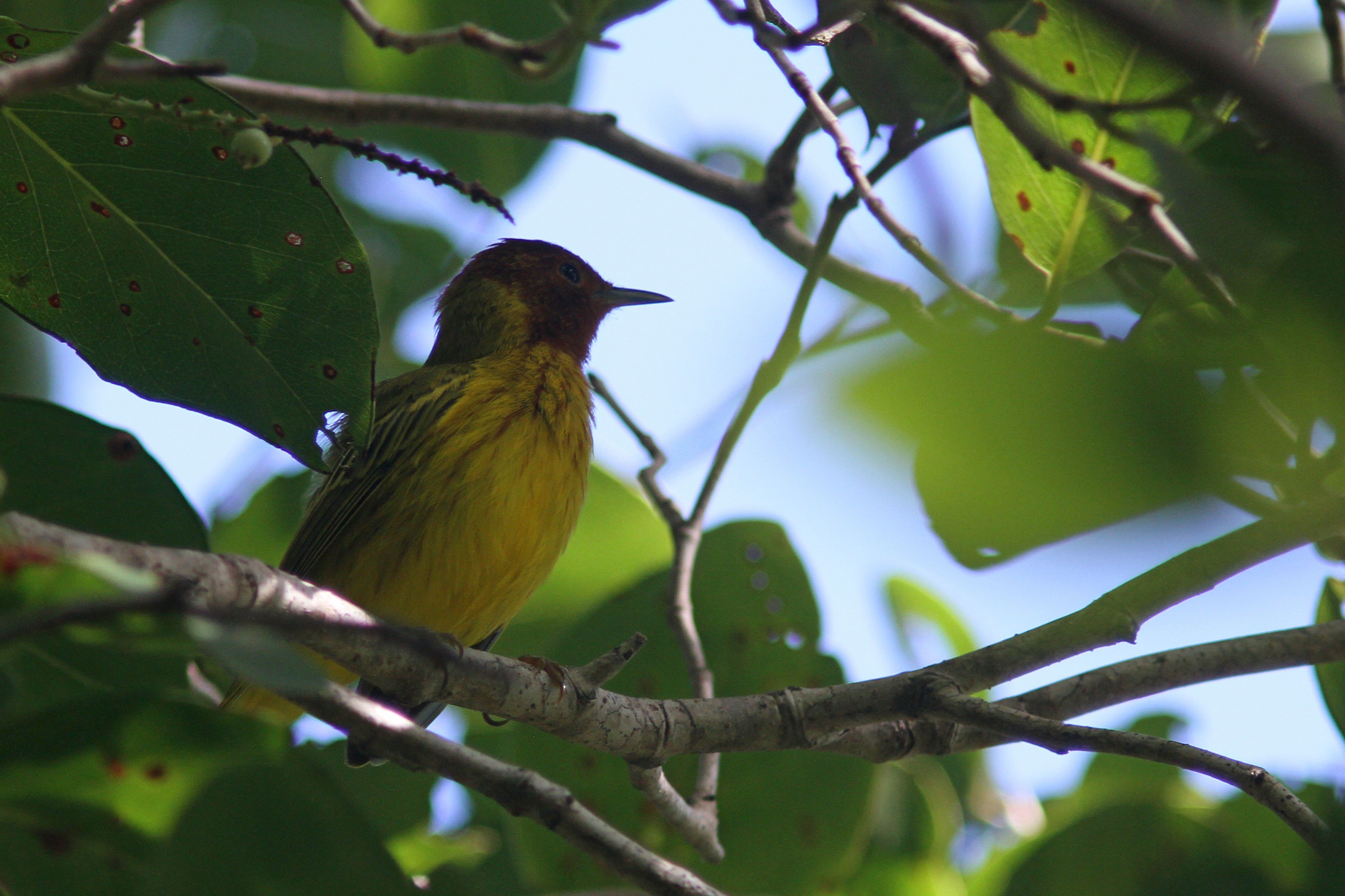
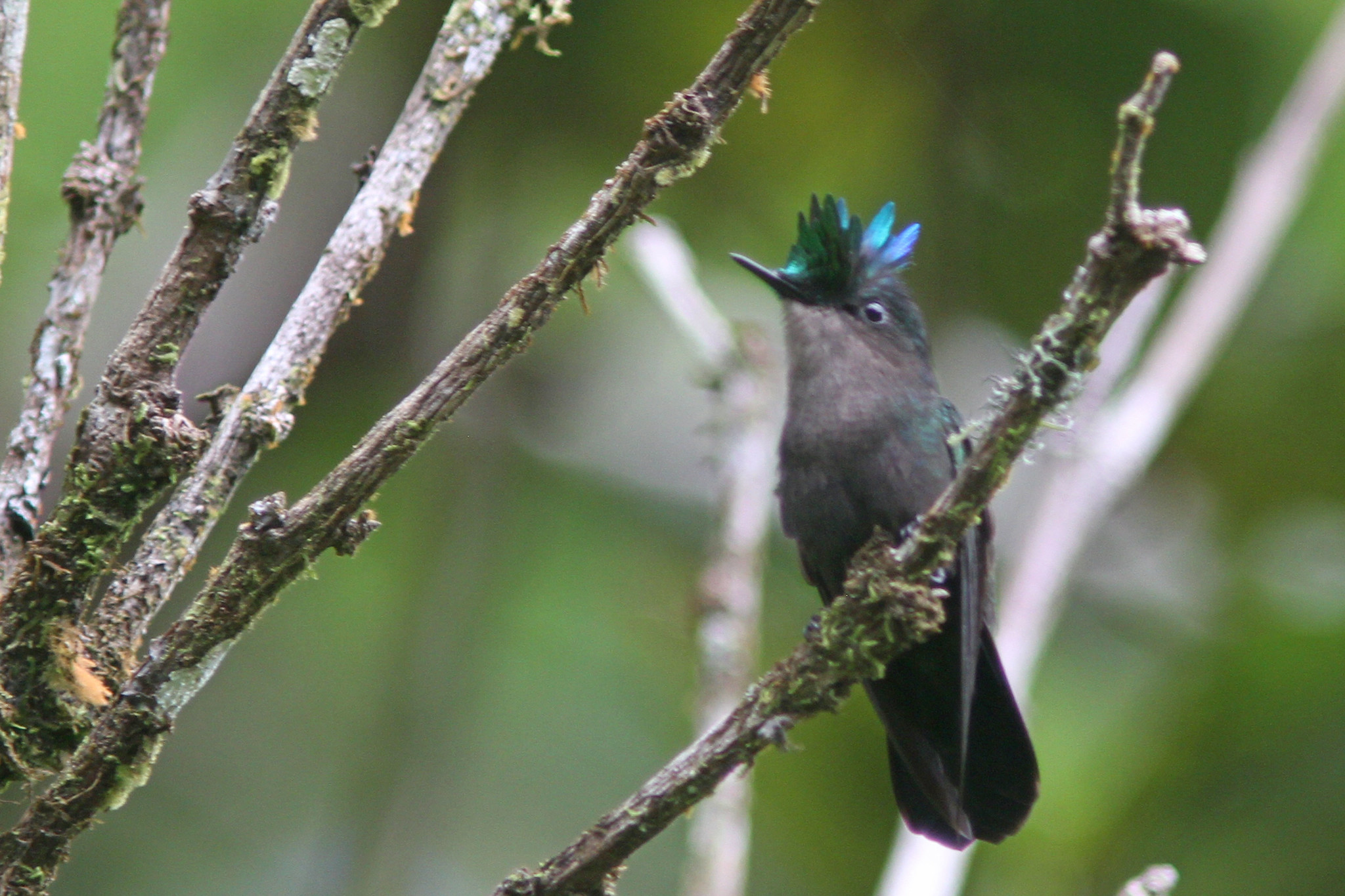
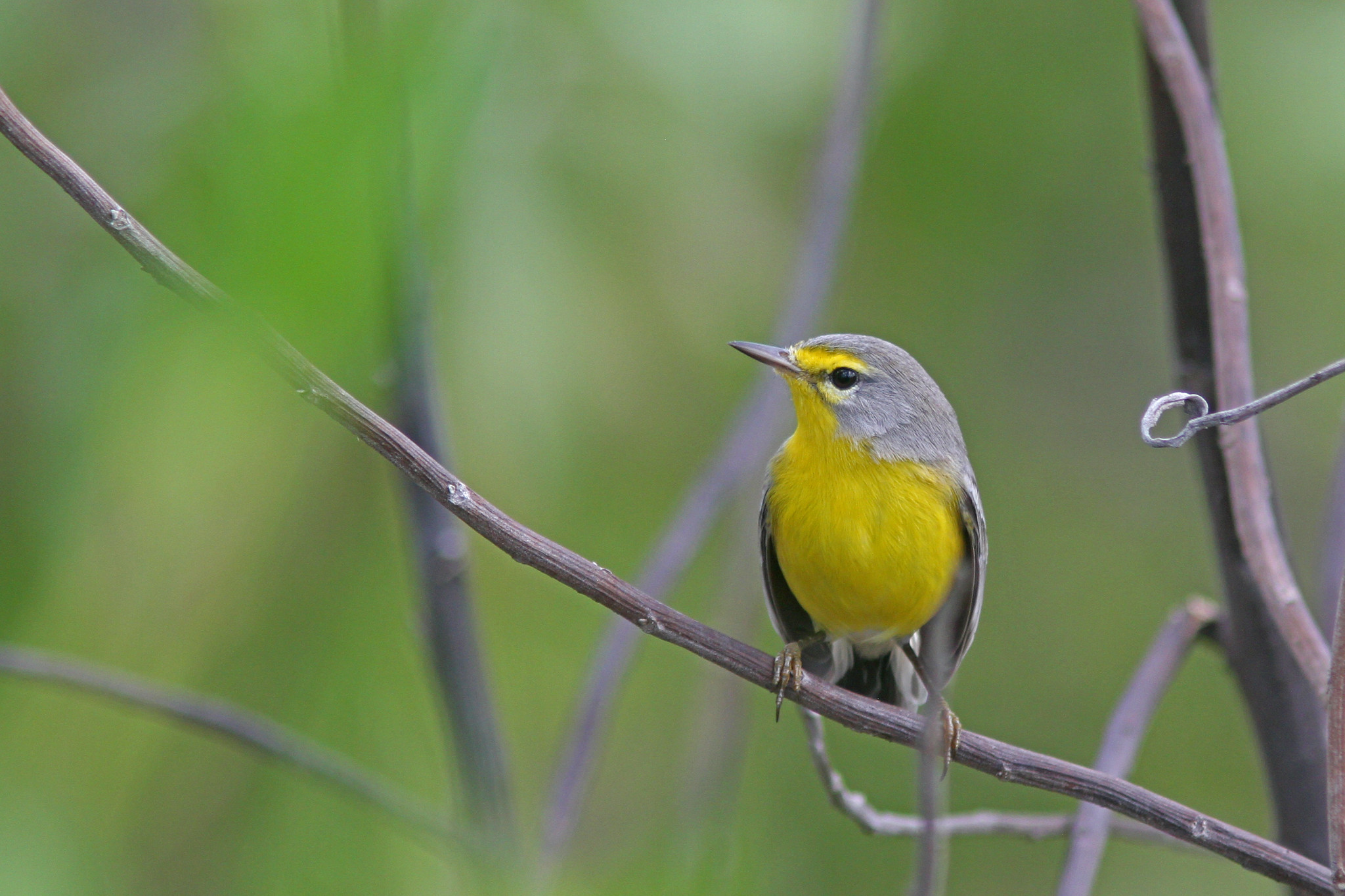
Barbuda Warbler, Coco Point Road, Barbuda, Feb 28, 2020
I just returned from a final trip down to warmer locales for this winter season. The trip began with a solo trip down to Antigua on Thursday the 27th with the main purpose of the trip to finally get over to Barbuda to track down the endemic Barbuda Warbler (more details on the warblers here). The small island was devastated by Hurricane Irma back in September 2017 (a Category 5 storm with 185 MPH winds) and there were fears that little if any of the birds made it though a record setting storm. Although we had stopped in Antigua on two previous cruises (March 2019 and December 2017) out of San Juan the day time cruise stops were never long enough to get over to Barbuda (a supposed 90 minute ferry ride away from Antigua...more on that later). There are three ways over to Barbuda from Antigua: a ferry trip, a small plane ride or a helicopter and I spent a lot of time trying to figure out the best mode of transport as they all have their positive and negative attributes. The helicopter flight was out as it is way too expensive and I decided against the flight as it involved possibly spending a night on Barbuda as the flights over and back don’t leave a lot of time to look around and weight restrictions would keep me from bringing all the items I would need for the trip. Of course that meant it would be a trip over on the ferry. I had left myself two full days on Antigua in order to have a back up day if the ferry got canceled by bad weather (something that apparently happens with some frequency). It was a great plan until the ferry schedule changed and no trips were planned to Barbuda for Saturday so it would have to be a Friday trip and I would have to keep my fingers crossed the trip didn’t get cancelled.
Barbuda Warbler, Coco Point Road, Barbuda, Feb 28, 2020
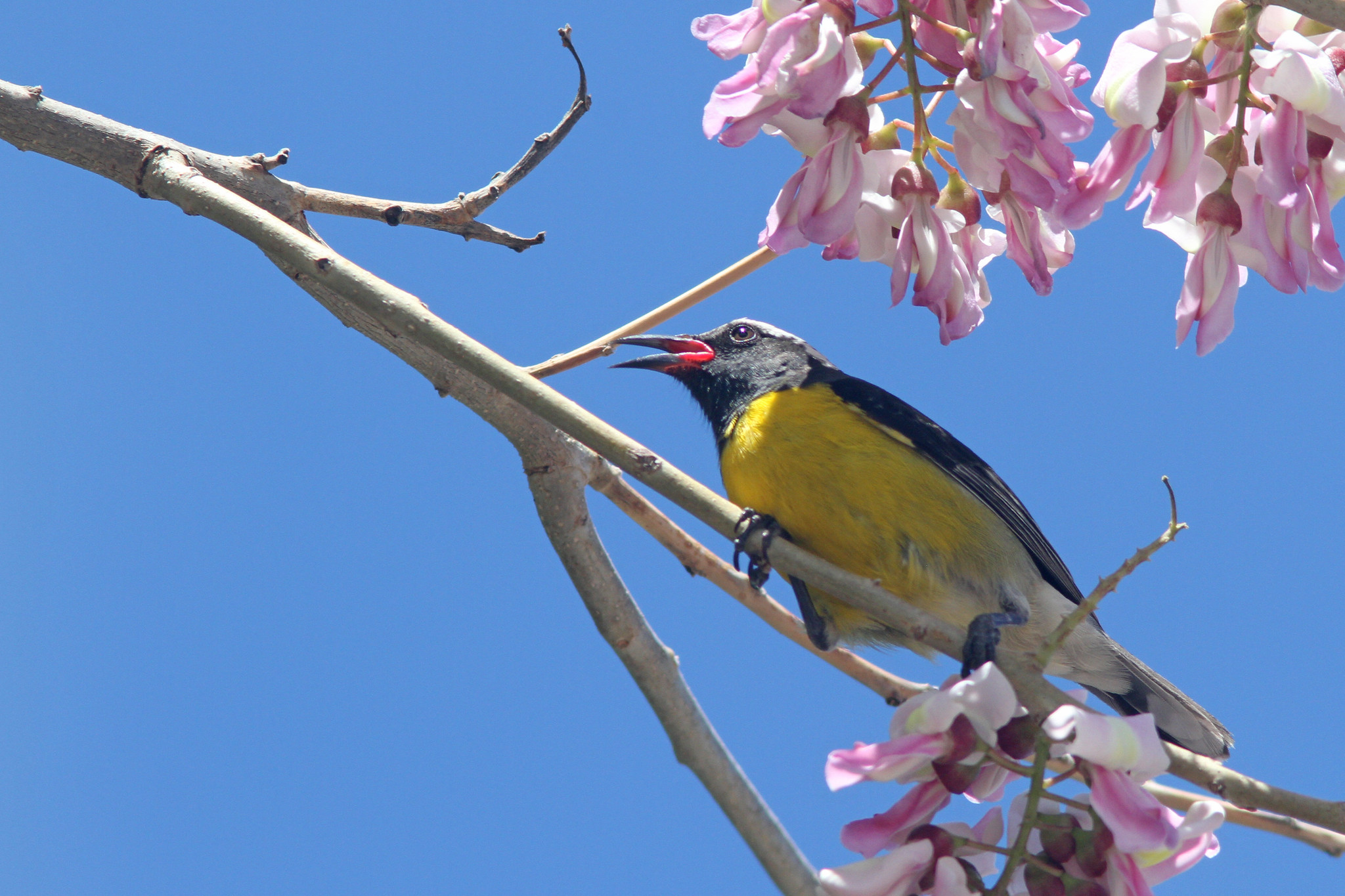
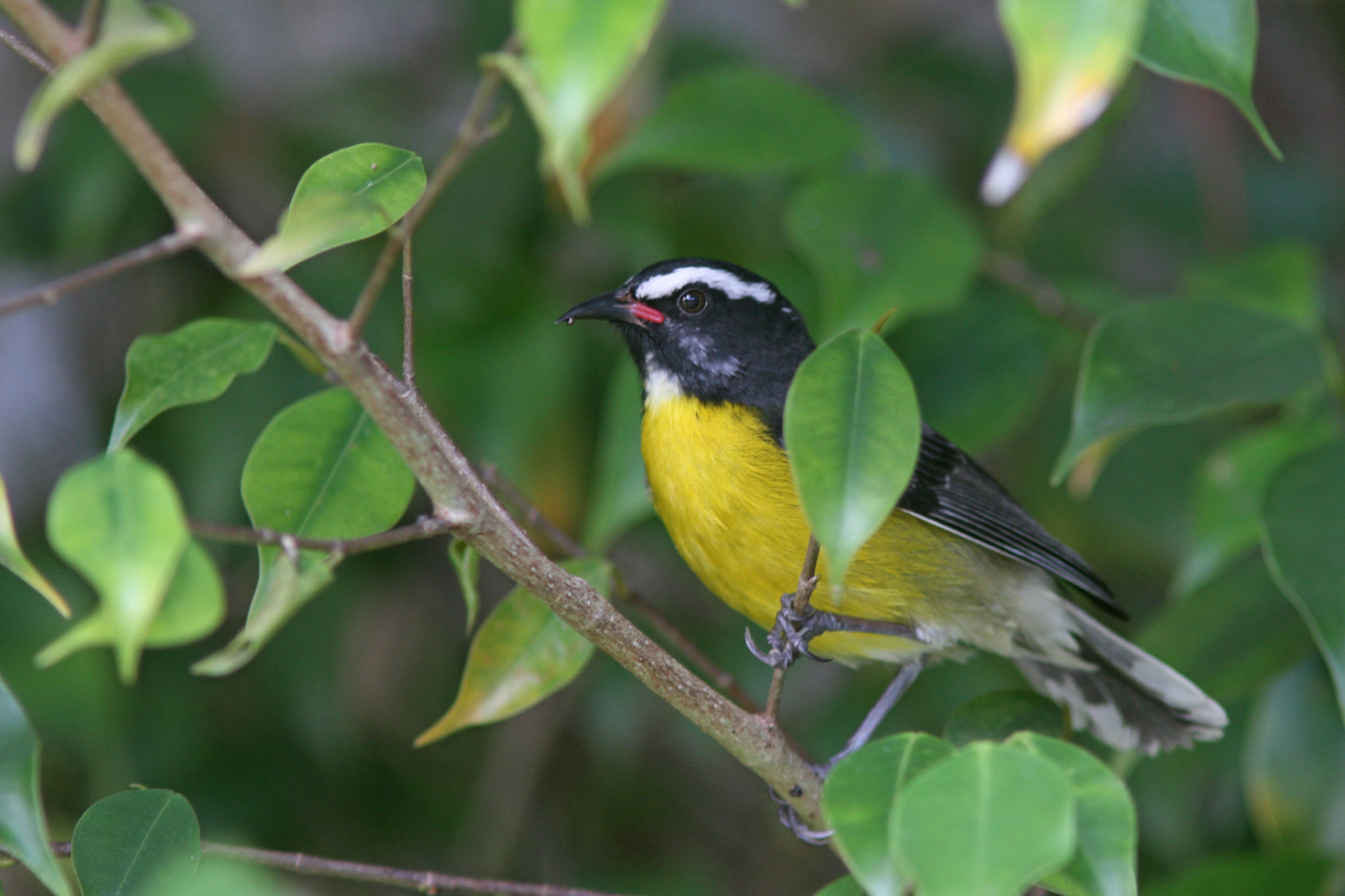
Bananaquit, Coco Point Road, Barbuda, Feb 28, 2020
Lesser Antillean Bullfinch, Coco Point Road, Barbuda, Feb 28, 2020
Cape May Warbler, Coco Point Road, Barbuda, Feb 28, 2020
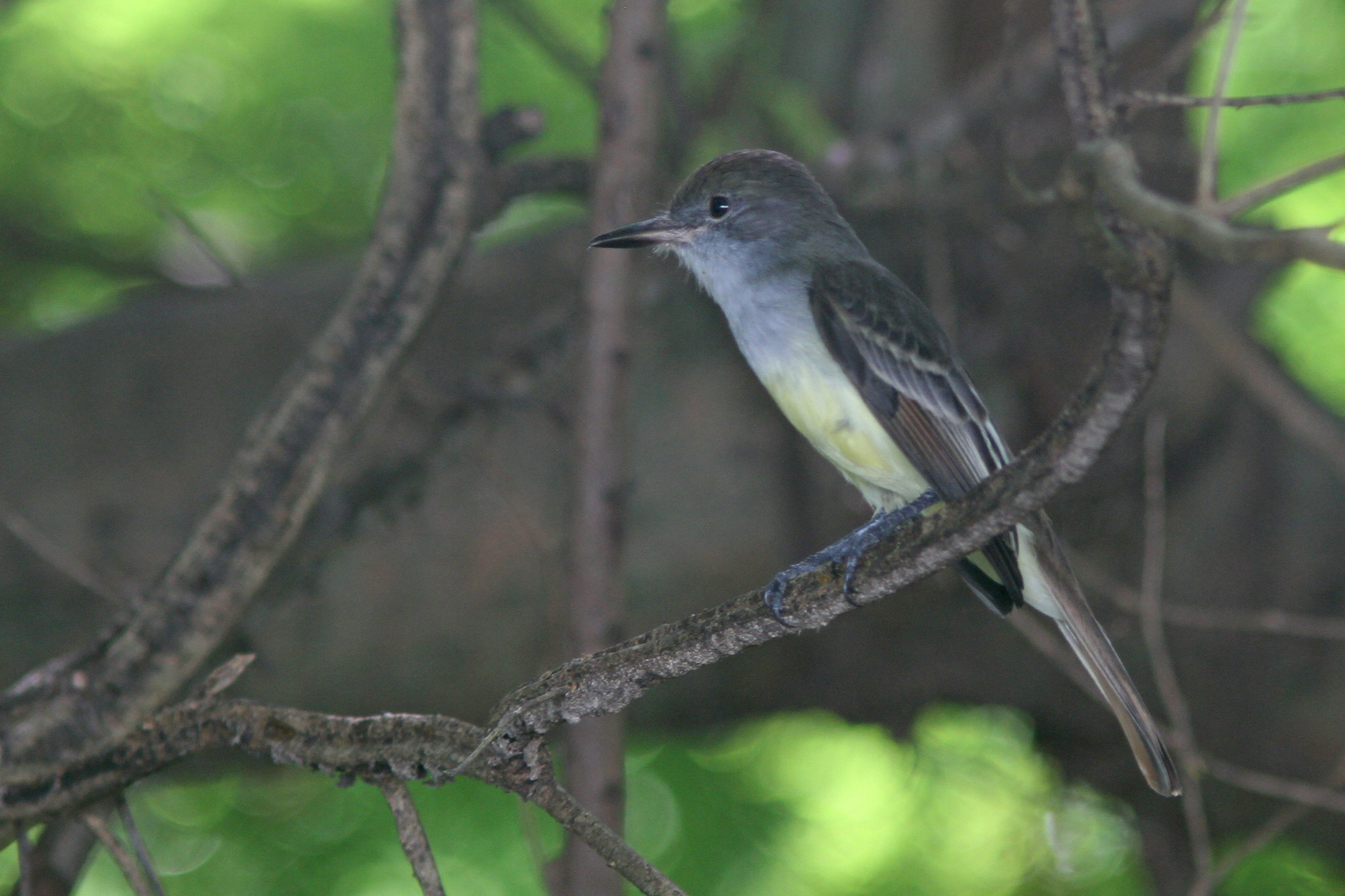
Lesser Antillean Flycatcher, Coco Point Road, Barbuda, Feb 28, 2020
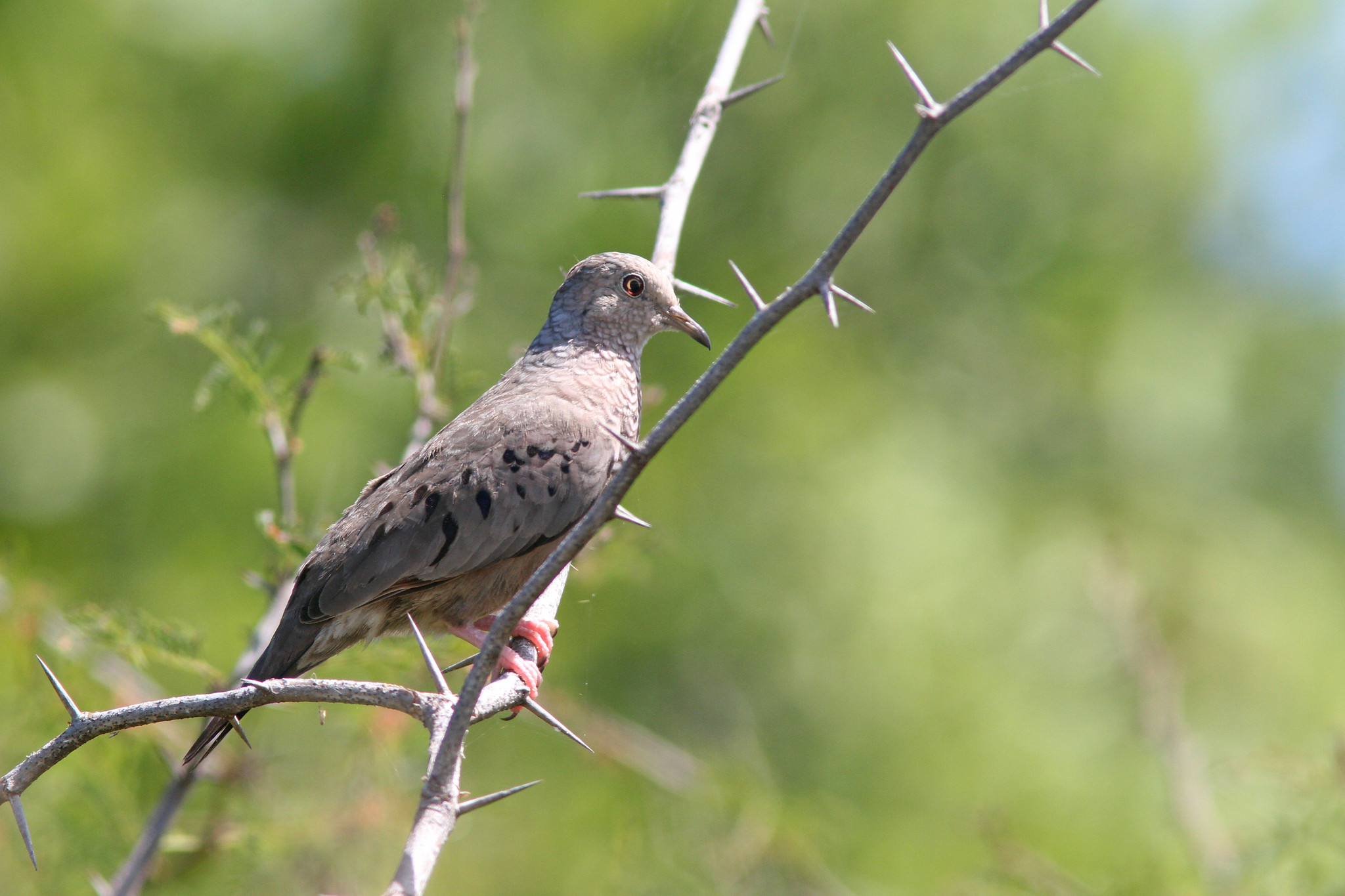
Common Ground Dove and Zenaida Dove, Coco Point Road, Barbuda, Feb 28, 2020
Black faced Grassquit, Coco Point Road, Barbuda, Feb 28, 2020
Mangrove Cuckoo, Coco Point Road, Barbuda, Feb 28, 2020
Helmeted Guineafowl, Coco Point Road, Barbuda, Feb 28, 2020
Looking back toward Antigua, Barbuda, Feb 28, 2020
Friday arrived and I got down to the ferry dock in St.Johns for 5:30am for a 6AM departure (or so I thought!). Despite multiple emails confirming the departure time the ferry was not actually leaving the port until 7AM....so much for the confirmation! The boat finally got going a little after 7 and then we took a turn away from the route to Barbuda to go to another pick up spot further south on Antigua (Jolly Harbor). After lots of waiting around there we finally got underway to Barbuda. We never arrived until 9:45 so the advertised 90 minute trip to Barbuda turned into a much longer ordeal...oh well, at least we eventually made it there. I immediately headed out to walk along Coco Point Road and River Road to Codrington (the only town on the island). After a very short time I started coming across a few Barbuda Warblers in the low scrub vegetation that dominates the island. It was great to see a decent numbers of warblers as well as many other species that made it through the hurricane from a few years ago. The most common species along the road were the Barbuda Warbler, Bananaquits and Black faced Grassquits. Among the more expected species I had two rare sightings with a male Cape May Warbler in a mixed flock as well as a Merlin that rocketed past chasing an American Kestrel (both flagged as rare in eBird with no previous records for the warbler and only one for the Merlin). The damage from the storm was still quite evident but the island was certainly slowly coming back to life. I walked almost all the way to town before turning back and heading back toward the ferry drop off. With a little remaining time I headed south of the ferry dock for almost a mile and added a new bird for the day with a couple of Helmeted Guineafowl from an established feral population that flushed as I was walking by. It was a very hot day with little in the way of shade but I made it through relatively unscathed with no hydration problems but got burned a bit in spots I didn’t put sunscreen on quite thick enough. The return trip also turned into a bit of fiasco with a slightly delayed departure around four and then the advertised 90 minute trip back to Antigua and another detour to Jolly Harbor before finally making it to St. John’s around 6:30pm. I would recommend to anyone thinking of taking the ferry over to Barbuda to leave and return out of Jolly Harbor instead of St John’s as you won’t have to leave as early and will get back quicker. I was totally beat when I got back and then could not find my previously arranged driver and after having no luck contacting him I decided to just make the half hour walk back to my lodging...bringing me up to over ten miles walked for the day with all my equipment and supplies.
White cheeked Pintail, McKinnon's Saltpond, Antigua, Feb 29, 2020
Gray Kingbird, McKinnon's Saltpond, Antigua, Feb 29, 2020
Bananaquit with nest material, McKinnon's Saltpond, Antigua, Feb 29, 2020
Cattle Egret, McKinnon's Saltpond, Antigua, Feb 29, 2020
Yellow crowned Night Heron, McKinnon's Saltpond, Antigua, Feb 29, 2020
West Indian Whistling Ducks, McKinnon's Saltpond, Antigua, Feb 29, 2020
Antillean Crested Hummingbird, McKinnon's Saltpond, Antigua, Feb 29, 2020
McKinnon's Saltpond, Antigua, Feb 29, 2020
Saturday would be a more relaxed and slow paced day compared to Friday with my day spent relatively local to my lodging along Fort Road (although I did walk several miles once again). I headed out before dawn to hit the nearby McKinnon's Saltpond (a great spot for waterfowl, waders and some shorebirds and a spot I had visited on one of my previous trips to Antigua). I walked about a mile and a half before turning around to retrace my steps as the day warmed up quickly. The salt ponds featured some good birds with numerous species of waterfowl including West Indian Whistling Ducks, White cheeked Pintails and a high count of Ruddy Ducks, four species of shorebirds, nine species of waders and loads of Bananaquits and Yellow Warblers. I headed back out late in the morning to walk out to Fort James. The middle of the day consisted of a few shorter walks and an occasional break from time to time as I tried to limit my time in the direct sun after getting a little burned the day before.
Yellow rumped Warbler 'myrtle', McKinnon's Saltpond, Antigua, Feb 29, 2020
As the day came to a close I headed back to McKinnon's Saltpond again and stayed there until sunset where I had yet another apparently rare sighting for the island when I heard a familiar chip note and found a group of three Yellow rumped Warblers along one of the hedges. I managed to get a recording as well as a few identifiable photos with my phone through binoculars (I left the big camera back at my lodging to give my back and shoulders a break). There are no eBird reports of the species for Antigua and just one record from Barbuda of a single individual back in December of 2006. I also found a few new species of shorebirds for the trip plus watched some of the evening flight of waders as they came into roost.
Cattle Egret, McKinnon's Saltpond, Antigua, Mar 1, 2020
White cheeked Pintail, McKinnon's Saltpond, Antigua, Mar 1, 2020
White crowned Pigeon, McKinnon's Saltpond, Antigua, Mar 1, 2020
Black faced Grassquit, McKinnon's Saltpond, Antigua, Mar 1, 2020
On Sunday morning I had some time available before I had to head to the airport late morning for my flight down to Grand Cayman via Miami to begin the second part of the trip. I once again walked over to the nearby McKinnon's Saltpond early in the morning, covering most of the areas I hit the previous day. Mostly the same species were around but I did add a new species for the trip with a Northern Waterthrush. I also had a higher count of waders as I got to the pond a little earlier and had more birds leaving their roost. I finished up around the pond before nine and headed back to get ready for the next portion of the vacation.

Species total for the trip to Antigua and Barbuda came to 56 species. Total for Antigua and Barbuda from this trip and two previous day stops during cruises now stands at 65.  Much more details on the warblers seen during this part of the trip can be found at the following link: Antigua and Barbuda warblers.


Friday, March 22, 2019

Cruise to eastern Caribbean

Saint Lucia Warbler, Millet Nature Reserve, St. Lucia, Mar 12, 2019
Saint Lucia Oriole, Millet Nature Reserve, St. Lucia, Mar 12, 2019
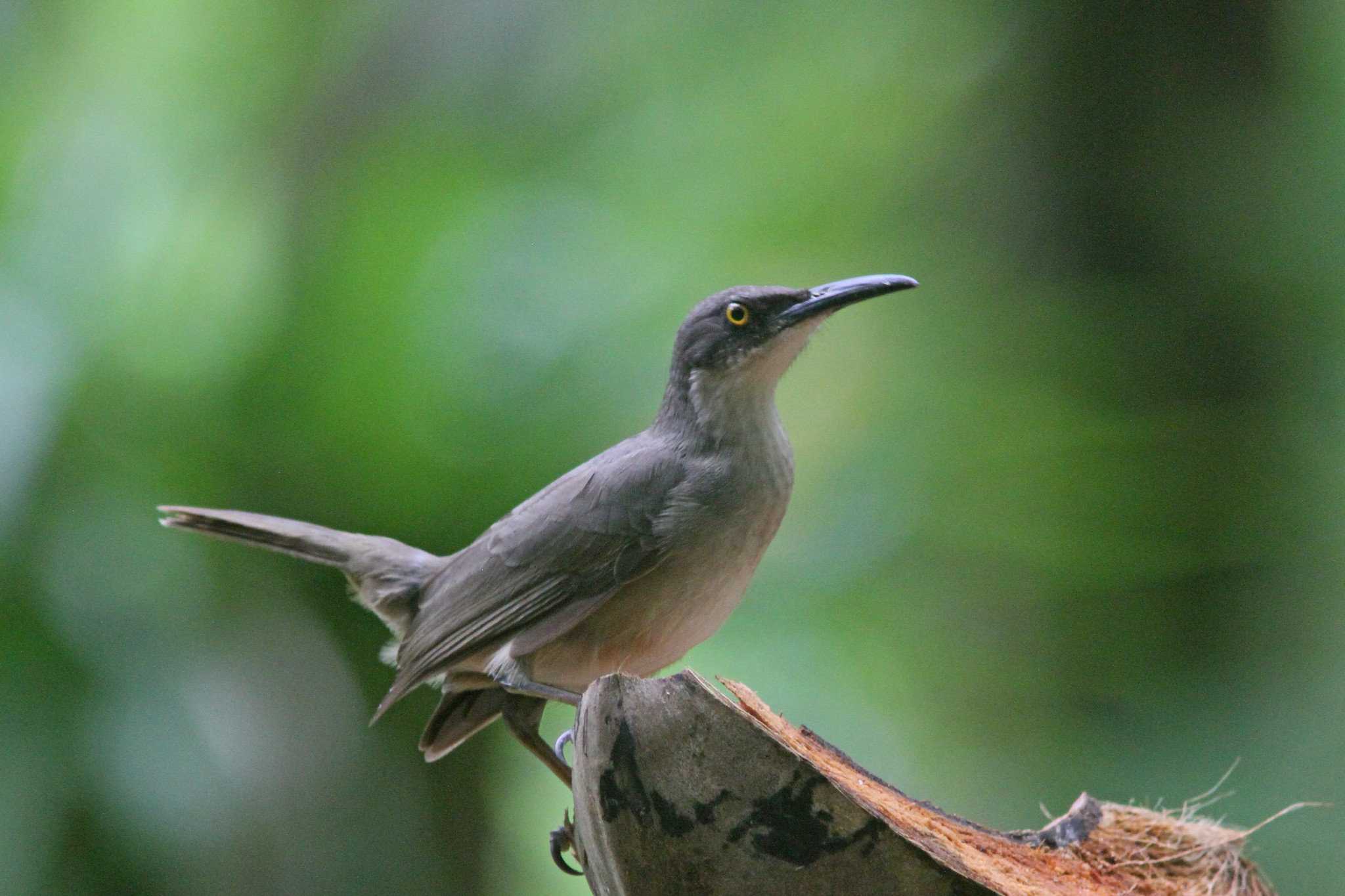
Gray Trembler, Millet Nature Reserve, St. Lucia, Mar 12, 2019
Saint Lucia Black Finch, Millet Nature Reserve, St. Lucia, Mar 12, 2019
Saint Lucia Parrot, Millet Nature Reserve, St. Lucia, Mar 12, 2019
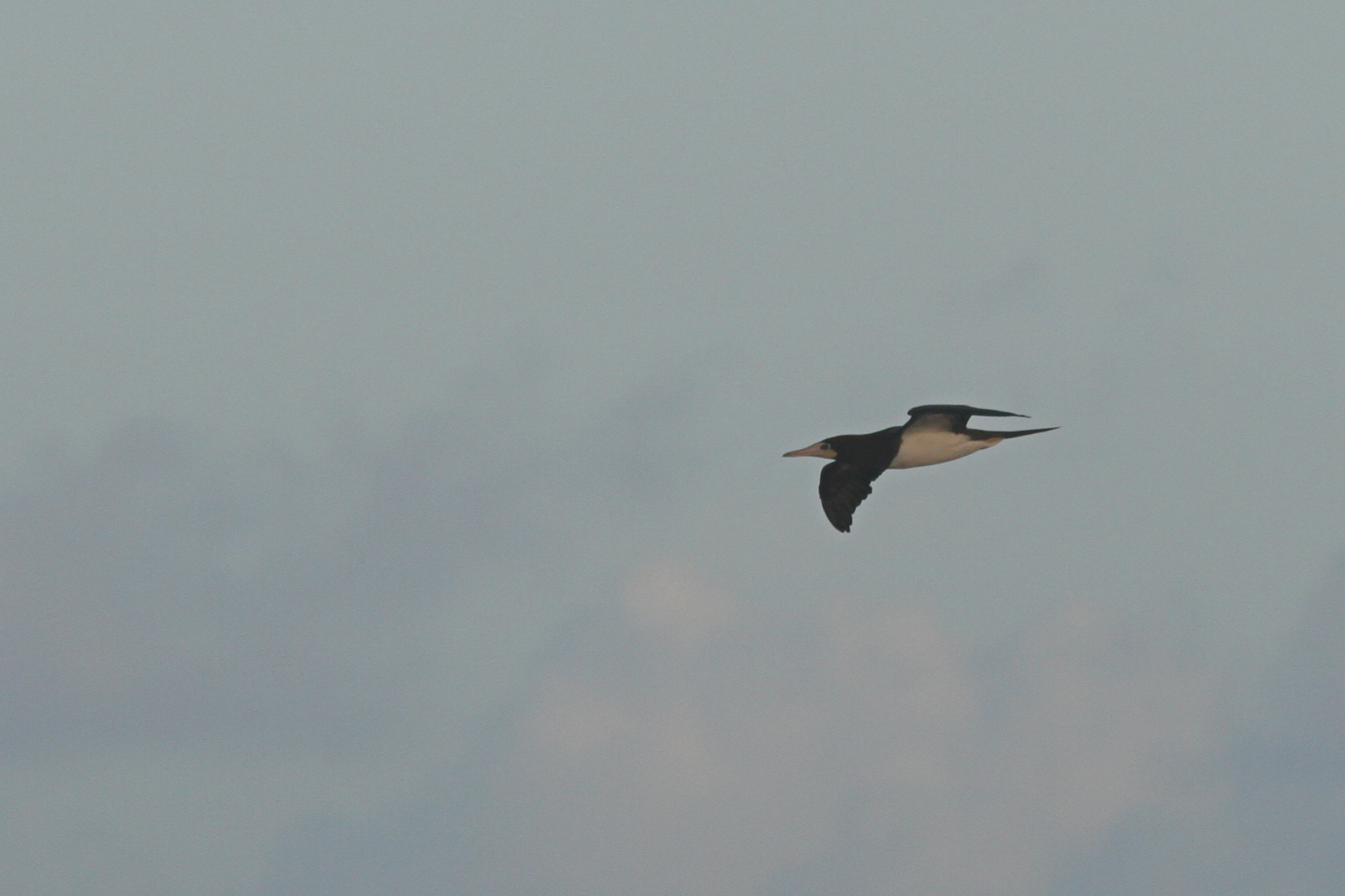
Brown Booby, offshore St. Lucia, Mar 12, 2019
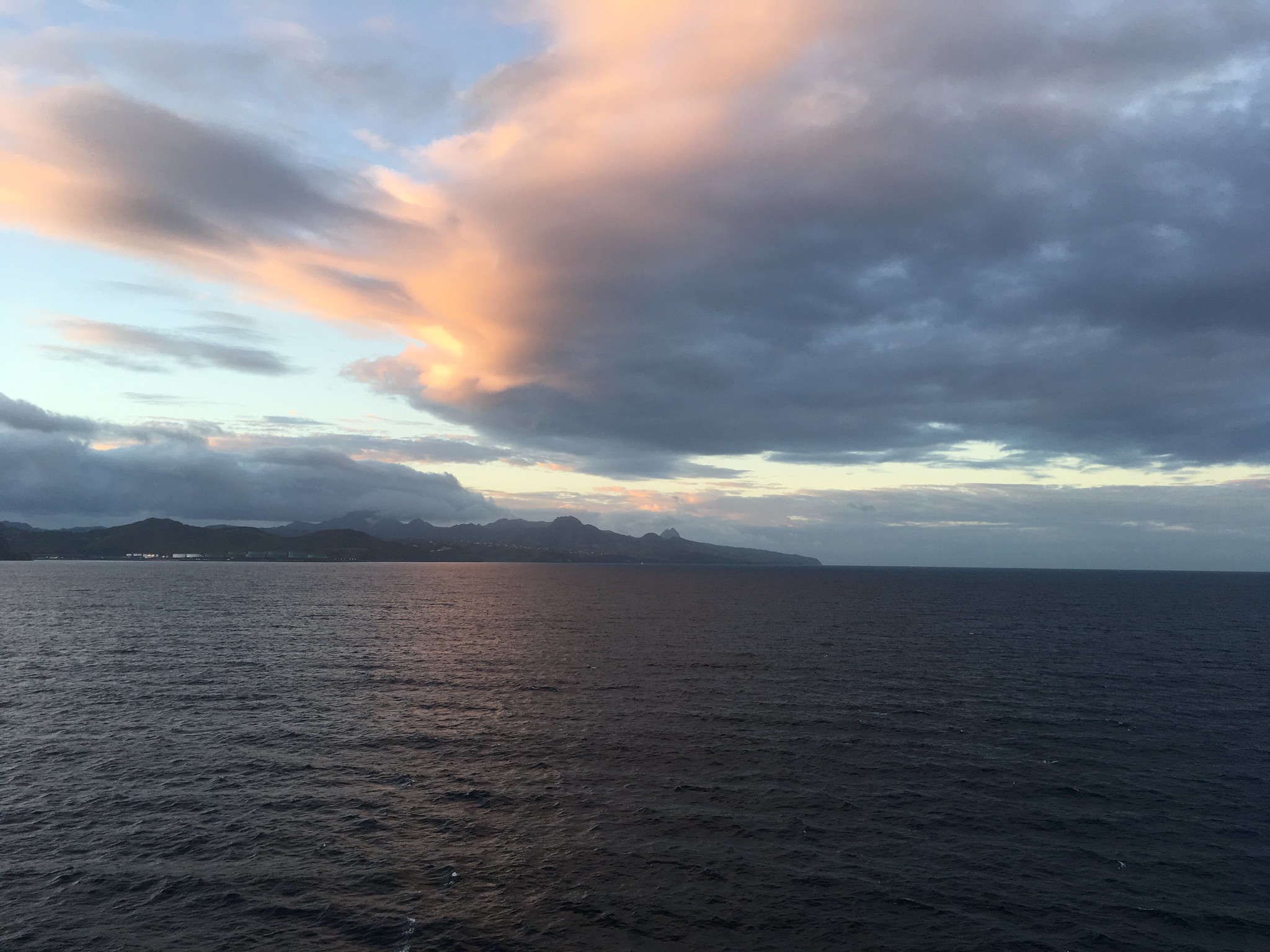
Central and southern mountains, St. Lucia, Mar 12, 2019
Mount Gimie, Millet Nature Reserve, St. Lucia, Mar 12, 2019
Back from a successful trip down to the eastern Caribbean on a week long cruise out of San Juan hitting several islands including Saint Lucia, Barbados, Antigua, Saint Thomas and Tortola. We had an early flight out at 6AM on Sunday the 10th just as a snowstorm was arriving. It started snowing just before we left but we got out before getting delayed. We arrived into San Juan around ten and then headed to the ship to start enjoying the warm temperatures. The first full day was an at sea day which was mainly spent reading and relaxing but I did manage to find a few birds including a few White tailed Tropicbirds and Magnificent Frigatebirds as we headed southeast from San Juan toward our first destination of the trip, Saint Lucia. We pulled into Saint Lucia around 7AM and I was one of the first off the ship at around 7:40 where I was suppose to meet up with my guide. On our way into port I picked up my first life bird for the trip with a number of Caribbean Martins flying around...it appeared the stop I was most looking forward to was going to be great but then came the trouble for the day. I arranged to have a guide for the day to track down all the endemics for the island including my main target, Saint Lucia Warbler. When I contacted my original guide a few weeks before the trip he had a change of plans and would be out of the country so he arranged another guide for me and assured me he would be there. I walked all around the area near the port for about 45 minutes with no luck finding him. I had a phone number for him but when I was able to make a call to him it was the wrong number and I could not reach the guide. I tried one more time before finally deciding that the prearranged guide was not going to show so I hired a taxi to take me into the mountains to the Millet Nature Reserve. We arrived there around 9:20 and spent the next three hours on the trails where I managed to pick up all my remaining target birds including Saint Lucia Oriole, Saint Lucia Warbler, Gray Trembler (near endemic, found on one other island), Saint Lucia Parrot (heard several times and seen well but distantly once), Saint Lucia Black Finch plus the local subspecies of Lesser Antillean Pewee.  There were a number of coconut feeders along the trails that attracted lots of Lesser Antillean Bullfinches as well as St. Lucia Black Finch, Gray Tremblers and Pearly eyed Thrashers...this was the first time I have ever seen this type of feeder in all my travels! Despite the snafu with my guide it was nice to finally make it to a location I have talked about going to for years. As we sailed out of Saint Lucia the ship was joined by first two, then three and finally four Brown Boobies.  More details on the search for St. Lucia Warbler and other warblers seen on the trip can be found at the follow:  Warblers during eastern Caribbean cruise.
Laughing Gull, offshore Barbados, Mar 13, 2019
Barbados from ship as we left, Mar 13, 2019
The next stop was to Barbados with the day spent with some morning snorkeling and the afternoon at the beach. Not much for birding all day but did have a group of parakeets fly over the beach as well as a few sightings of the endemic Barbados Bullfinch.
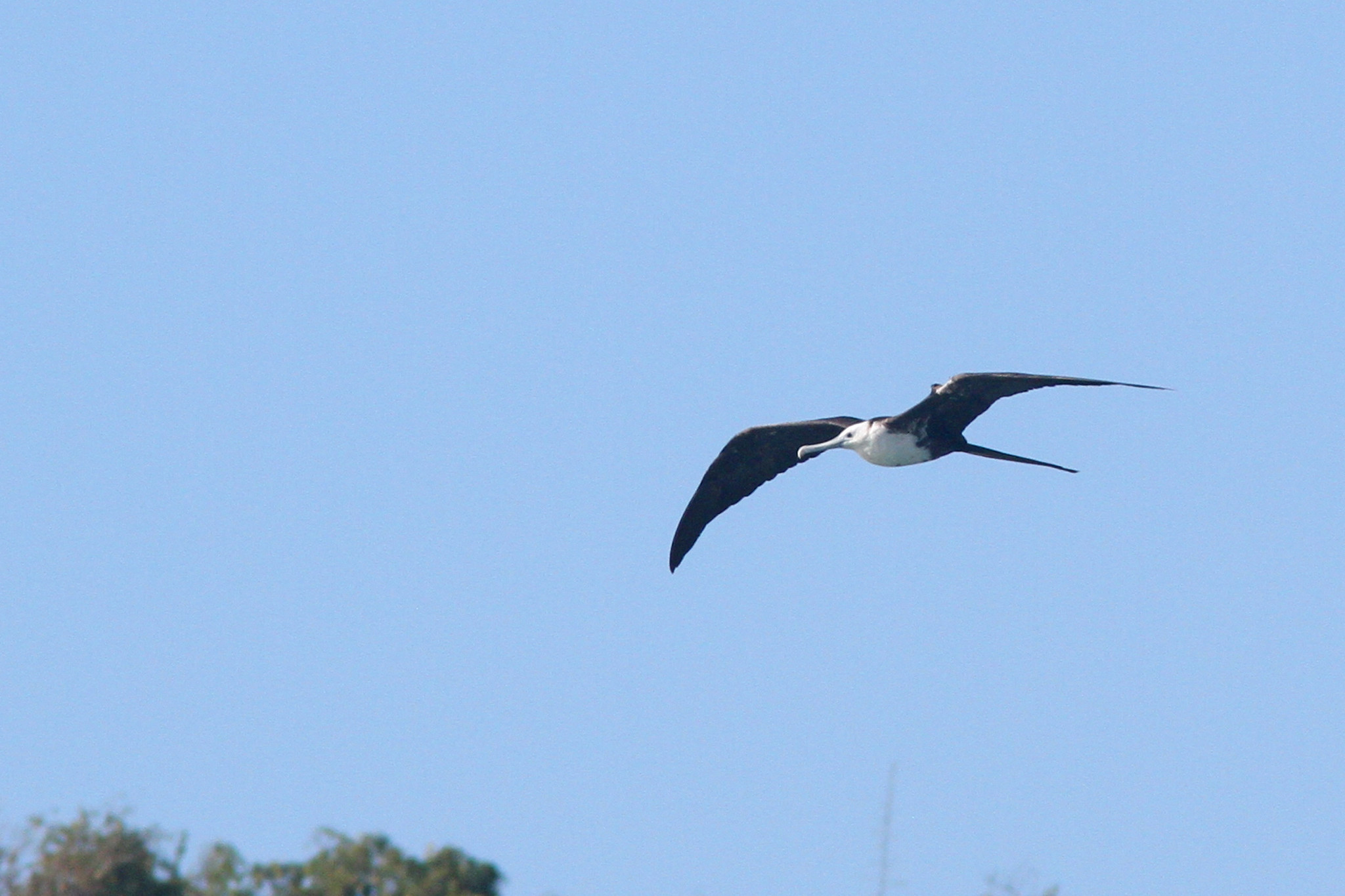
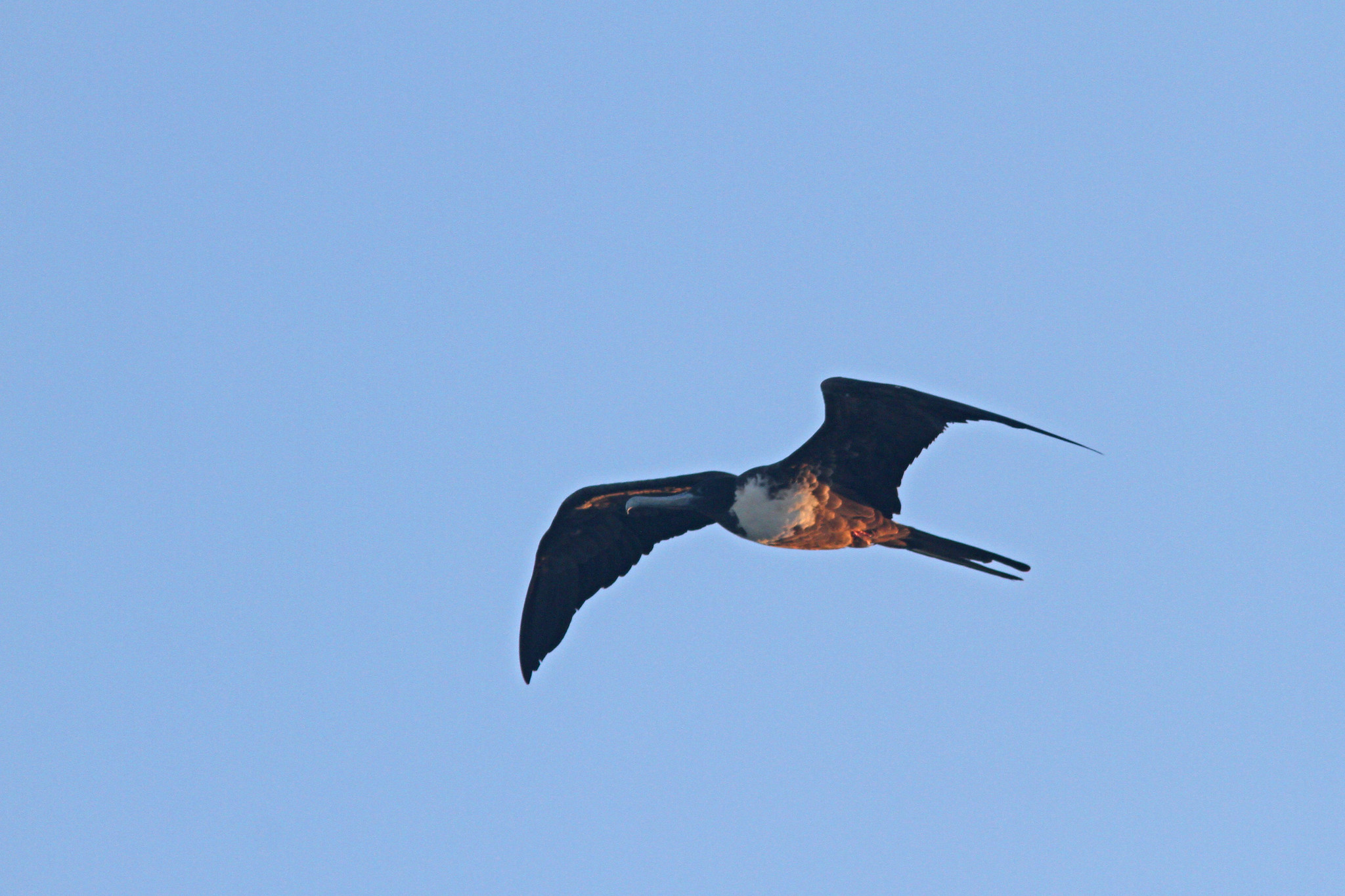
Magnificent Frigatebird, St. John's harbor, Antigua, Mar 14, 2019 
Prairie Warbler, McKinnon's Salt Pond, Antigua, Mar 14, 2019
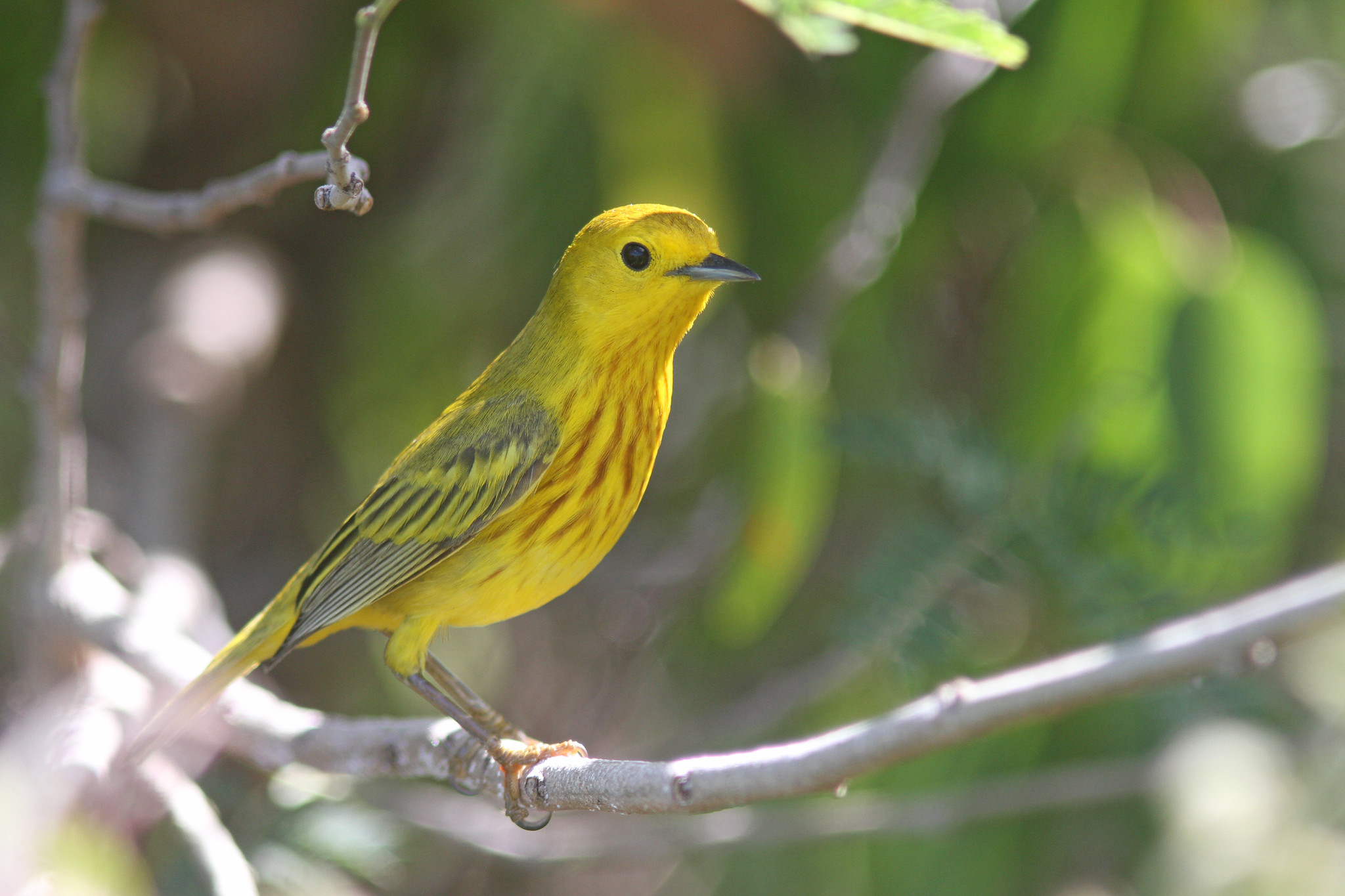
Yellow Warbler, McKinnon's Salt Pond, Antigua, Mar 14, 2019
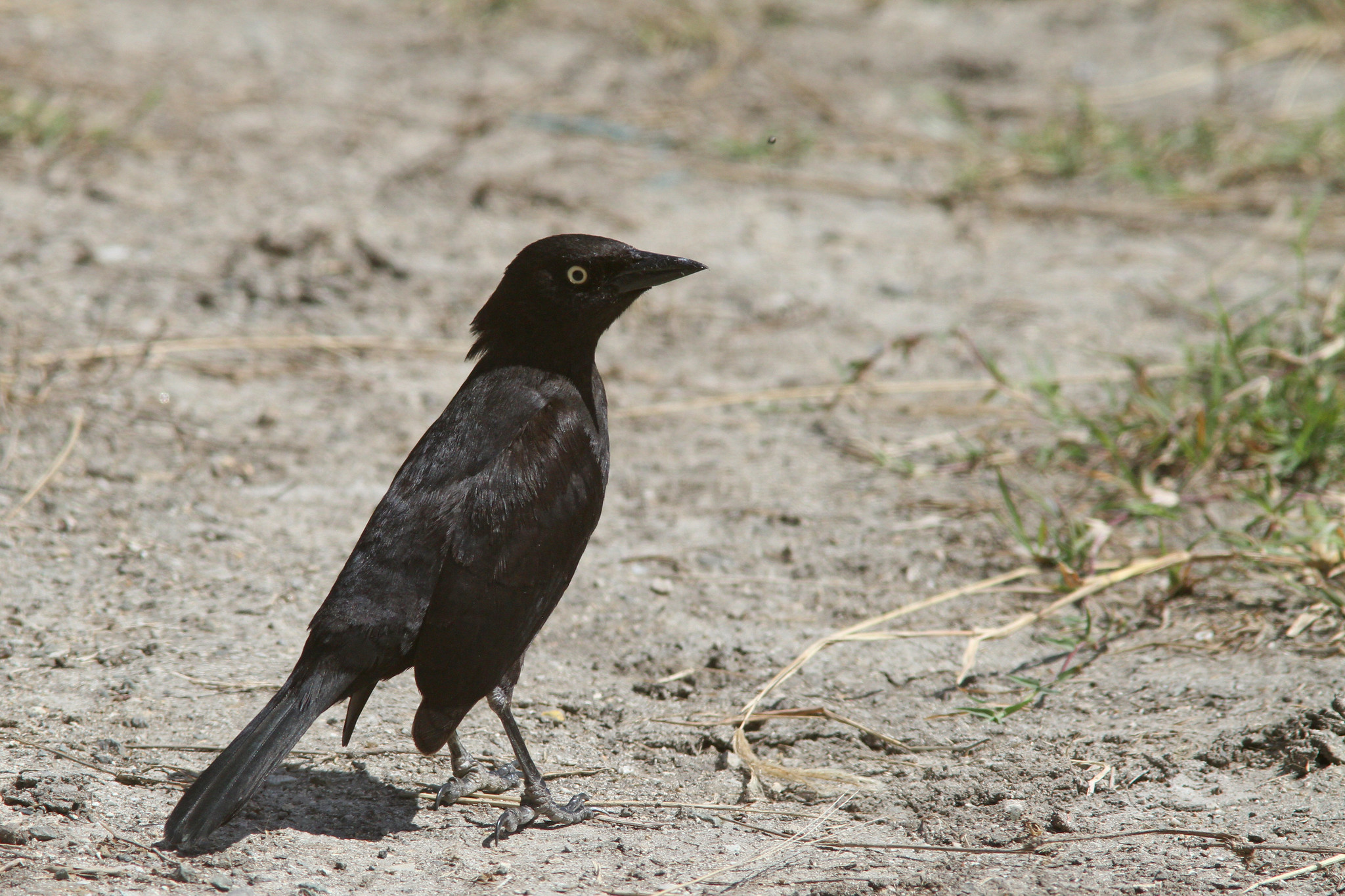
Carib Grackle, McKinnon's Salt Pond, Antigua, Mar 14, 2019
Little Blue Heron, McKinnon's Salt Pond, Antigua, Mar 14, 2019
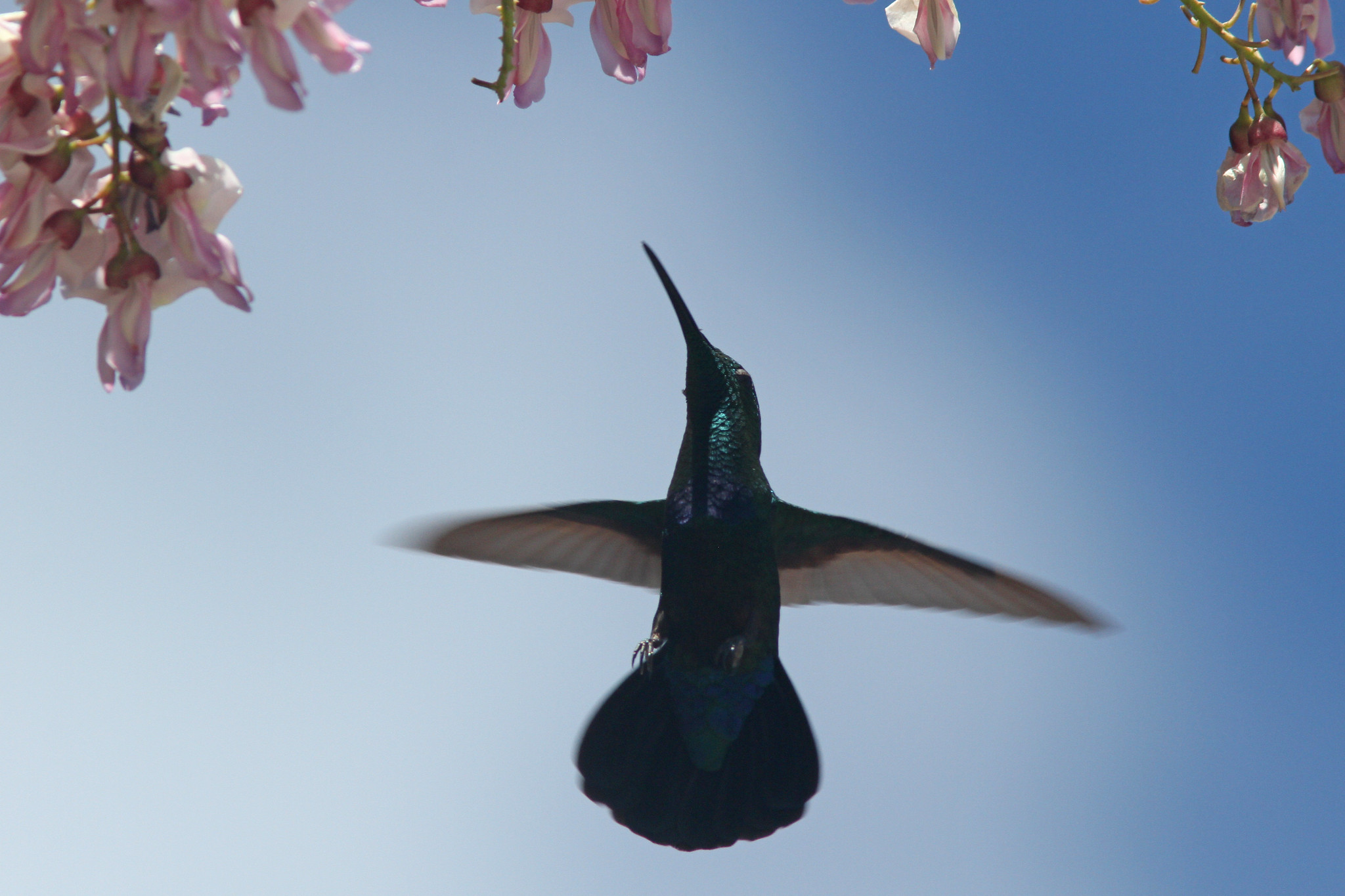
Green throated Carib, Fort James Beach to McKinnon's Salt Pond area, Antigua, Mar 14, 2019
Bananaquit, Fort James Beach to McKinnon's Salt Pond area, Antigua, Mar 14, 2019
Common Ground Dove, Fort James Beach to McKinnon's Salt Pond area, Antigua, Mar 14, 2019
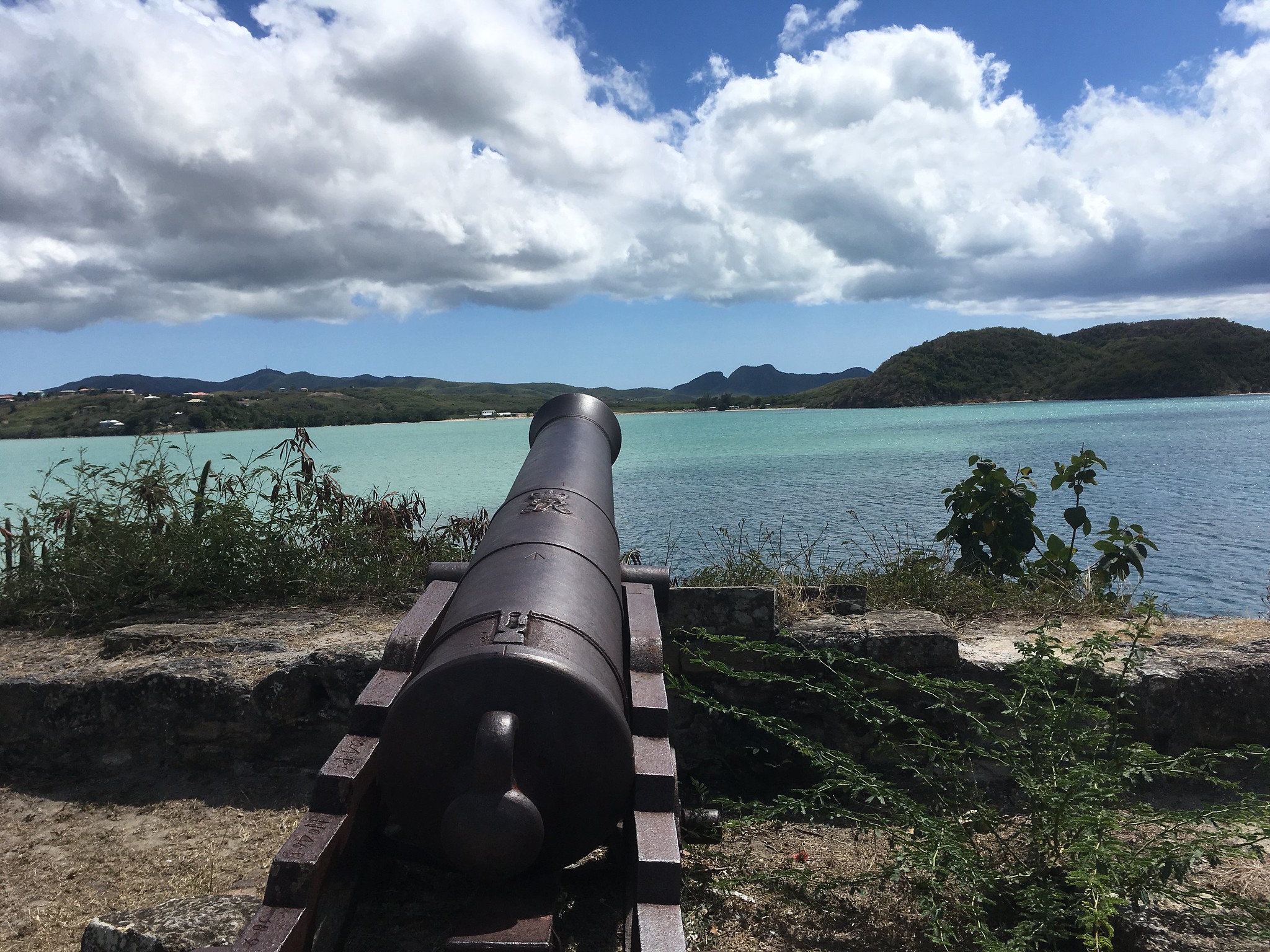
Fort James looking toward harbor entrance, Antigua, Mar 14, 2019
On Thursday we stopped in Antigua and despite my best efforts before the trip to figure out a way over to nearby Barbuda to see the endemic Barbuda Warbler there was just no way to do it in the time we had in port. I will have to make a specific trip down at some point to finally catch up with the bird. We headed to the beach just a short distance from the port and it was near enough to McKinnon’s Salt Ponds for me to make the walk over to it. I spent a good portion of the day walking along the roads and paths between the old fort and the salt ponds and had a nice selection of birds including an unusual for the island Prairie Warbler. I had multiple species either building nests or carrying nest material including White crowned Pigeon, Carib Grackle and Lesser Antillean Bullfinch. Unfortunately some road work around the main part of the pond kept the area closed I was still able to view a portion of the pond and it produced a nice selection of waders and shorebirds.
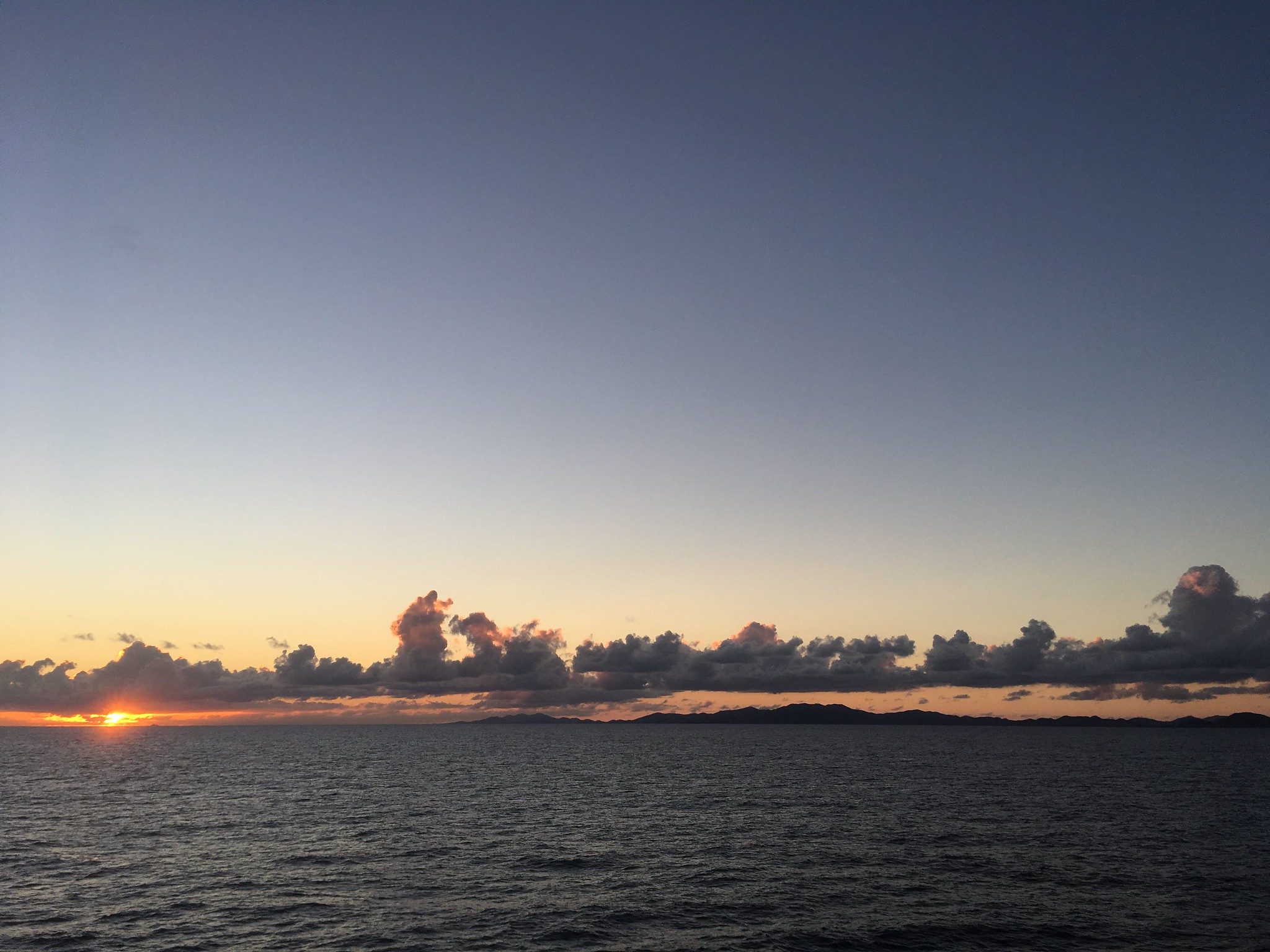
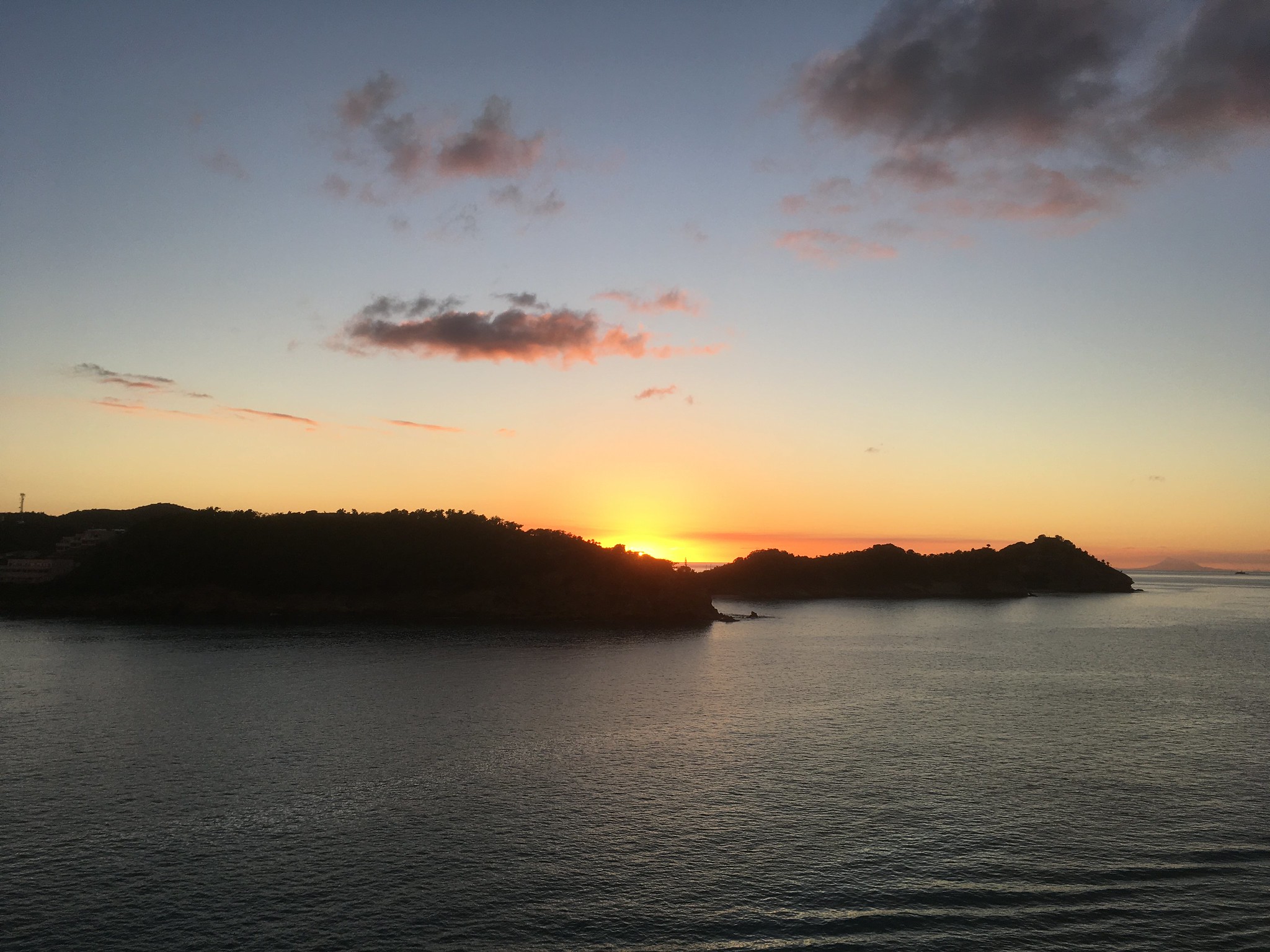
Sunset, offshore St Thomas, USVI, Mar 15, 2019
The next stop was to St Thomas in the US Virgin Islands where we had a tour consisting of another day of snorkeling. Certainly not a birding day but some great snorkeling with tons of tropical fish plus turtles and octopus on our private tour. I did see a few birds along the way but nothing too unusual.
Brown Boobies, Roadtown harbor, Tortola, BVI, Mar 16, 2019
Sunset, offshore Tortola, BVI, Mar 16, 2019
The final stop of the cruise was to Tortola in the British Virgin Islands and we did a kayak tour where we spent three hours out in the sun exploring a mangrove area and a nearby bay. The damage left from the hurricane was quite evident on this island as well but the mangroves seem to be slowly coming back. Not too much for birds but a couple of American Oystercatchers were nice to see in addition to a handful of waders.  We returned to San Juan on Sunday the 17th bright and early and then it was off to the airport for the flight back home.

Overall for the trip I had a total of 63 species with seven of those being life birds (Caribbean Martin, St. Lucia Oriole, St. Lucia Warbler, Gray Trembler, St. Lucia Parrot, St. Lucia Black Finch and Rose ringed Parakeet).

Thursday, December 21, 2017

Trip to the eastern Caribbean including St Kitts, Antigua, Martinique, Barbados and Grenada

Martinique Oriole, De Rivera Blanche, Martinique, Dec 13, 2017
Just back from a round trip cruise from San Juan which made stops at a variety of islands in the Caribbean including St. Kitts, Antigua, Martinique, Barbados and Grenada. The original itinerary had stops in St Martin, St Croix and Dominica but the extensive hurricane damage to those islands resulted in a change of stops. This change unfortunately meant no chance to get the near endemic Plumbeous Warbler on Dominica.
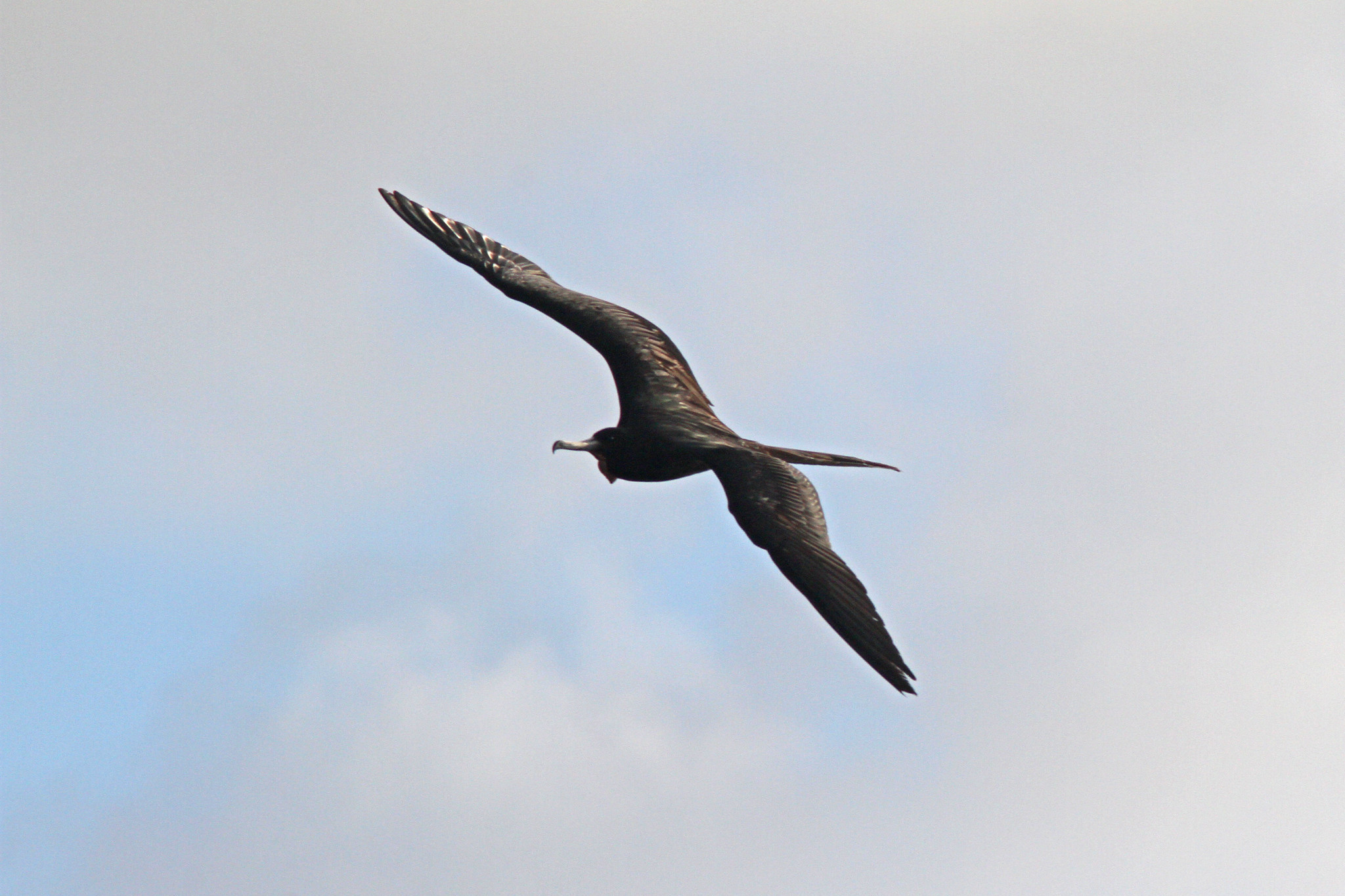
Magnificent Frigatebird, Basseterre, St. Kitts, Dec 11, 2017
Red billed Tropicbird, offshore St Kitts, Dec 11, 2017
Brown Booby, offshore St Kitts, Dec 11, 2017
Our first day was spent at St. Kitts where we were the sole participants on an around the island tour that included a short walk in the rainforest (which produced an unusual for the area Louisiana Waterthrush plus a couple Brown Tremblers) and some snorkeling time as well as some beach time. I was up for dawn before we docked and time spent sea watching turning up a couple Red billed Tropicbirds, Brown Boobies and a number of Magnificent Frigatebirds and Brown Pelicans. Once we docked we got off the boat right away and joined a prearranged tour for the remainder of the day. I added three new life birds including the previously mentioned Red billed Tropicbirds and Brown Tremblers as well as a Lesser Antillean Flycatcher (species #1308, 1309 and 1310).  Additional photos at St. Kitts album.
Sunset, Antigua, Dec 12, 2017

Magnificent Frigatebird, St. Johns, Antigua, Dec 12, 2017
On our second day we landed on the island of Antigua where we headed to one of the many local beaches for a beach day. I tried my best to arrange a day trip to nearby Barbuda to track down the Barbuda Warbler but I couldn't get it to work out due to time constraints and the island still being off limits following the severe destruction from hurricane season. Despite having just a very limited area to check I still turned up some local birds as well as neotropical migrants spending the winter on the island. Life birds included a Red footed Booby flying past the ship before we docked for the day as well as my first Carib Grackles (species #1311 and 1312). Also sighted a few monkeys and several mongoose...a common theme on these islands and one that has been detrimental to the native wildlife.  Additional photos from the day at the following link: Antigua album
White breasted Thrasher, Reserve Naturelle de La Caravelle, Martinique, Dec 13, 2017
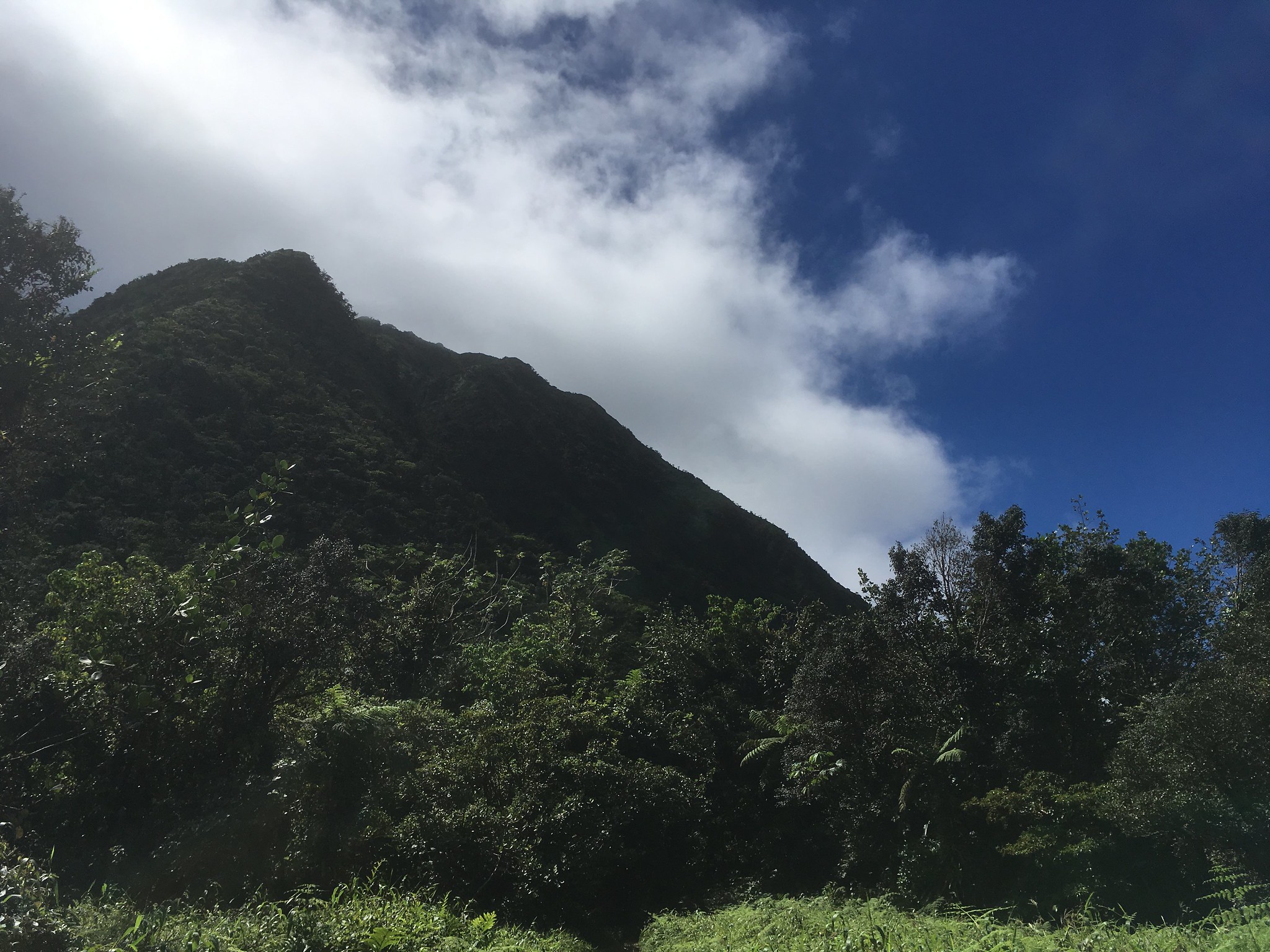
Mountains at midday, Foret Pitons du Carbet,  Martinique, Dec 13, 2017
Purple throated Carib, De Rivera Blanche, Martinique, Dec 13, 2017
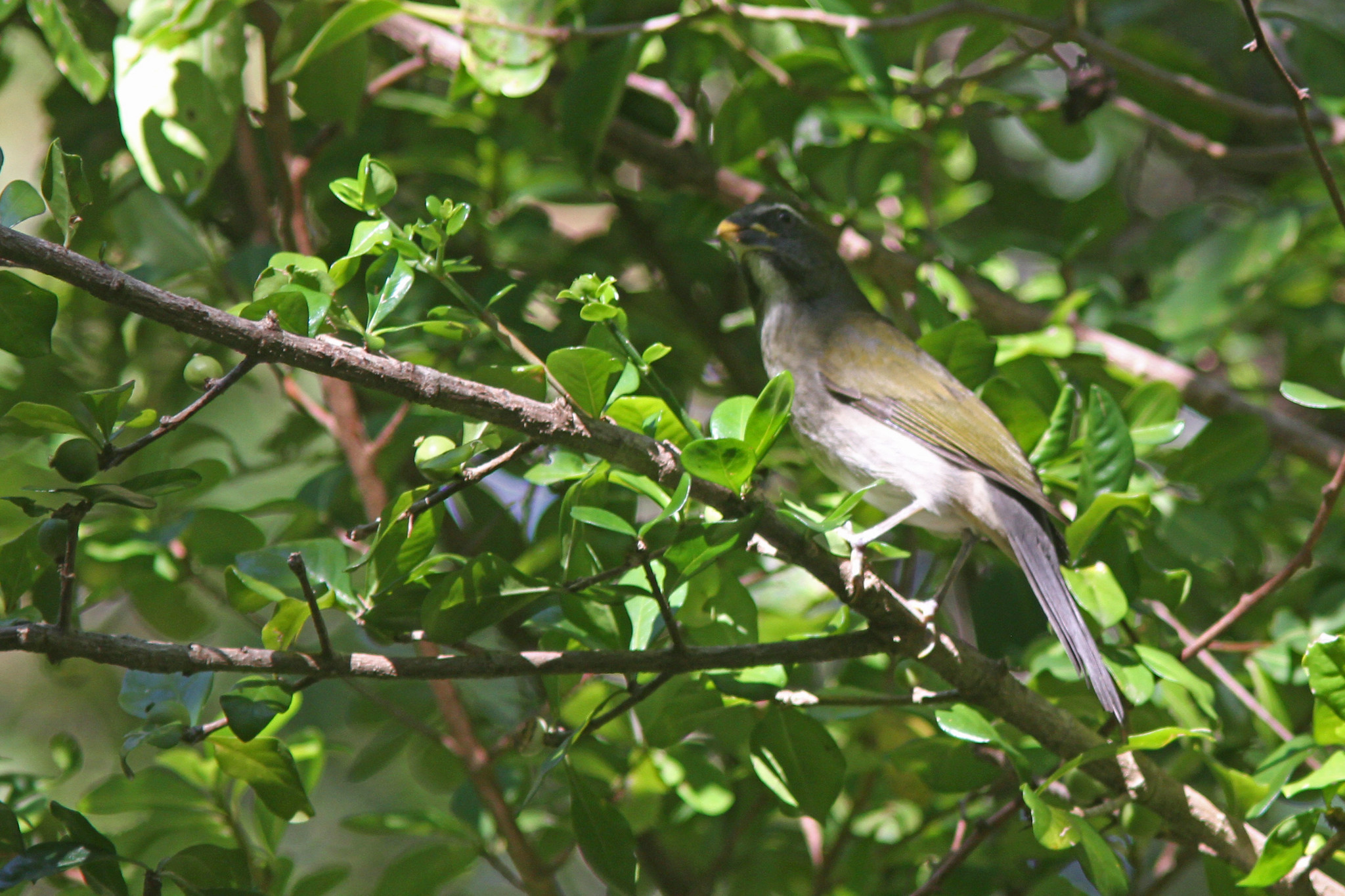
Lesser Antillean Saltator, Reserve Naturelle de La Caravelle, Martinique, Dec 13, 2017
Yellow Warbler (Martinique), Reserve Naturelle de La Caravelle, Martinique, Dec 13, 2017
Antillean crested Hummingbird, Foret Pitons du Carbet,  Martinique, Dec 13, 2017
Scaly breasted Thrasher, Foret Pitons du Carbet,  Martinique, Dec 13, 2017
The third day found us in Martinique where I hired a guide for the day to track down the endemic Martinique Oriole as well as a few other Lesser Antilles specialties. I was the third person off the ship and I immediately found the guide Beatriz Conde waiting for me. We headed out of capital of Fort de France over to the Caravelle peninsula to Reserve Naturelle de La Caravelle where we quickly found several of the critically endangered White breasted Thrasher (another life bird for me, #1313) The thrasher only occurs in this small area of Martinique and an equally small area of nearby St. Lucia. Other notables on the peninsula included two more lifers...Spectacled Thrush and Lesser Antillean Saltator (#1314 and 1315) as well as several of the unique subspecies of Yellow Warbler among others.  After just under two hours on the peninsula we headed back west to the rainforest interior of the island arriving around midday where we enjoyed a lunch surrounded by a number of notable species including Purple throated Carib (#1316), Scaly breasted Thrasher (#1317) and my first looks at the endemic and endangered Martinique Oriole (#1318). Despite much effort a few more typically reliable sites we never had any luck finding Blue headed Hummingbird (which occurs just in Martinique and Dominica) or the Gray Trembler (which occurs only in Martinique and St. Lucia). The last stop of the day did produce four Lesser Antillean Swifts rapidly moving by providing the seventh life bird of the day and #1319 overall. Many additional photos from the day can be found at the following Flickr album link: Martinique .  If you are looking for a good guide to the island drop Beatriz a message at biasconde@hotmail.com 
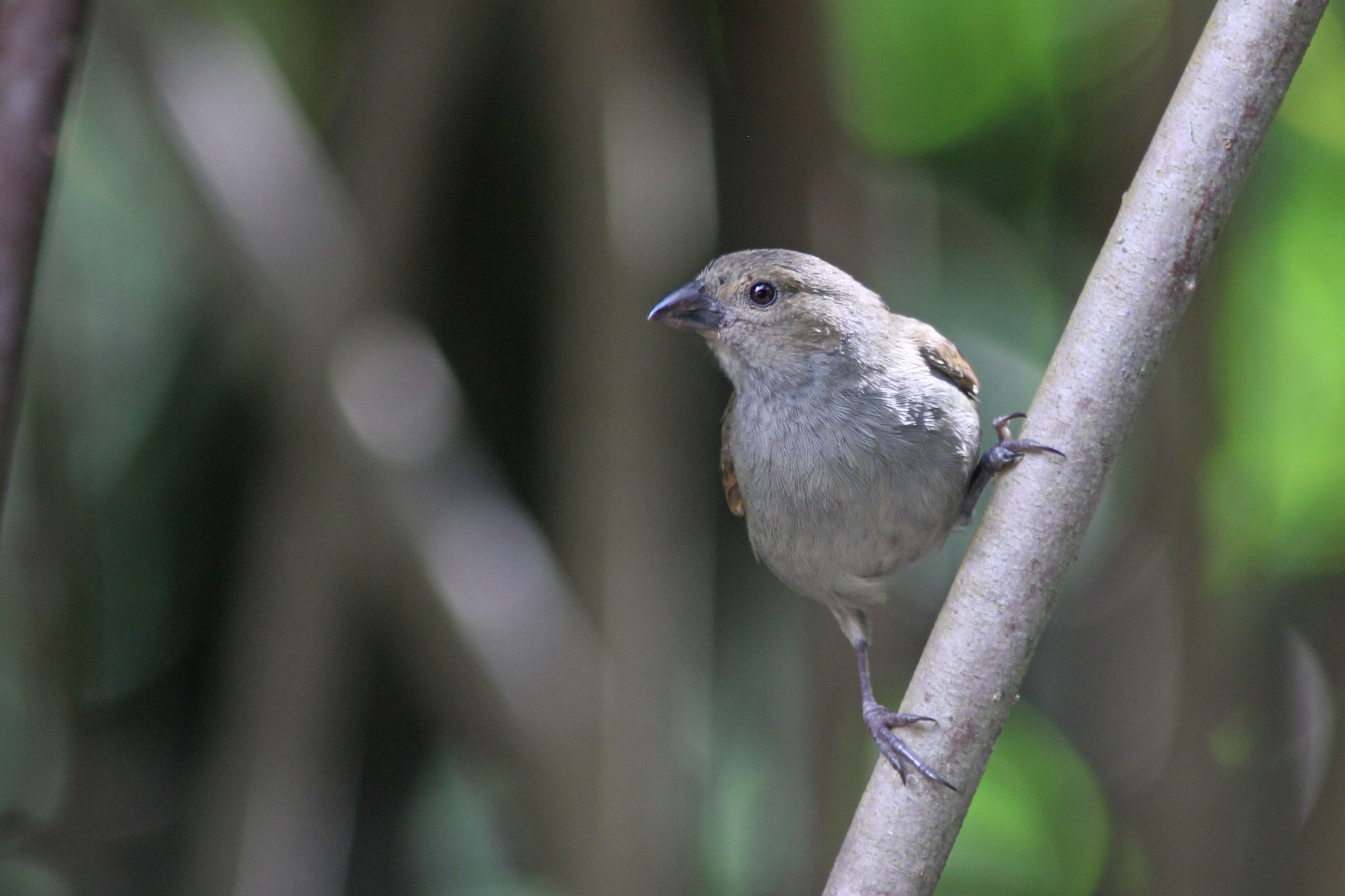
Barbados Bullfinch, Grahme Hall Nature Sanctuary, Barbados, Dec 14, 2017
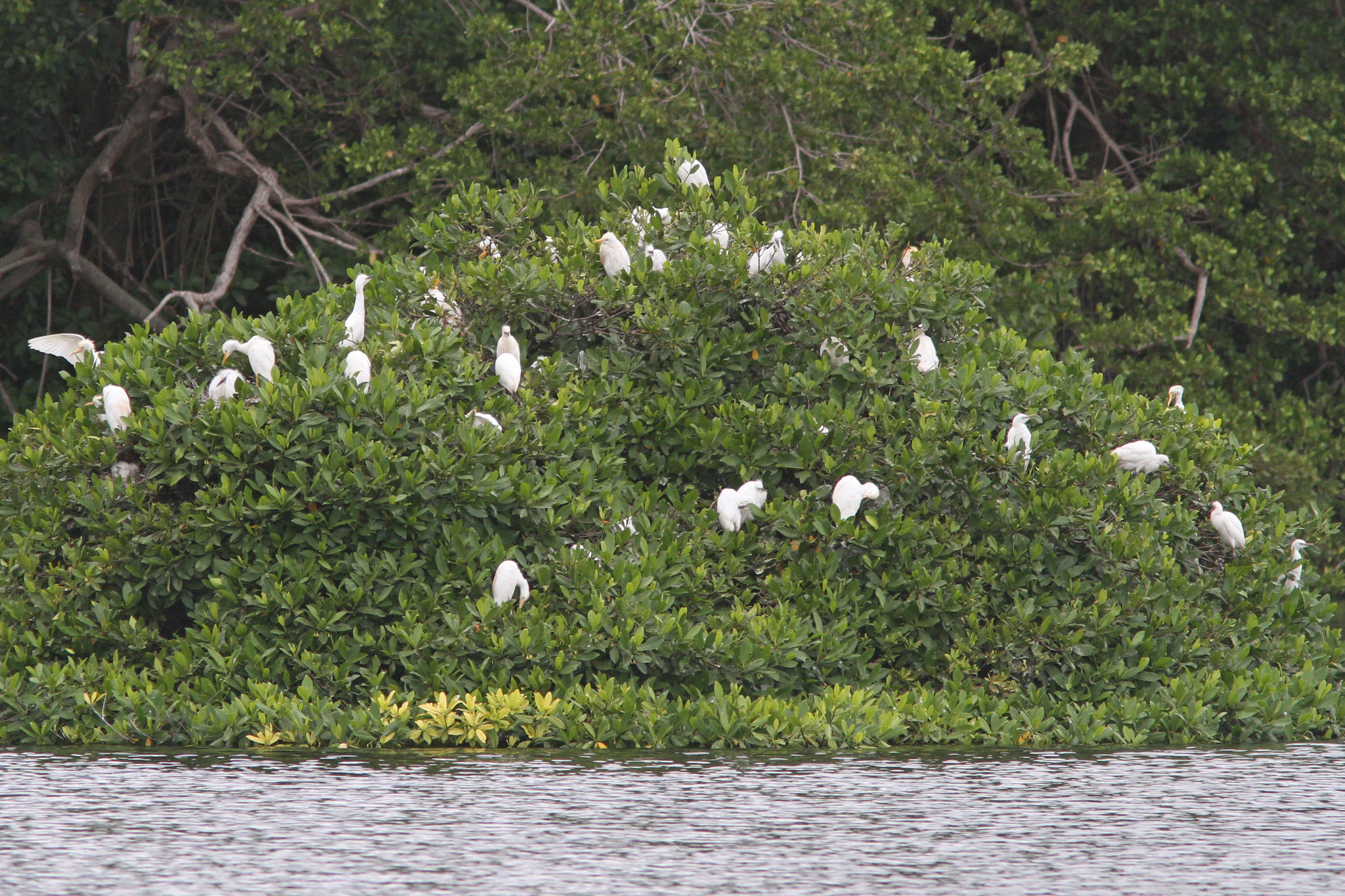
Cattle Egrets. Little Egrets and Snowy Egrets, Grahme Hall Nature Sanctuary, Barbados, Dec 14, 2017
Bananaquit, Grahme Hall Nature Sanctuary, Barbados, Dec 14, 2017
Green Throated Carib, Grahme Hall Nature Sanctuary, Barbados, Dec 14, 2017
On Thursday we arrived at Barbados and I headed over to Grahme Hall Nature Sanctuary and spent a few hours there and tracked down my main targets including Little Egret, the endemic Barbados Bullfinch and the endangered local subspecies of Yellow Warbler. Unfortunately the nature center only had a limited amount of the area open so the views of the egrets were a bit distant (a real shame as the vast amount of the sanctuary was closed to the public as an ongoing dispute between the owner of the sanctuary and the Barbados government continues). The Little Egret is an old world species that made it to Barbados and has started to breed on the island, including at this location. The Barbados Bullfinch is the only endemic on the island and differs from the similar Lesser Antillean Bullfinch in a few ways with the biggest obvious difference being the males and females look the same. Both of these species were lifers (#1320 and 1321). I also eventually caught up with the endangered local subspecies of Yellow Warbler and managed to get a few photos of it. I was happy to get my target birds but I think with a guide I could have gotten some more good stuff but none of the guides I tried to book were available on the day I was there so I had to be content with just the stop at Grahme Hall.  Link to all the photos from the day here: Barbados
Grenada Flycatcher, Mt Hartman NP, Grenada, Dec 15, 2017
Grenada Dove habitat, Mt Hartman NP, Grenada, Dec 15, 2017
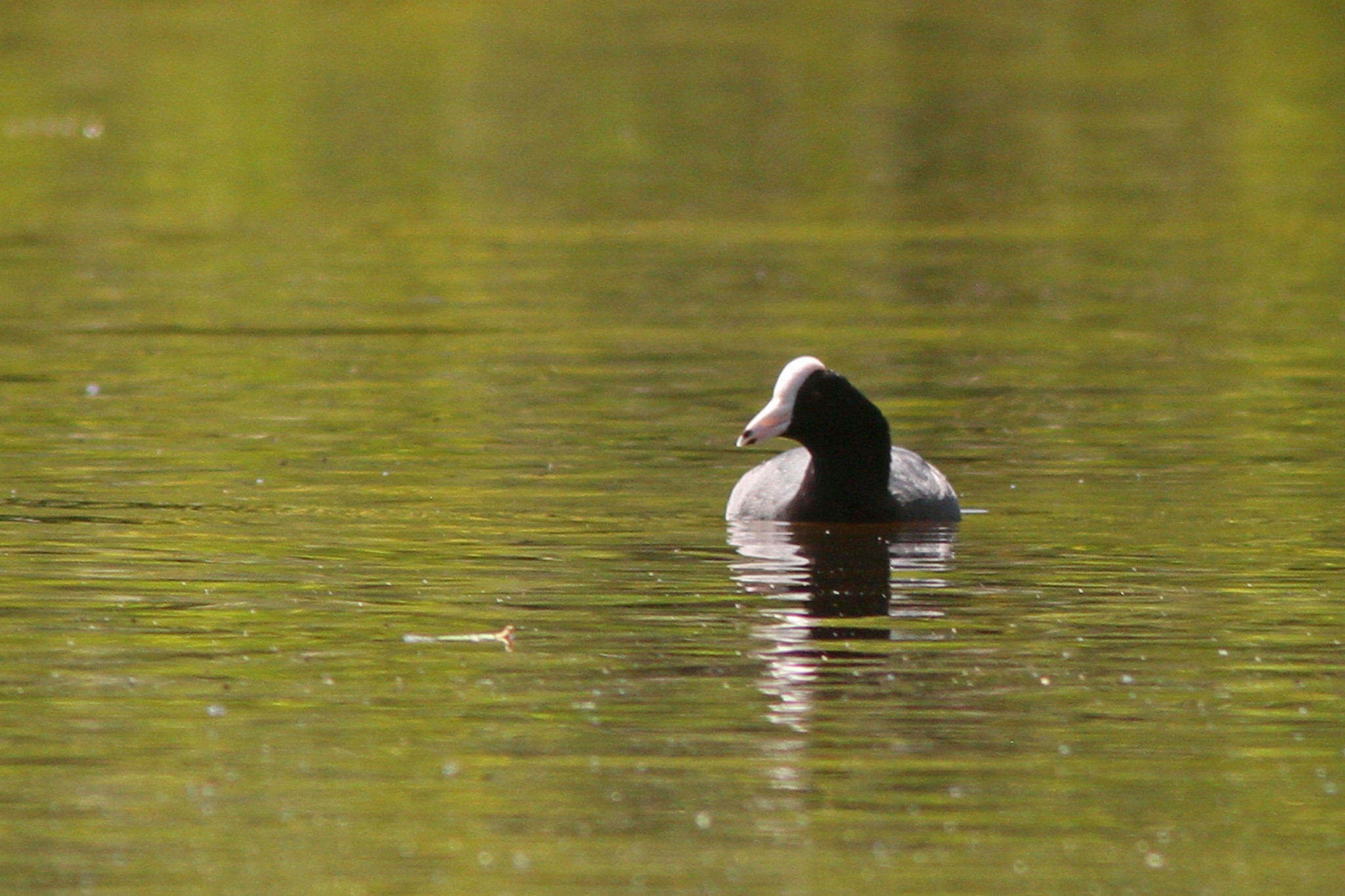
American Coot (white shielded), La Sagesse Beach, Grenada, Dec 15, 2017
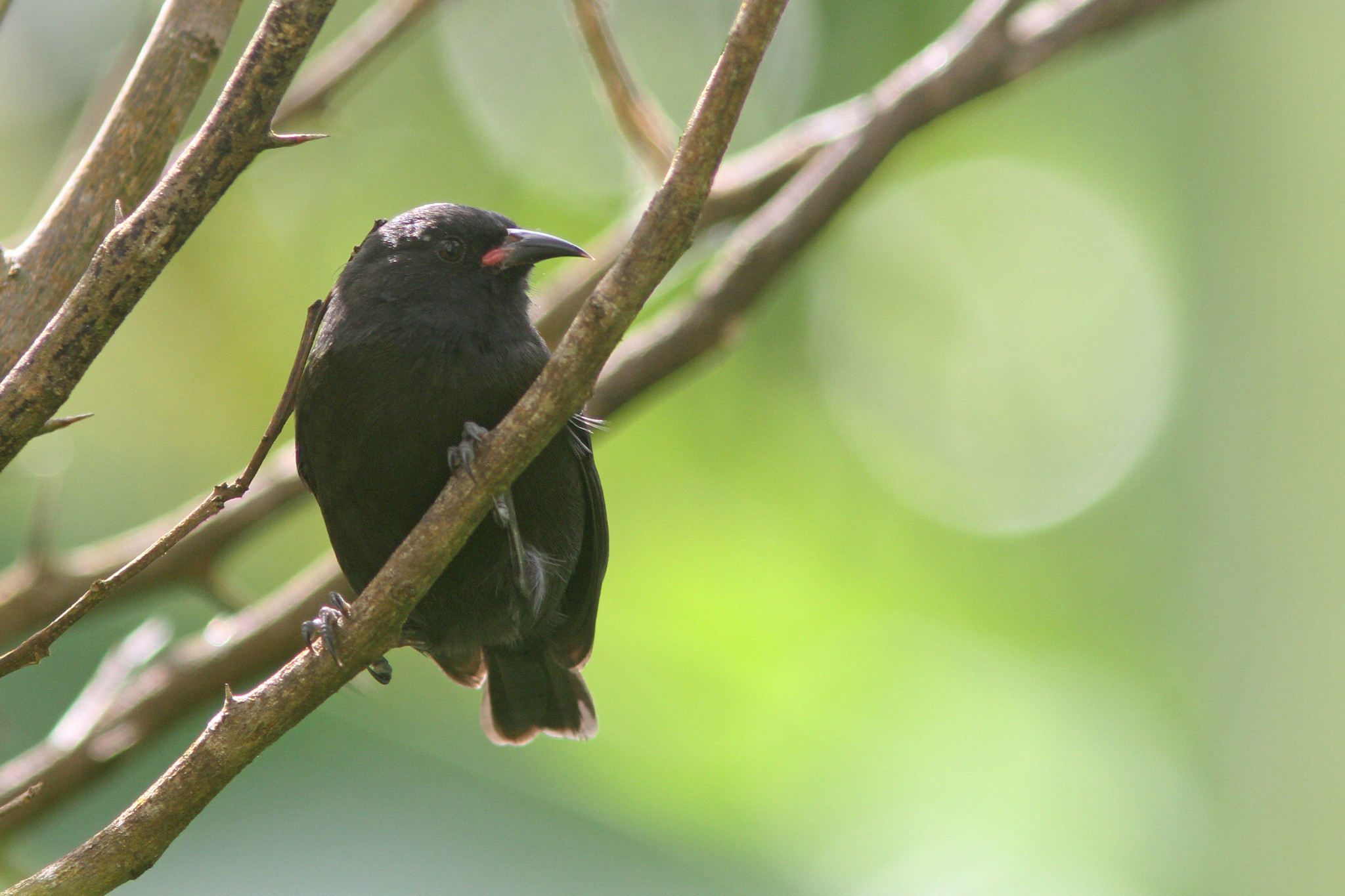
Bananaquit (Grenada), private residence, Grenada, Dec 15, 2017
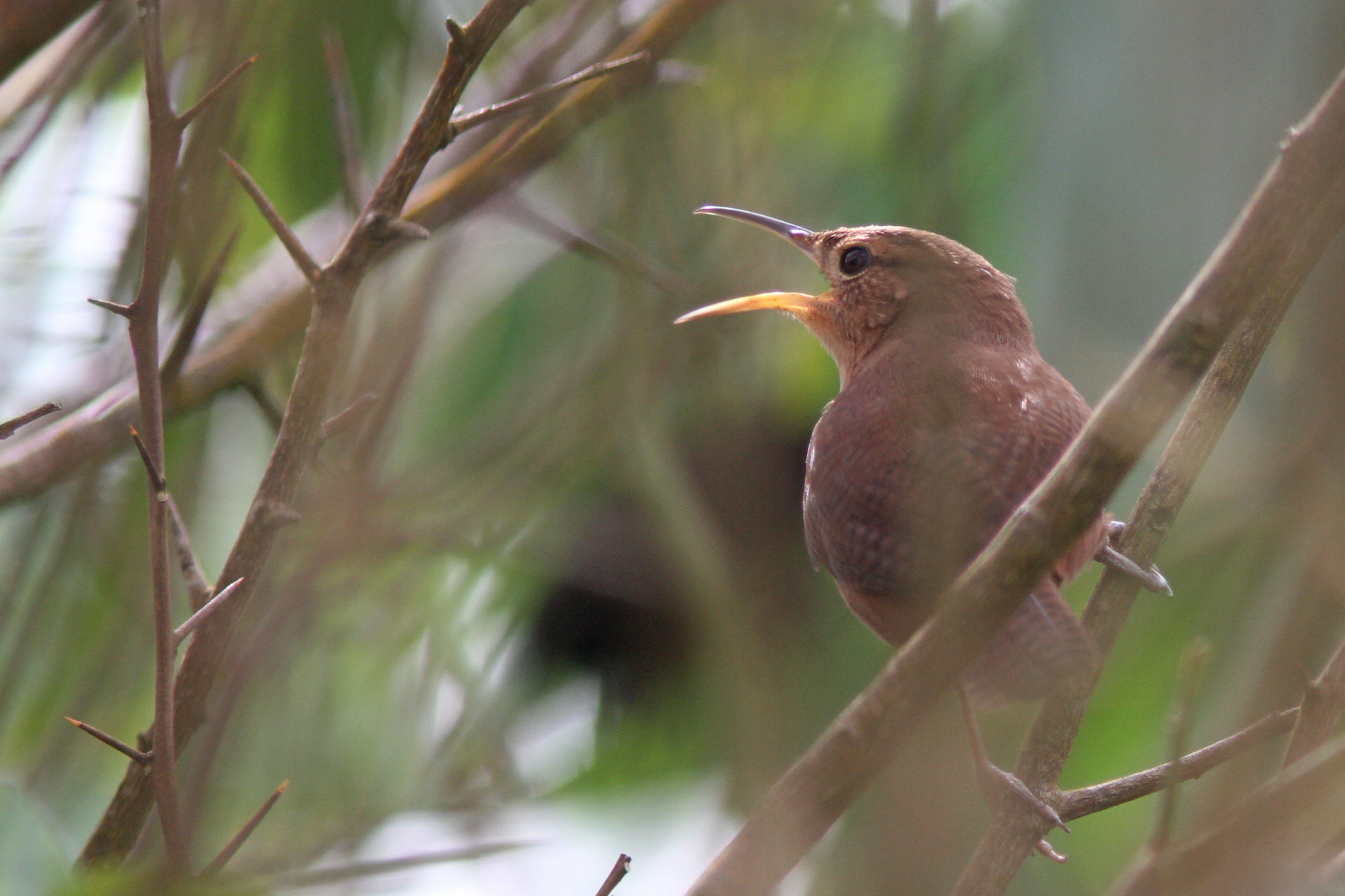
House Wren (Grenada), private residence, Grenada, Dec 15, 2017
Lesser Antillean Tanager, Morne Gazo Forest Reserve, Grenada, Dec 15, 2017
La Sagesse Beach area, Grenada, Dec 15, 2017
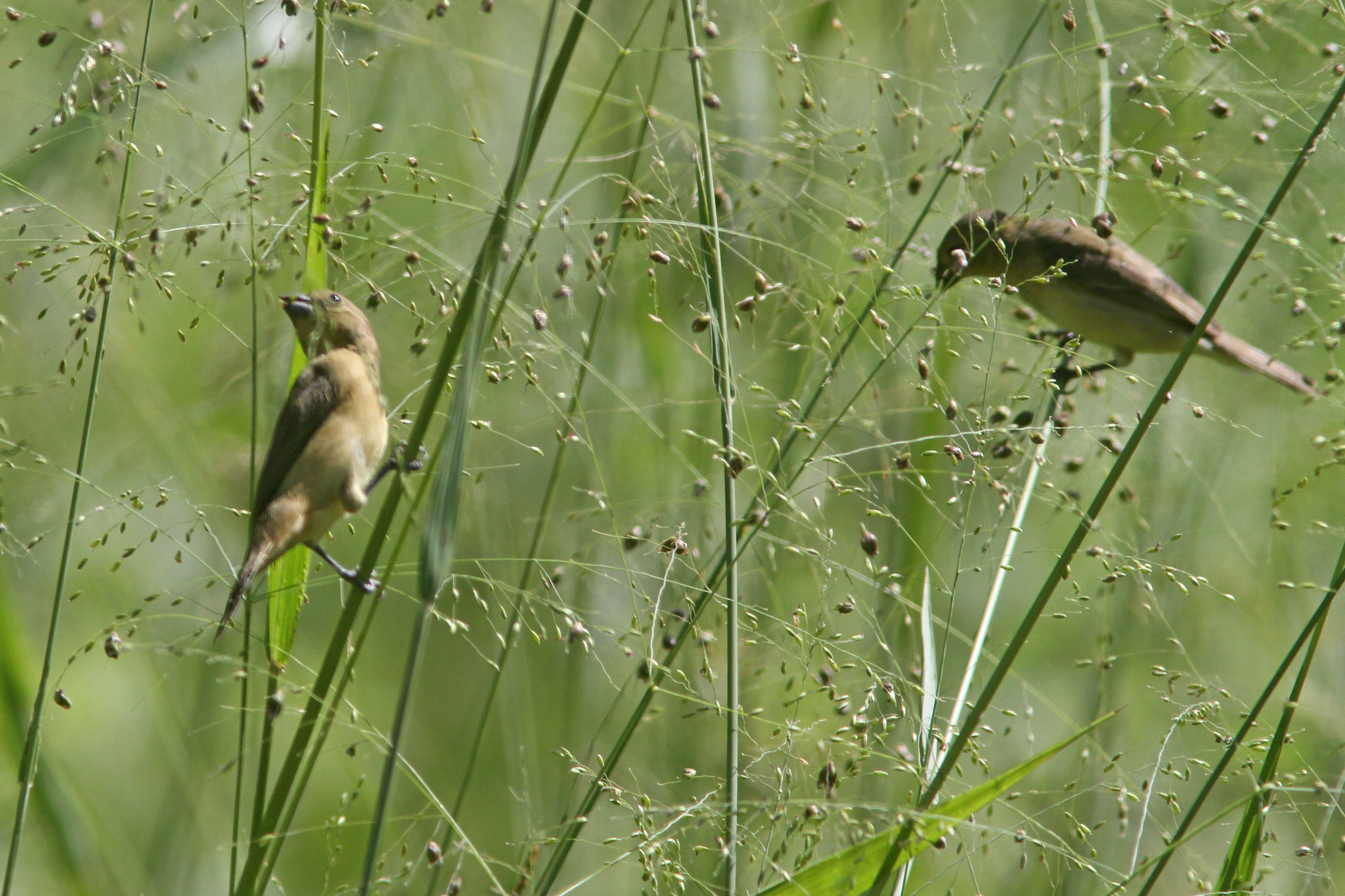
Yellow bellied Seedeaters, road to La Sagesse Beach, Grenada, Dec 15, 2017
The final stop was to the island of Grenada where I hoped to track down the endemic and critically endangered Grenada Dove as well as a few other range limited species. After a bit of a snafu first thing in finding the guide I eventually caught up with Anthony Jeremiah (Jerry) and we were quickly headed off to Mount Hartman Dove Sanctuary where arrived and quite quickly had a Grenada Dove calling in among the dense, thorny cover. We eventually flushed two more doves but getting a good view was just not in the cards despite much effort. Quite a few other species around including Grenada Flycatcher, Yellow bellied Elaenia and my first look at the all black Bananaquits (present only on Grenada and St Vincent). We then continued a bit further east to a small wetland which produced a number of shorebird species including a tagged Ruddy Turnstone (I wasn't able to get a good enough look to read the tag). Our next stop was the area of La Sagesse Beach where we had some grassland species on the way to the beach including dozens of Yellow bellied Seedeaters. The mangroves near the beach turned up a few shorebirds plus a decent selection of waterfowl. The beach itself was quite nice and secluded with very few people around. We left the beach by early afternoon and headed up to Jerry's house to check out his yard and try for a few more target species. We immediately found a Rufous breasted Hermit coming into the feeders along with loads of Bananaquits, Lesser Antillean Bullfinch's, Antillean Crested Hummingbirds and brief looks at Lesser Antillean Tanagers. Before making one last attempt at getting better views of Grenada Dove we stopped briefly at a new forest reserve (Morne Gazo Forest Reserve) to try to get better looks at the tanagers and we succeeded quickly. Our return to the dove reserve produced just a single dove calling and that was it. A productive day with four life birds: Grenada Dove, Grenada Flycatcher, Rufous breasted Hermit and Lesser Antillean Tanager (#1322-1325). Link to all the photos from day on Grenada. If you are going to Grenada I highly recommend contacting Anthony Jeremiah to be your guide, he can be contacted at tonydove200@yahoo.com.

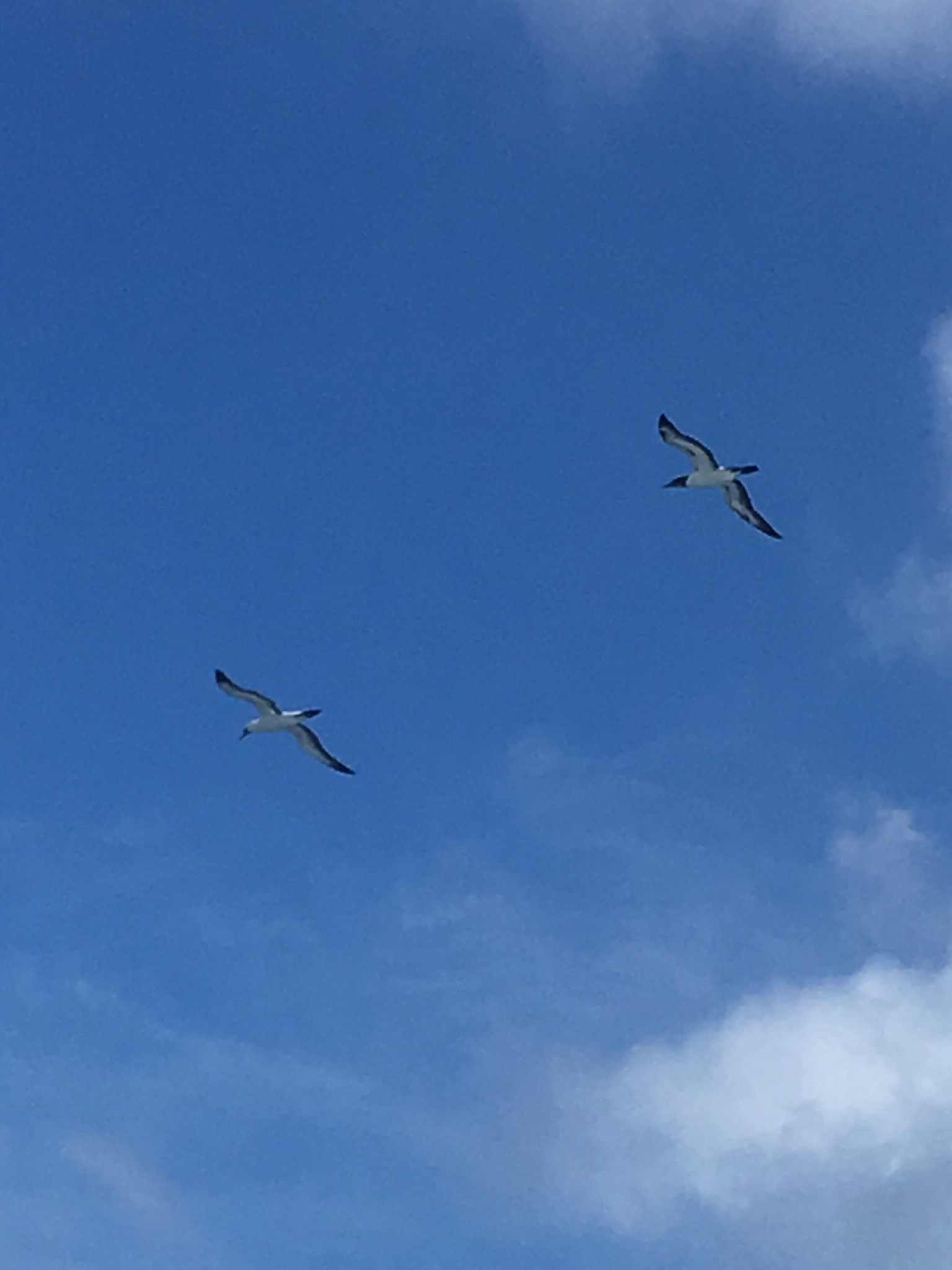
Masked Boobies, Caribbean Sea, Dec 16, 2017
The last full day was spent at see and a bit of seawatching turned up a single Audubon's Shearwater and a couple of Masked Boobies that hung around the ship for almost an hour.

A total of 80 species for the trip with 18 of those life birds. I got most of my target birds but did miss a handful which I will hopefully pick up on future visits to the islands of the Lesser Antilles. Each island on the trip produced the following total species:

Saint Kitts: 23
Antigua: 27
Martinique: 30
Barbados: 23
Grenada: 45

All photos from the entire trip here:  Eastern Caribbean cruise