Saturday, June 6, 2026

Breeding Bird Survey completed this morning

Great Blue Heron
Great Blue Heron, Breeding bird survey stop #9, Ware, MA, Jun 6, 2026
White tailed Deer
White tailed Deer, Breeding bird survey stop #21, Palmer, MA, Jun 6, 2026
Prairie Warbler
Prairie Warbler, Breeding bird survey stop #34, Monson, MA, Jun 6, 2026
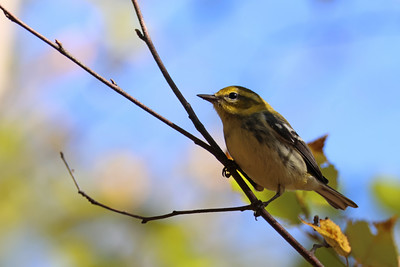
Northern Yellow Warbler
Northern Yellow Warbler, Breeding bird survey stop #40, Monson, MA, Jun 6, 2026
Sawmill Brook
Sawmill Brook, Breeding bird survey stop #42, Monson, MA, Jun 6, 2026
Farm fields
Farm fields, Breeding bird survey stop #29, Monson, MA, Jun 6, 2026
UMASS orchard
UMASS orchard, Breeding bird survey stop #3, Belchertown, MA, Jun 6, 2026

Although I usually try to run by annual breeding bird survey route on a Sunday the forecast looked better for Saturday so I ran it today.  With our weekends always seeming to produce less than stellar weather I did not want to take a chance and wait for a later Sunday in June.  Breeding bird surveys are long term studies to look at breeding species along a 25 mile route with three minute stops every 1/2 mile.  The survey starts early (4:42AM) so being a morning person certainly helps!  This was my 17th consecutive year conducting this route that starts in Belchertown and continues south to the Connecticut state line.  Although not a record breaking year for species I still had a good showing with a total of 75 species.  The top five species as far as being recorded at the most stops included  American Robin (40 stops), Gray Catbird (31 stops), Ovenbird (30 stops), American Crow (29 stops) and Red eyed Vireo (28 stops).  No new species for the route this year so my total whole conducting the route still stands at 114 species.  Full trip report at the following link: BBS 2026 trip report.


Below is table of each year I have conducted the survey with # of species seen and date of survey

year            # of species            date of survey 
2010             71                         June 20 
2011             64                         June 26 
2012             56                         June 3 
2013             67                         June 23 
2014             70                         June 15 
2015             75                         June 14 
2016             78                         June 19 
2017             73                         June 22 
2018             71                         June 22 
2019             83                         June 9 
2020             76                         June 14 
2021             71                         June 19 
2022             78                         June 5 
2023             77                         June 25 
2024             84                         June 2
2025             77                         June 8
2026             75                         June 6


Thursday, June 4, 2026

An oddly plumaged bright yellow Scarlet Tanager found while conducting field bird surveys on the Prescott Peninsula

Scarlet Tanager with pigment issue
Scarlet Tanager with pigment issue, Prescott Peninsula, New Salem, MA, Jun 4, 2026
Scarlet Tanager with pigment issue
Scarlet Tanager with pigment issue, Prescott Peninsula, New Salem, MA, Jun 4, 2026
Scarlet Tanager with pigment issue
Scarlet Tanager with pigment issue, Prescott Peninsula, New Salem, MA, Jun 4, 2026
Scarlet Tanager with pigment issue
Scarlet Tanager with pigment issue, Prescott Peninsula, New Salem, MA, Jun 4, 2026
Scarlet Tanager with pigment issue
Scarlet Tanager with pigment issue, Prescott Peninsula, New Salem, MA, Jun 4, 2026
Scarlet Tanager with pigment issue
Scarlet Tanager with pigment issue, Prescott Peninsula, New Salem, MA, Jun 4, 2026
Prairie Warbler
Prairie Warbler, Prescott Peninsula, New Salem, MA, Jun 4, 2026
Indigo Bunting
Indigo Bunting, Prescott Peninsula, New Salem, MA, Jun 4, 2026
Black capped Chickadee carrying food
Black capped Chickadee carrying food to nest, Prescott Peninsula, New Salem, MA, Jun 4, 2026
Black capped Chickadee nest
Black capped Chickadee nest, Prescott Peninsula, New Salem, MA, Jun 4, 2026
Post burn
Post burn, Prescott Peninsula, New Salem, MA, Jun 4, 2026
First post surgery walk
First post surgery walk for Wilson, Belchertown, MA, Jun 4, 2026

I made it on to the restricted Prescott Peninsula at Quabbin to conduct the first of my field bird surveys for the year.  It is part of an ongoing study of the small remaining fragments of farm fields left on the peninsula.  On the vast peninsula some of these small fields hold the only populations of a number of species of bird on the peninsula that require more open areas.  It was beautiful weather with clear skies, no wind and low humidity.  I started my surveys a little before five and then stayed on the peninsula for the next two and half hours completing most of the field locations.  The usually most productive and largest field recently had a prescribed burn done.  It will be interesting to see the impact (if any) that comes from the burn.  Most of the species I would expect to be present were indeed present so no major impact for this year beyond the density of a few species are lower likely due to a reduction in available cover and breeding locations.  One of the oddest finds happened while surveying the fields where an old observatory once stood.  I saw a yellow bird flying high from tree to another and expected it to be an oriole but instead I saw a bright yellow overall bird with jet black wings...a male Scarlet Tanager with some type of pigment issue.  The yellow was not the dull yellow of a fall plumaged bird but instead seemed more like the bright yellow one would see on a Western Tanager.  I have seen a few adult male Scarlet Tanager over the years that have a less vibrant red color, to the point of looking more orange.  The individual today was unlike any I have ever seen.  I poked around a bit to see what I could find regarding the likelihood of this plumage abnormality and did not find much.  David Sibley wrote a short article about it...link here: yellow Scarlet Tanager and it is interesting he lives not too far away and his article also mentioned another one in Washington, MA the same year.  Perhaps this area of western Massachusetts hosts a population more inclined to have this abnormality?   A very cool looking individual and one I hope to relocate on subsequent surveys.  I made a couple other stops before heading home to pick up Wilson for his first real post surgery walk and he did well.

Monday, June 1, 2026

Great Cormorant to start off June

Great Cormorant
Great Cormorant, Holyoke Dam, South Hadley, MA, Jun 1, 2026
Great Cormorant with Double crested Cormorant
Great Cormorant and Double Crested Cormorant, Holyoke Dam, South Hadley, MA, Jun 1, 2026
Great Cormorant
Great Cormorant, Holyoke Dam, South Hadley, MA, Jun 1, 2026
Eastern Towhee
Eastern Towhee, Quabbin Park, MA, Jun 1, 2026
American Redstart
American Redstart, Quabbin Park, MA, Jun 1, 2026
Hooded Mergansers
Hooded Mergansers, Lake Wallace, Belchertown, MA, Jun 1, 2026
Winsor Dam
Winsor Dam, Quabbin Park, MA, Jun 1, 2026

June started out with some great birds around and I was able to catch up with one rarity plus lots of other stuff.  Normally to start out a new month I would be out the door before dawn to add new species for the month but Wilson had surgery on Saturday and is still having some issues so I stuck around home until I knew my boy was good (he is slowly improving).  Eventually I made it out and made a few stops including a spot in Ware, Quabbin Park and Lake Wallace before I returned home.  Early in the afternoon I saw some reports of rarities including a Red necked Phalarope in the river in Hadley and then a Great Cormorant at the Holyoke Dam (found by Ted).  With Wilson doing better I decided to try for the Great Cormorant as I figured that would be the more likely rarity to be relocated.  I drove down to the dam arriving a little after one and walked to just above the dam to scan the buoys.  The Great Cormorant was the last of the cormorants in line perched on the numerous buoys.  Even without looking at other field marks the size difference compared to the multiple Double crested Cormorants was readily apparent.  I got a series of photos and videos through the scope and then let other know the bird was still present.  Great Cormorant is a rare species inland in Massachusetts and even rarer in spring with most records being in the later part of fall with only one spring record before today (at least in eBird).  This is only my fourth Hampshire County record of the species with the others being October 2004 at Arcadia, October 2008 at Quabbin Gate 5 and November of last year at Winsor Dam.  There are other recent fall records for the species in the area but I missed those as I was out of the country when they showed up.  Despite not being able to cover as many areas as I typically would to start off the month I still managed 97 species for the day...not too bad as far I'm concerned.


Sunday, May 31, 2026

Poverty Mountain bird survey ends out May

Red tailed Hawk
Red tailed Hawk, Pelham, MA, May 31, 2026
Eastern Phoebe
Eastern Phoebe, Pelham, MA, May 31, 2026
Common Yellowthroat
Common Yellowthroat, Shutesbury, MA, May 31, 2026
Pink Ladyslippers
Pink Ladyslippers, Pelham, MA, May 31, 2026
Adams Brook
Adams Brook, Shutesbury, MA, May 31, 2026

As is always the case May has gone by too fast and I ended the month assisting with the 21st year of the Poverty Mountain bird survey at Kevin and Cynthia's fantastic property in the corner of Amherst, Pelham and Shutesbury.  I stuck around the house longer than usual this morning to make sure Wilson was doing well enough after some surgery he had yesterday.  It was a tough afternoon and overnight for him (and us) but he had improved quite a bit so I headed out for a few hours to assist with the count.  It was not the highest count but not too bad given the cold weather to start the day.  I found a total of 50 species for the count and I'm sure a few other species got added by others elsewhere.  
Eastern Bluebird nestlings
Eastern Bluebird nestlings, Home, Belchertown, MA, May 31, 2026
Hooded Merganser eggs in duck box #2
Hooded Merganser eggs in duck box #2, Home, Belchertown, MA, May 31, 2026
Eastern Bluebird fledglings
Eastern Bluebird fledglings, Home, Belchertown, MA, May 31, 2026

Once back home late in the morning I checked the nest boxes and found some very freshly hatched Eastern Bluebirds and the Hooded Merganser still sitting on eggs in duck box #2.  I also have a Gray Catbird on a nest in some of the low bushes near the house.  A check of the camera on the water feature turned up a number of captures including at least three Eastern Bluebird fledglings.

Overall the month was fairly productive with 168 species in Hampshire County, which is slightly below usual but it did produce my first new Hampshire County species for the year with a Loggerhead Shrike a couple days ago. 


Saturday, May 30, 2026

More shorebirds on a cool, windy and rainy day

Black bellied Plover
Black bellied Plovers, Honey Pot, Hadley, MA, May 30, 2026
Black bellied Plover
Black bellied Plovers, Honey Pot, Hadley, MA, May 30, 2026
Black bellied Plover
Black bellied Plovers, Honey Pot, Hadley, MA, May 30, 2026
Black bellied Plover
Black bellied Plovers, Honey Pot, Hadley, MA, May 30, 2026
Song Sparrow
Song Sparrow, Honey Pot, Hadley, MA, May 30, 2026
Eastern Coyote
Eastern Coyote, Honey Pot, Hadley, MA, May 30, 2026
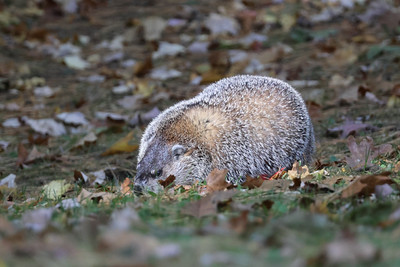
Groundhog
Groundhog, Honey Pot, Hadley, MA, May 30, 2026
Winsor Dam
Winsor Dam, Quabbin Park, MA, May 30, 2026

The forecast for today was not great with near record cold for highs, wind and rain.  Today was suppose to be the date for the annual Poverty Mountain bird survey but with the forecast the survey got pushed to tomorrow.  When I woke up this morning I expected rain and instead found mainly clear conditions with a breeze.  The radar didn't show any rain nearby so I first headed over to Winsor Dam and the wind was certainly up there and viewing was not easy due to the wind.  With nothing of note there and strong winds I decided to make the drive back over to the Honey Pot in Hadley to try my luck in relocating the Loggerhead Shrike seen there yesterday.  The wind was much less there to start with a mix of sun and clouds.  I decided to walk out on the dike and use the scope to scan as many spots as I could for the shrike.  Although I had no luck finding the shrike for the day the stop was well worth the effort with a number of unusual species including a silent flyby group of Black bellied Plovers that cut across the fields and continued north in the ever increasing winds.  When I made it out to the shore of the river and started my walk back I heard a shorebird calling as it flew overhead headed north.  I could not place it right away and got a recording as it quickly moved off.  I only got brief looks at it as it was going away in bad light and could not pin down an ID.  I had thoughts of trying some other spots but the clouds rapidly closed in and the light rain started as the temperatures continued to drop.  The flyover shorebird that I got a recording of had me thinking of a few different species and all would be rare.  I sent the recording off to a few people including Ted, Mary and Aaron and the overall consensus was that the bird was a Ruddy Turnstone.  Amazing to get another Ruddy Turnstone after having one at Winsor Dam less than a week ago.  I made my way home to help get Wilson ready for a surgery he had to undergo and once he was on his way I eventually made my way over to Winsor Dam.  If I thought it was windy earlier that was nothing compared to my second stop at the dam for the day.  The water had white caps and there was a sustained wind of 30MPH with higher gusts...it was not comfortable to be outside in.  Initially there was just some sprinkles and as I scanned the water I came up with some gulls including one Bonaparte's Gulls as well as multiple Double crested Cormorants.  I then caught sight of the first of several groups of shorebirds fighting the wind as they tried to move north.  I was able to ID some but others remained unidentified.  A another slug of rain then arrived and as it did so the wind increased even more and I would estimate there were some 50MPH gusts.  The flags sounded like they were about to break free and the recently installed scaffolding on the headquarters building was creaking a bit.  As heavier rain continued to move in I called it quits and headed home.

Friday, May 29, 2026

LOGGERHEAD SHRIKE today gets me a new Hampshire County species!

Somewhere out there is a Loggerhead Shrike 
Somewhere out there is a Loggerhead Shrike, Honey Pot, Hadley, MA, May 29, 2026

There are few times I'm able to add a new species to my Hampshire County list after many years of intense birding here but today was one of those days.  The day started out less than stellar when I headed out before dawn and immediately got an alert that one of my tires was low (probably picked up something in the tire during my trip east to successfully look for two target warblers yesterday out east...more on that here).  I got some air in the tire and the leak appeared to be slow so I headed over toward Amherst to get some birding in before the various tire places opened.  I tried multiple spots to get the tire fixed without any luck with most not having any openings until the following week.  Eventually I found a spot in Northampton that could get me in at noon.  I birded a bit more in the morning before heading home to get Wilson and we took a tick filled walk in Belchertown.  I headed over to Northampton for midday and dropped off the car to get the tire repaired and then walked down to my former workplace at the fire department and caught up with some old friends.  While I was there I got a text that my car was done and not long after got a text from Joe saying he had a shrike at the Honey Pot in Hadley.  Given the date the chances of it being a very rare Loggerhead Shrike was almost more likely than a Northern Shrike (which occurs here in winter).  I visited a bit more before walking back to pick up my car and then heading out.  I almost immediately got stuck in traffic in Northampton (almost like I was back in eastern mass again!).  Eventually I got out of it and made my way across the river and headed to the area Joe described in his text.  I arrived in the area of the transfer station and scanned a bit with seeing nothing.  I was quickly joined by Joe and Theresa who said the bird had just flown into the area I was in just before I arrived (damn the traffic getting here!).  We scanned for a bit and eventually both Theresa and I had brief looks at the shrike as it flew.  Despite much effort from various vantage points we were never able to relocate the bird.  The ever increasing winds made it tough to see movement and the nearly innumerable potential perching points made relocating the bird tough to say the least.  After about an hour of scanning I finally gave up and headed for home.  With my brief look I could not have identified the bird without Joe's photos.  With the continued north winds and ever increasing chances of rain I don't think the bird will be too inclined to leave.  The tough part is that there are so many great spots for the species in the area and viewing different areas requires a decent amount of walking as the farm fields are all private and posted and the publicly accessible areas consist of the dike and the roads going through the area.   Loggerhead Shrike is a super rare species in the county with the last report being in the late 1980's.  There were some seen at more recently in Franklin County including one in June 2019 at the Turners Falls Airport and one in July 2022 at the Orange Airport.  Here is a link to Joe's checklist with some photos of this rarity: Loggerhead Shrike.  Much thanks to Joe in finding the bird and letting me know.  In the end the nail in my tire put me closer to the area at the right time proving that even bad things can lead to good things.

Wednesday, May 27, 2026

Two nights of Eastern Whip Poor Will surveys

Sunset 
Sunset, Goodnough Dike, Quabbin Park, MA, May 26, 2026

Although a bit sleep deprived with early mornings out birding and two back to back nights of Eastern Whip Poor Wills it has still been a great couple days as migration rapidly slows down.  On Monday I tried to get the first of my two surveys done but I was stymied by some downed trees on the restricted access Prescott Peninsula at Quabbin.  I usually try to check the route prior to attempting it but ran out of time so I made the attempt.  I ran across a few downed trees and finally got stopped short of my first stop by a couple miles.  I hope to be able to run the full route again in the near future but seeing I was already there I figured I would run the stops I could get to just in case I can't make another attempt.  The conditions were perfect with clear skies, moonlight and calm winds.  I had multiple Eastern Whip Poor Wills calling at the first few stops and then nothing on the northern parts of the peninsula (this is usually the case as the birds always seem to be on the southern and middle part of the peninsula).  Yesterday I completed the second route with a biologist from DCR.  Most of the route is in Quabbin Park and then continues south through Belchertown.  We had great conditions for the most part and had multiple Eastern Whip Poor Wills at most stops in the park.  I then added multiple more individuals as I continued the route through Covey WMA and beyond.  Conditions were very good with only one stop featuring any wind at all.  No photos of any of the whips but the sunset yesterday was spectacular.  I even managed to add another whip this morning at home when I headed out the door a little after four and had a whip singing...only my third record ever at the house.