Showing posts with label neighborhood nestwatch. Show all posts

Monday, June 3, 2019

Neighborhood Nestwatch year five

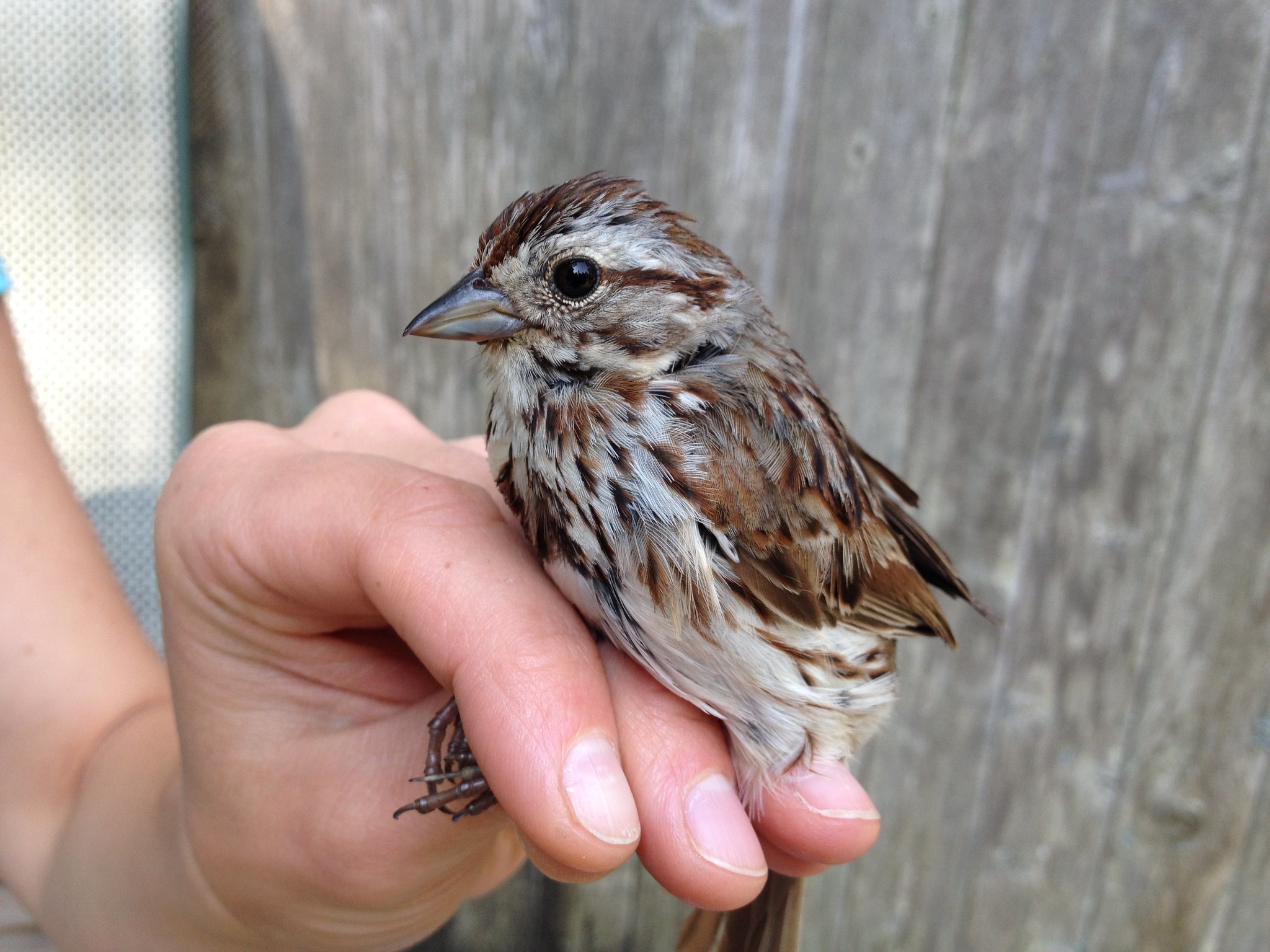
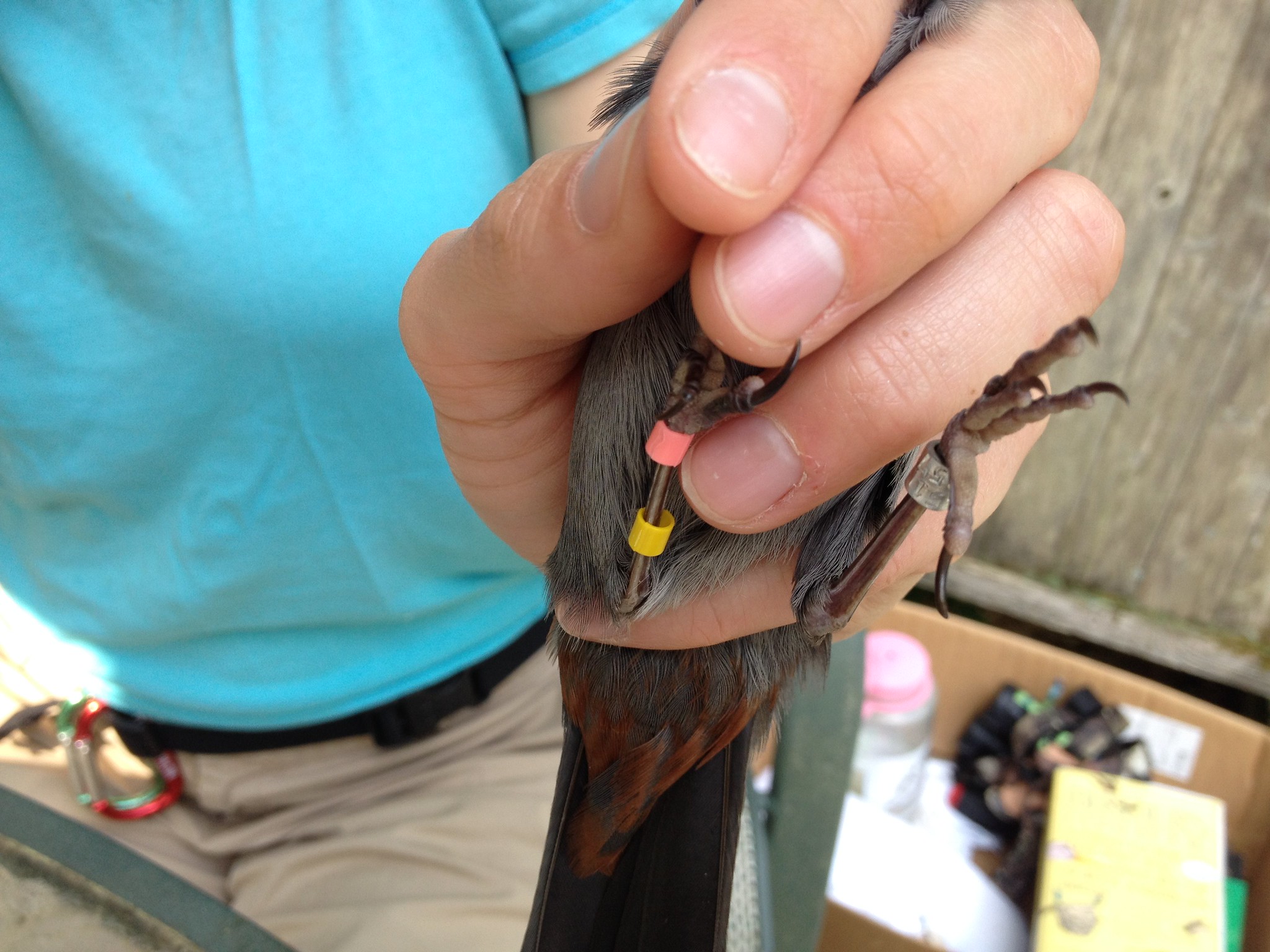
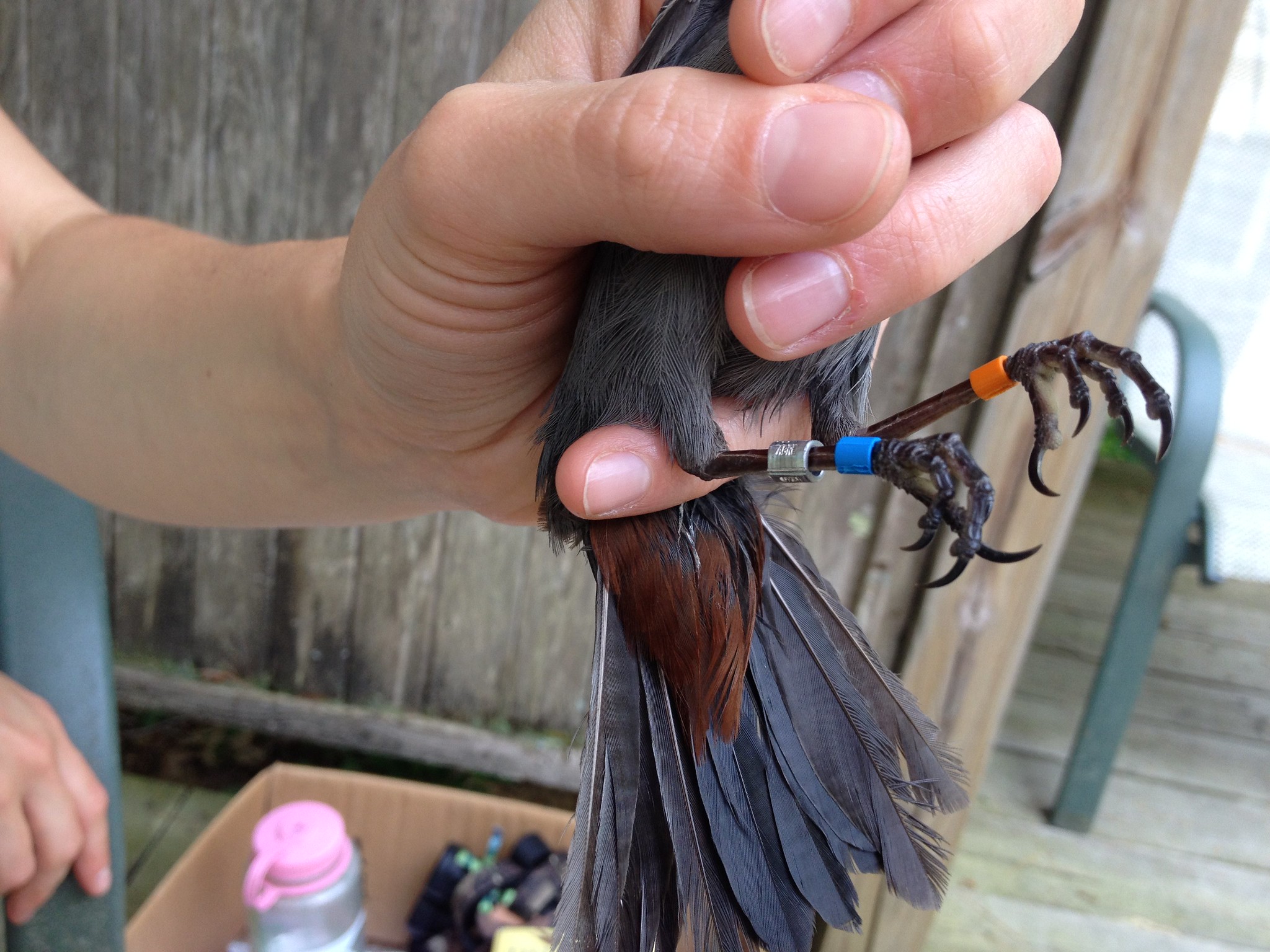
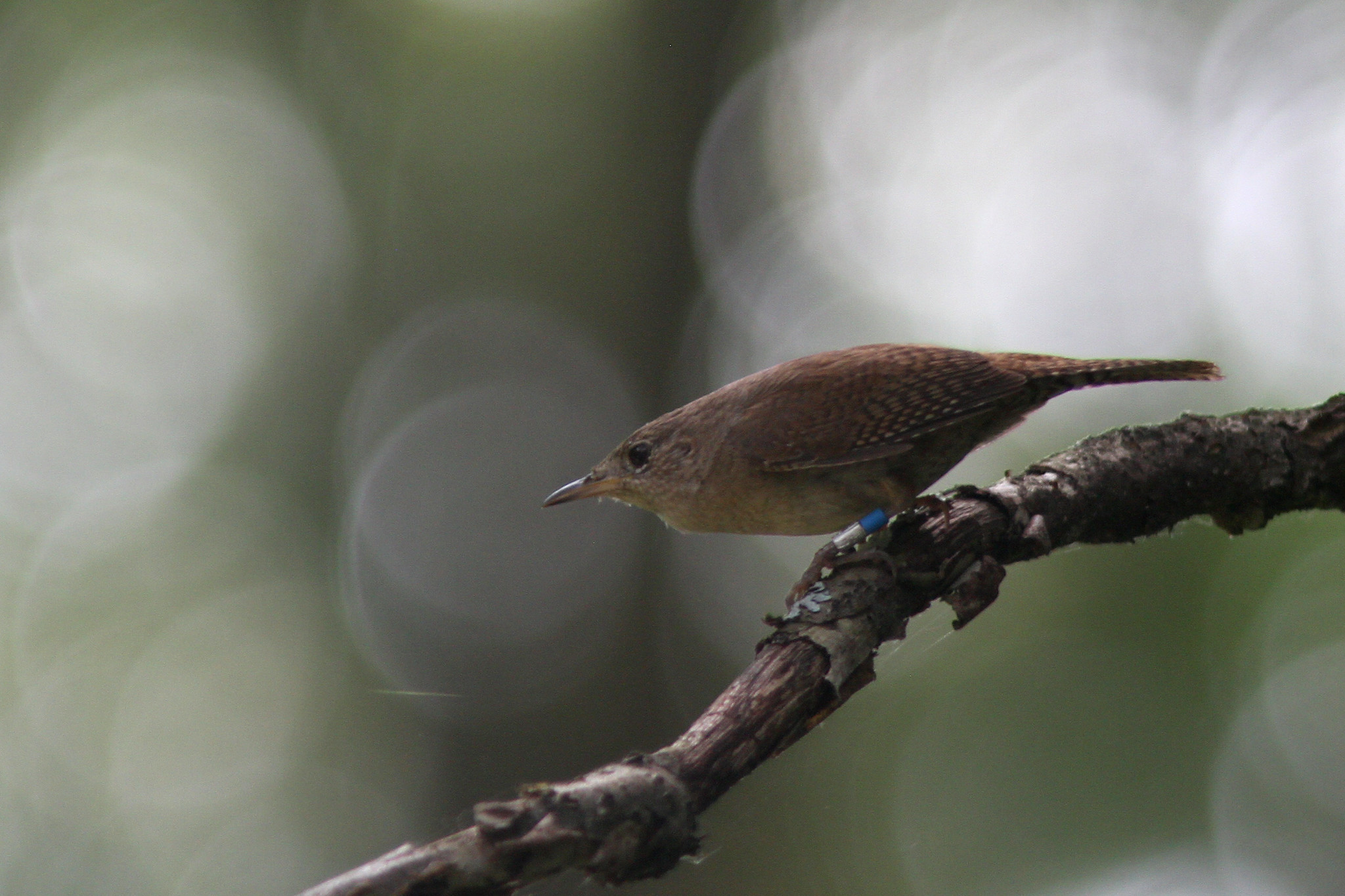
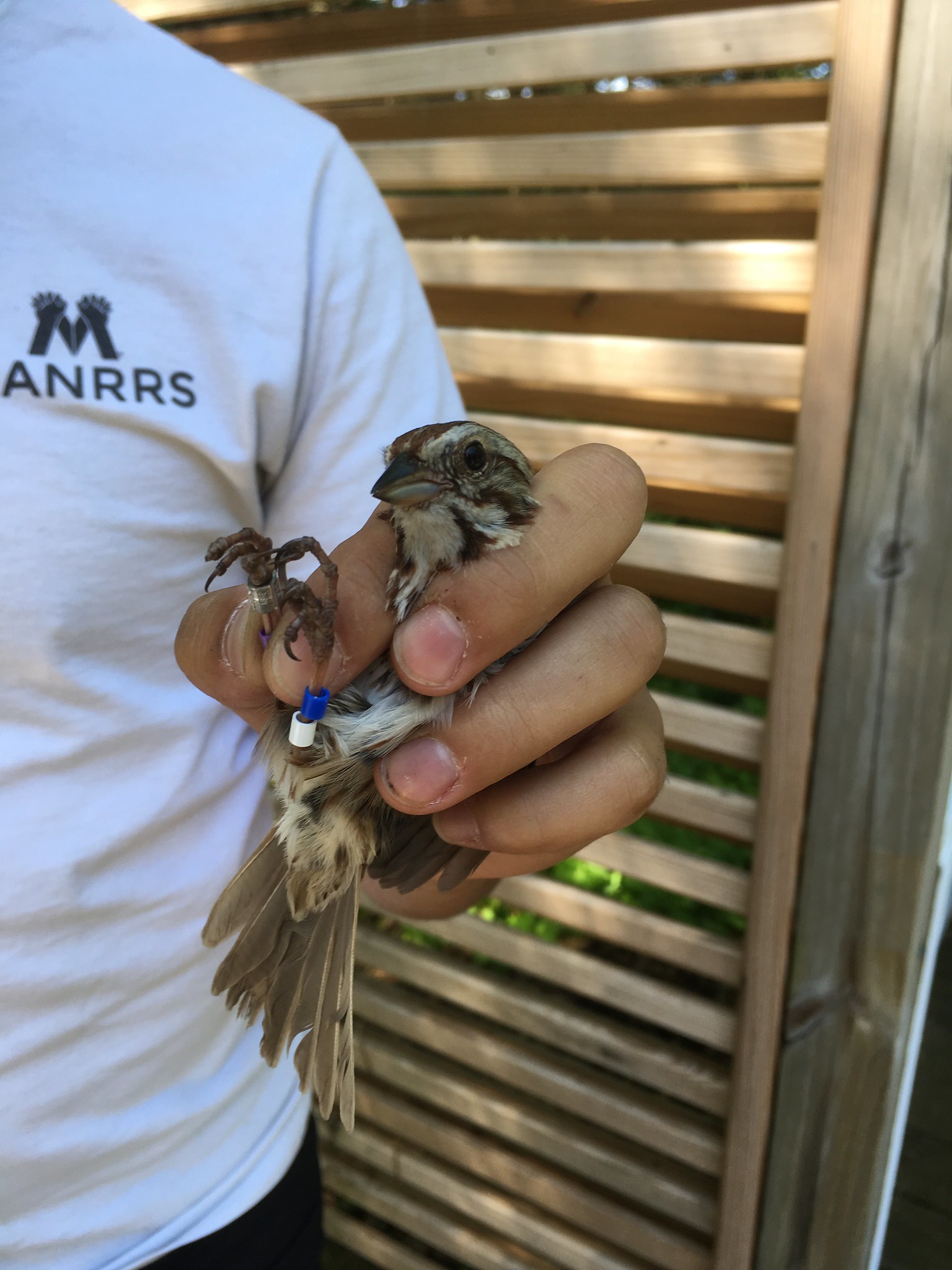
Song Sparrow with leg bands, Home, Belchertown, MA, Jun 3, 2019
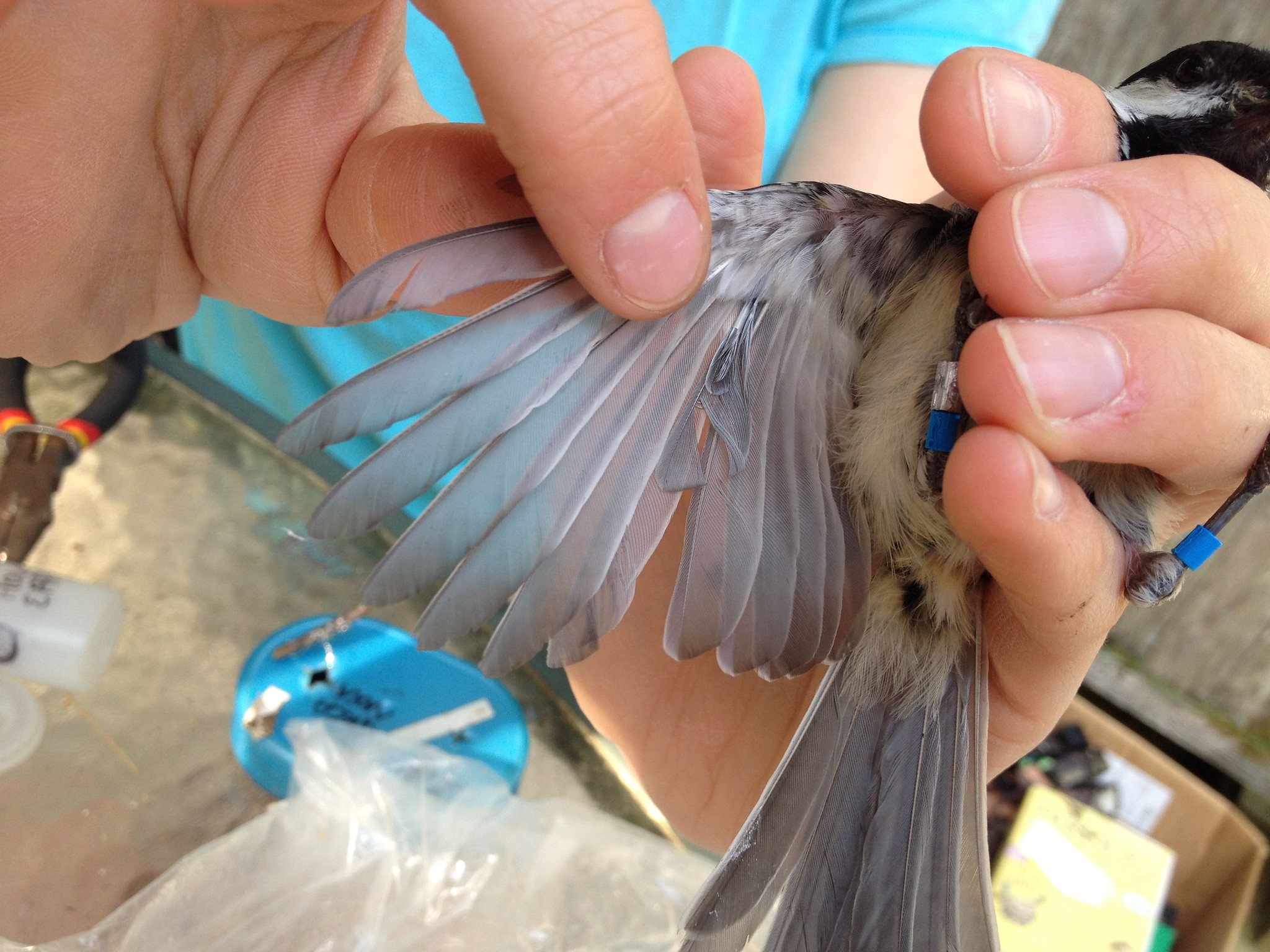
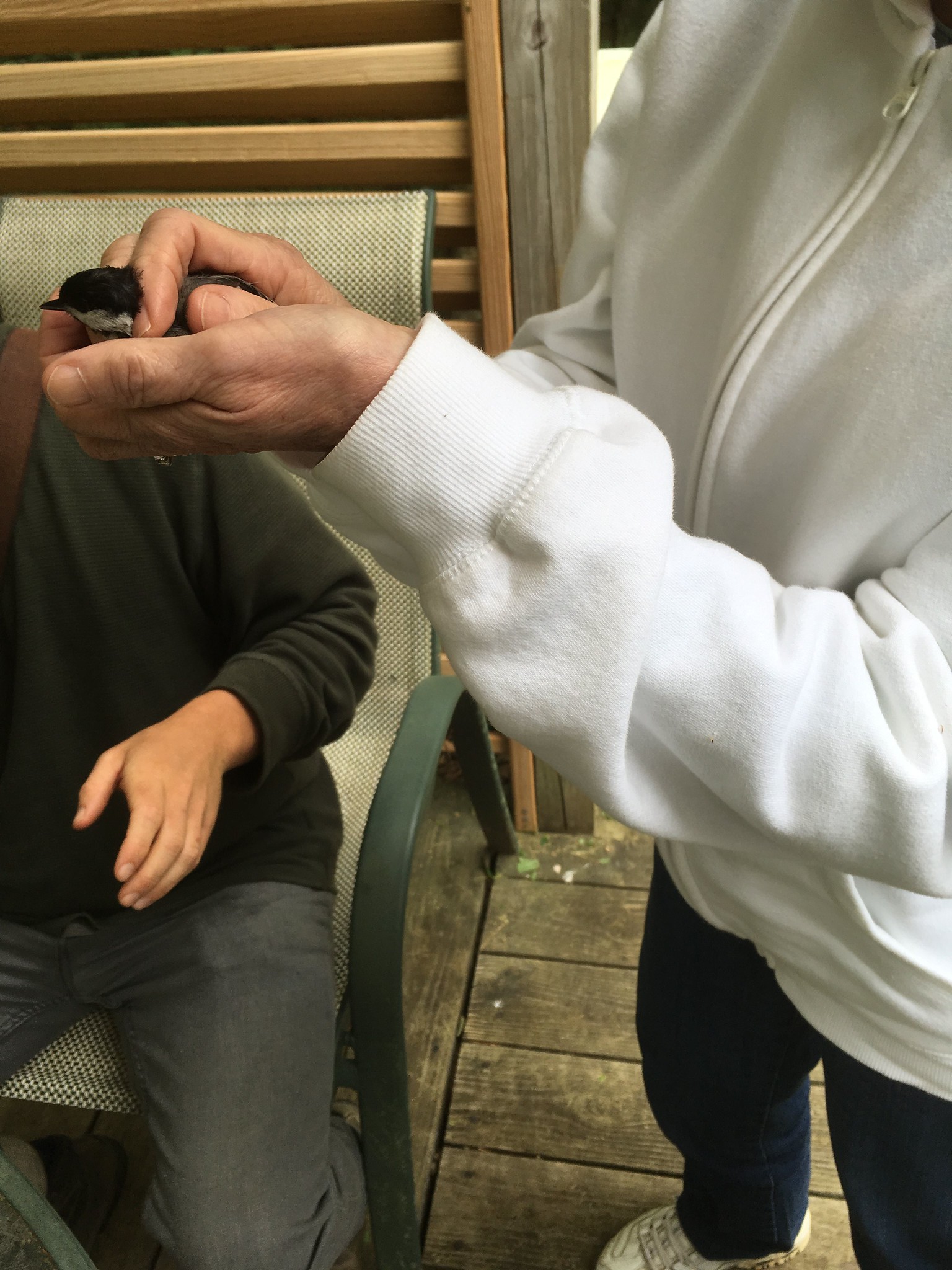
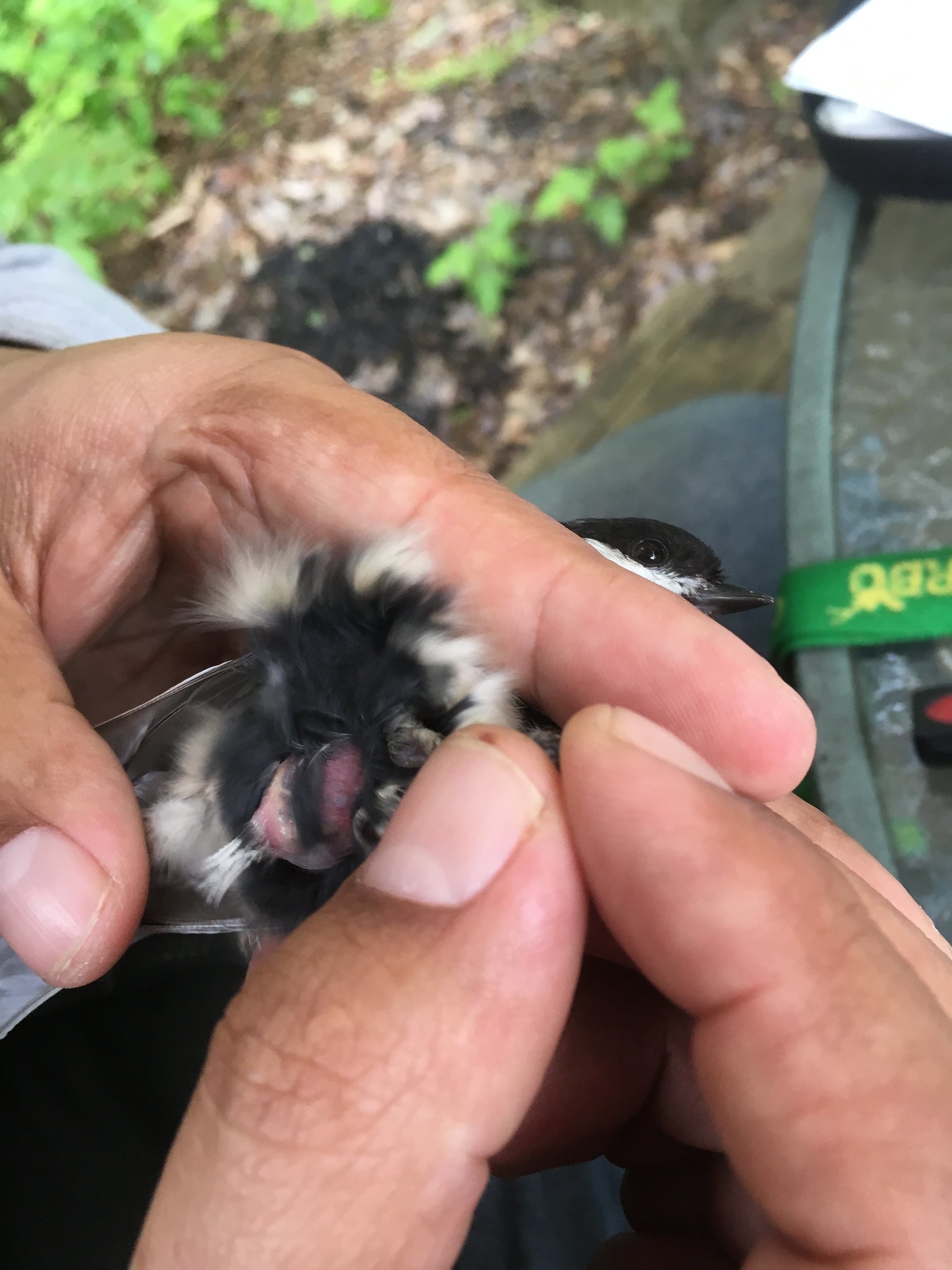
Black capped Chickadee with leg bands, Home, Belchertown, MA, Jun 3, 2019
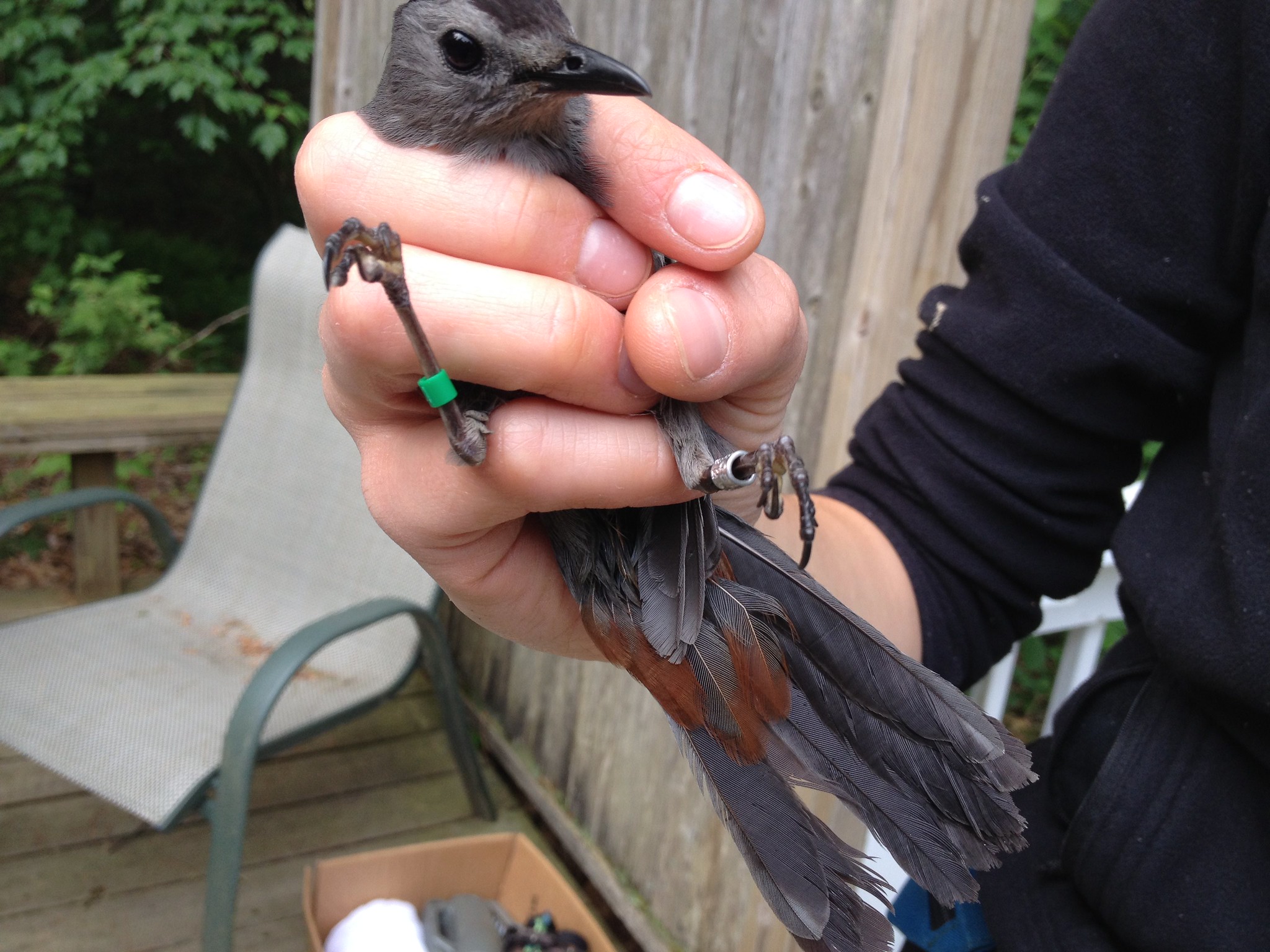
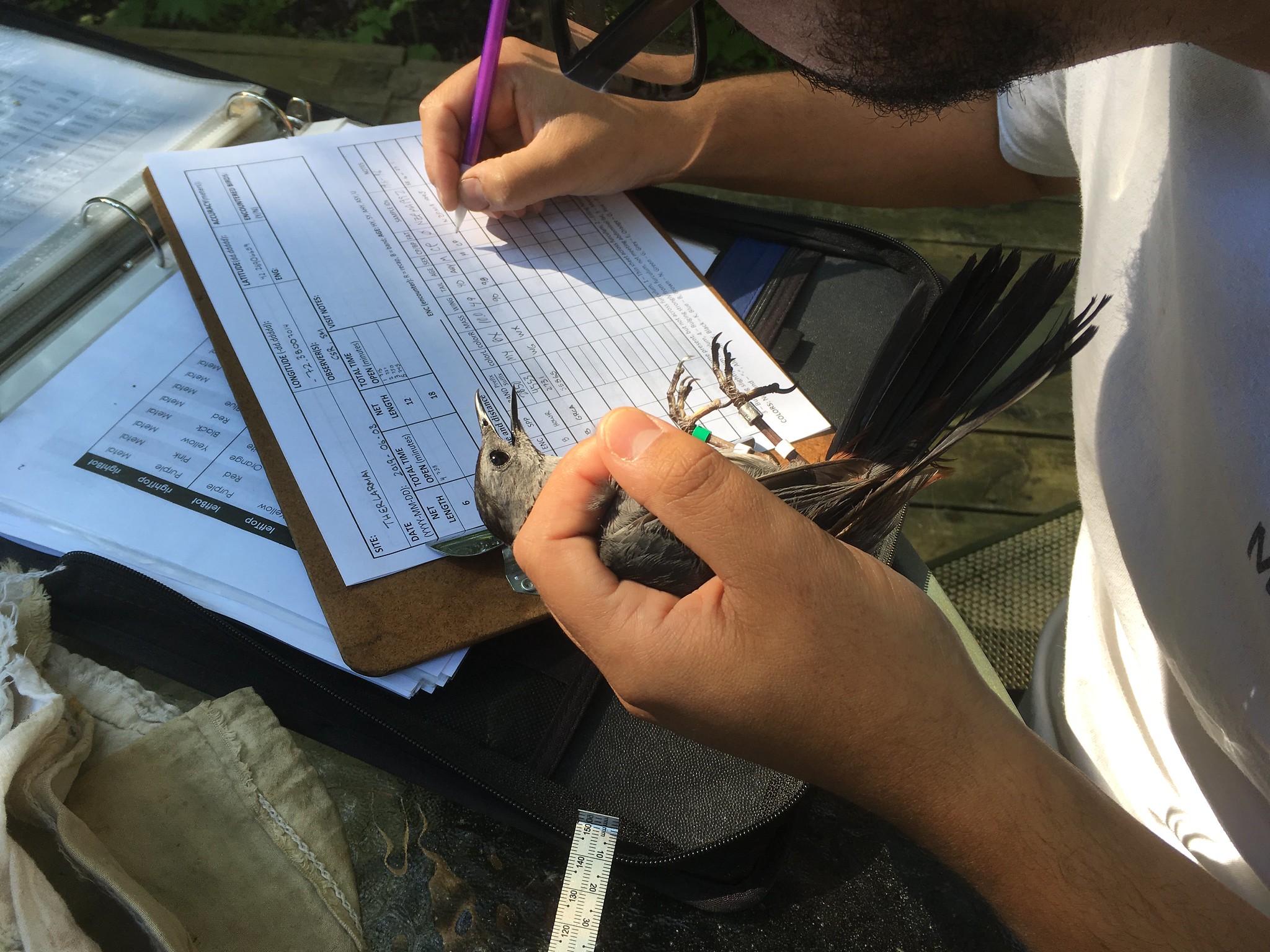
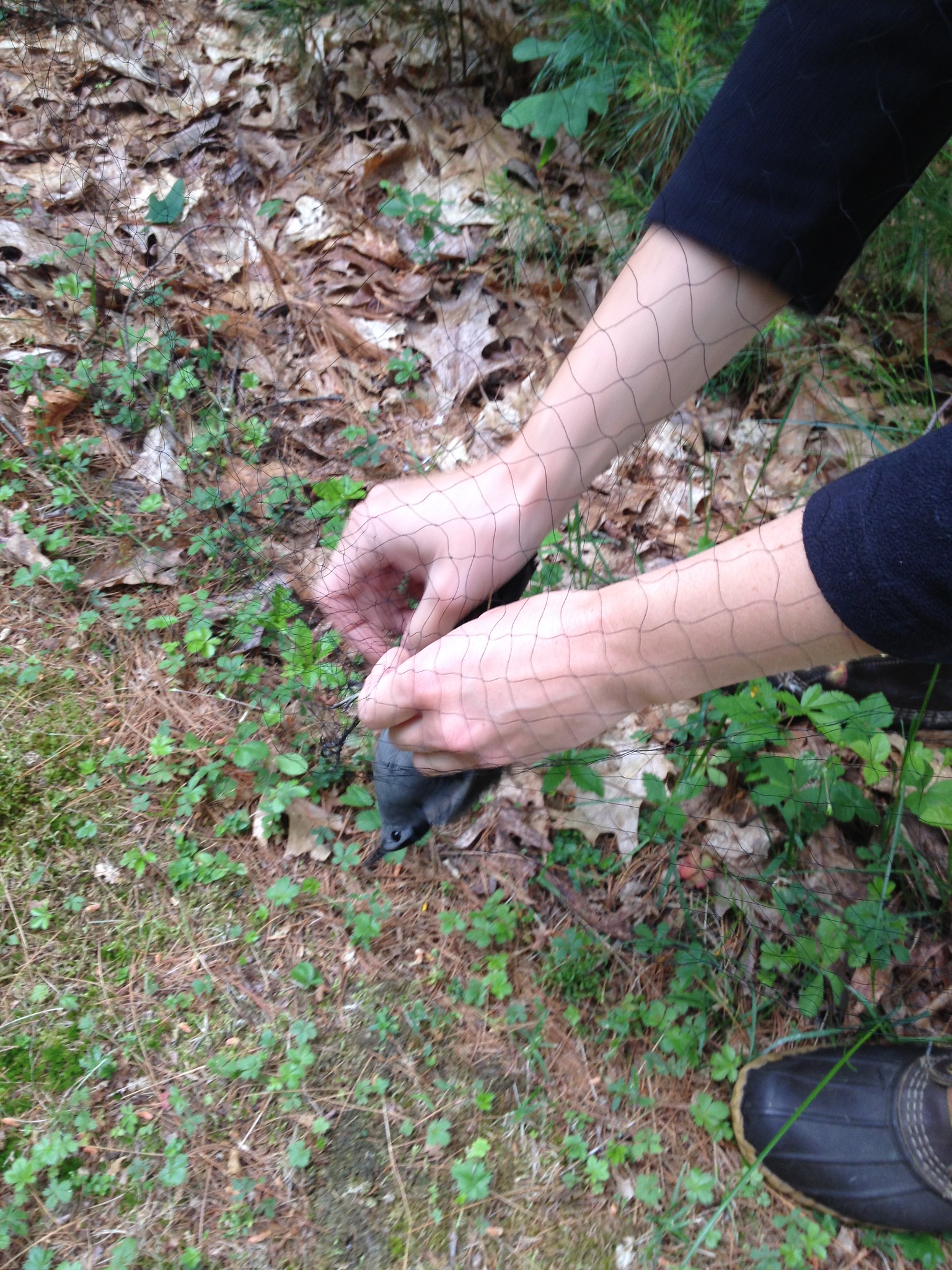
Gray Catbird with leg bands, Home, Belchertown, MA, Jun 3, 2019
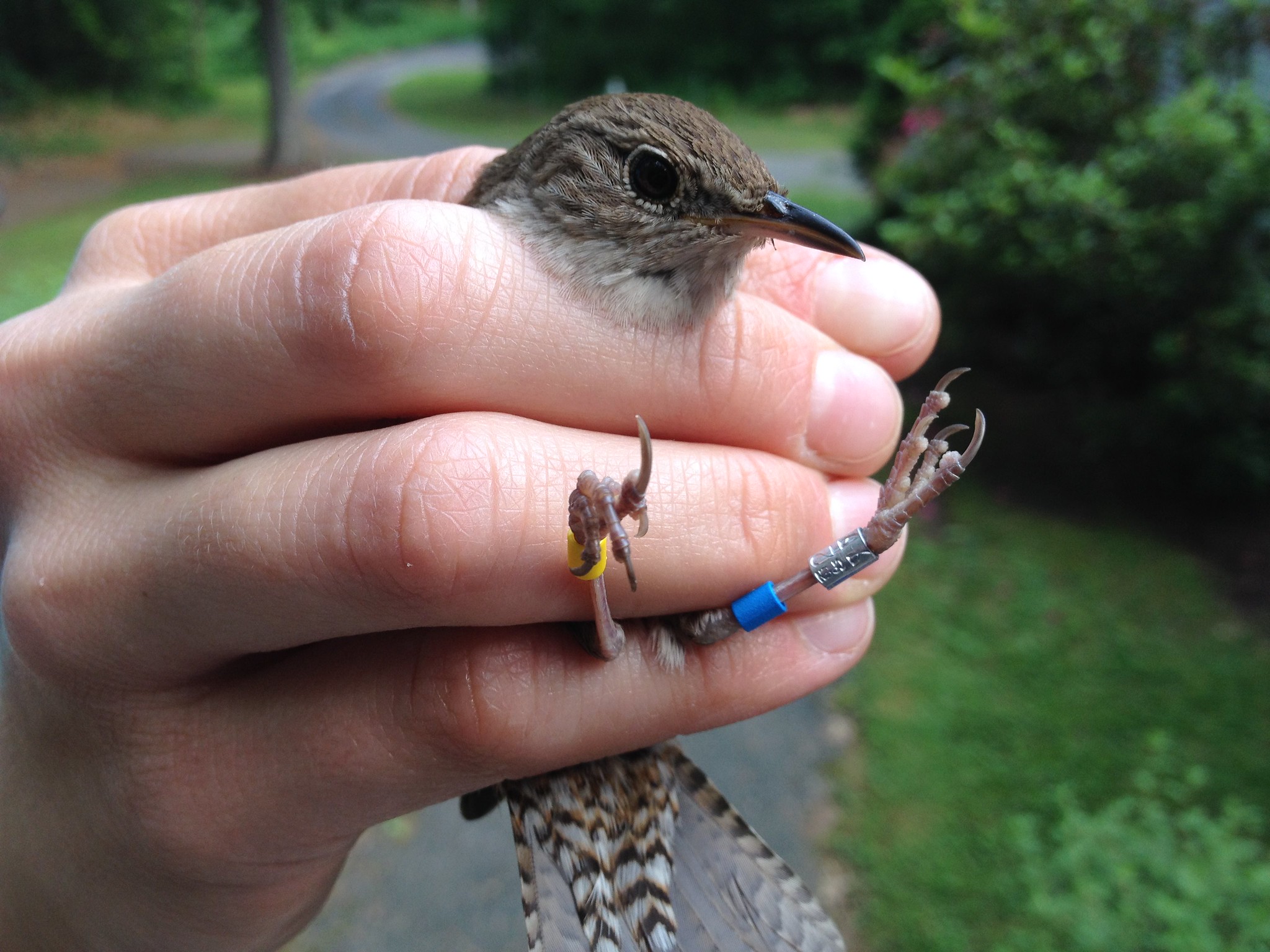
House Wren with leg bands, Home, Belchertown, MA, Jun 3, 2019
Pine Warbler, Home, Belchertown, MA, Jun 3, 2019
Hairy Woodpecker, Home, Belchertown, MA, Jun 3, 2019
Tufted Titmouse, Home, Belchertown, MA, Jun 3, 2019
Veery, Home, Belchertown, MA, Jun 3, 2019
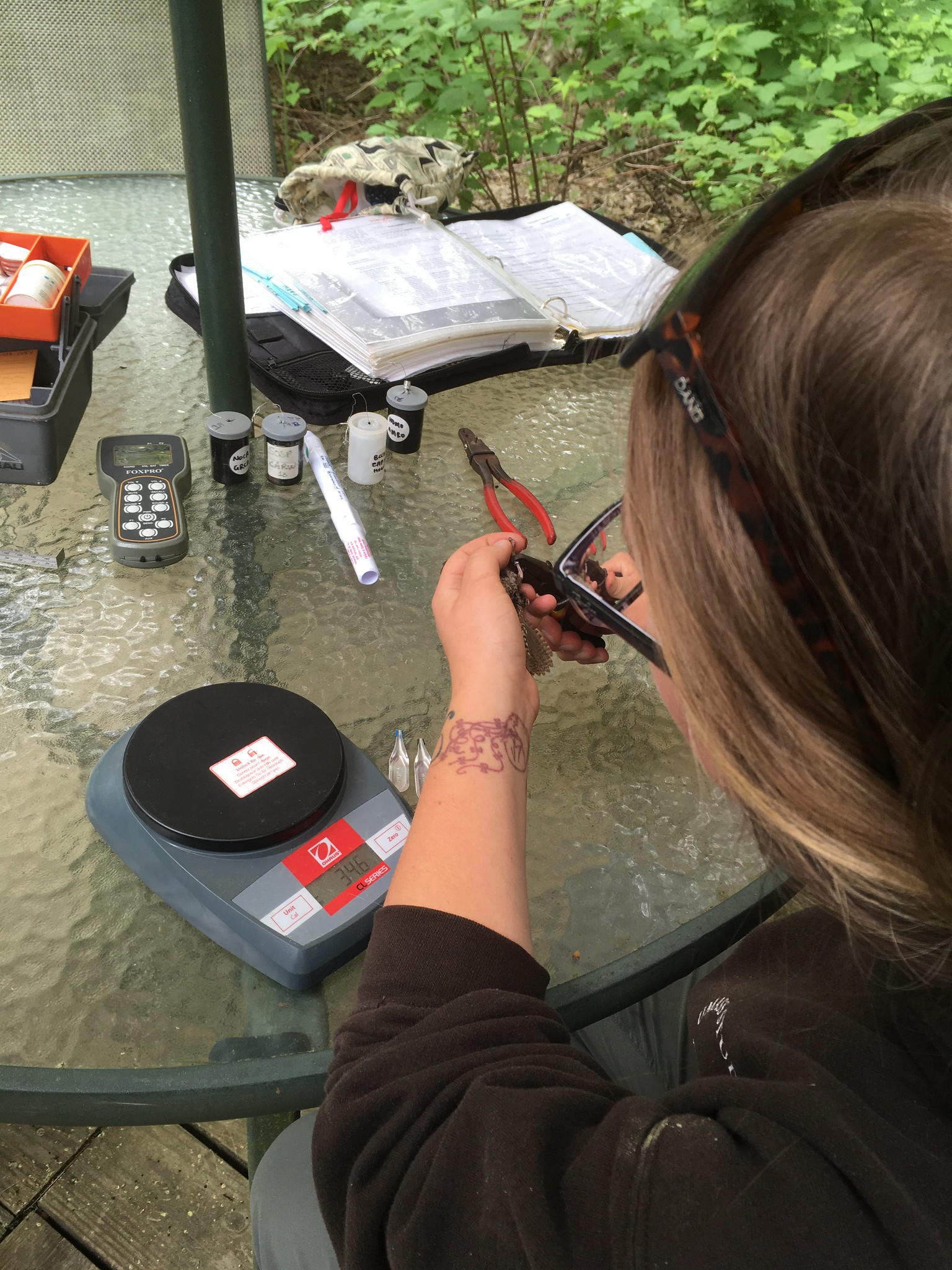
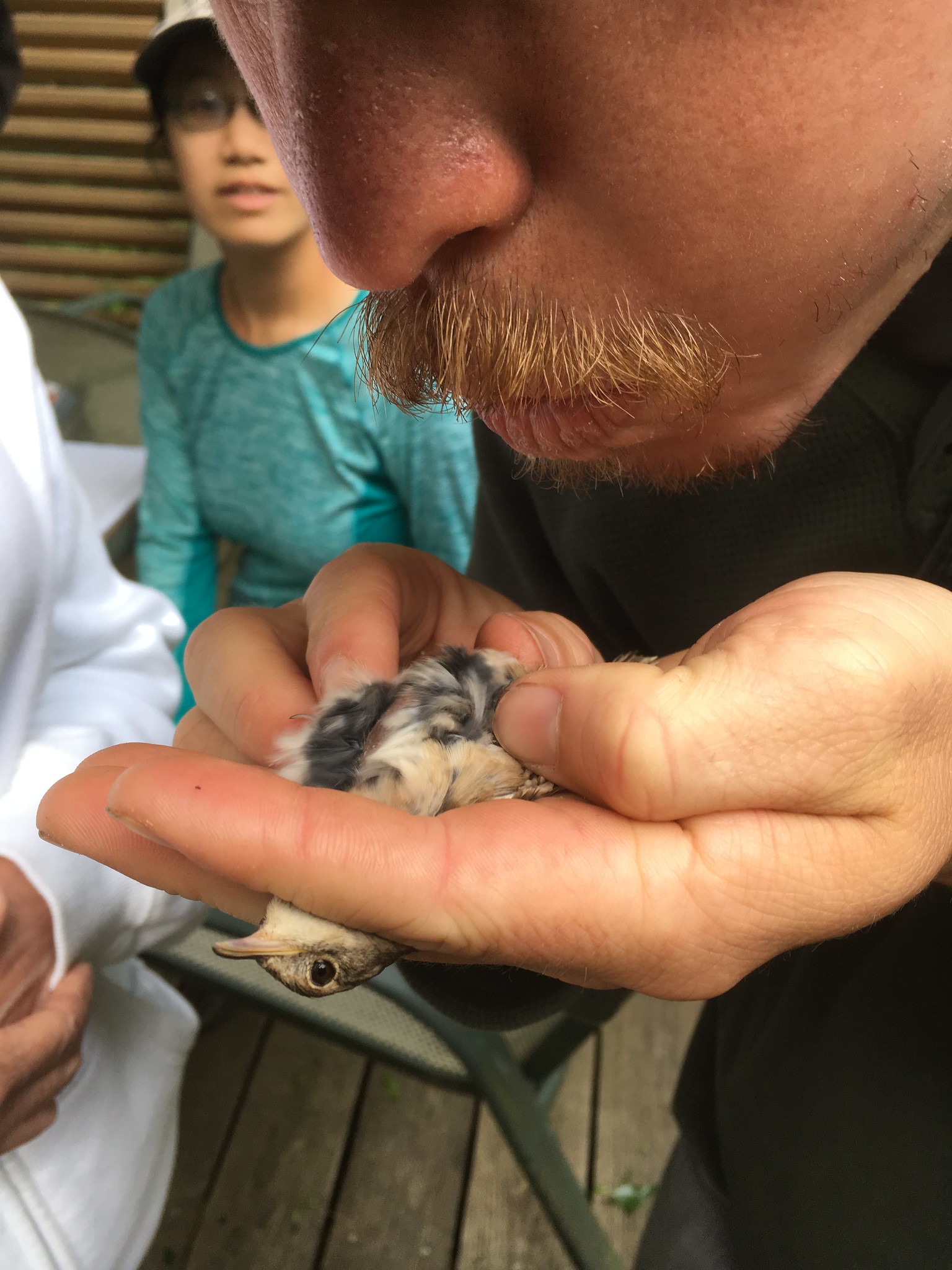
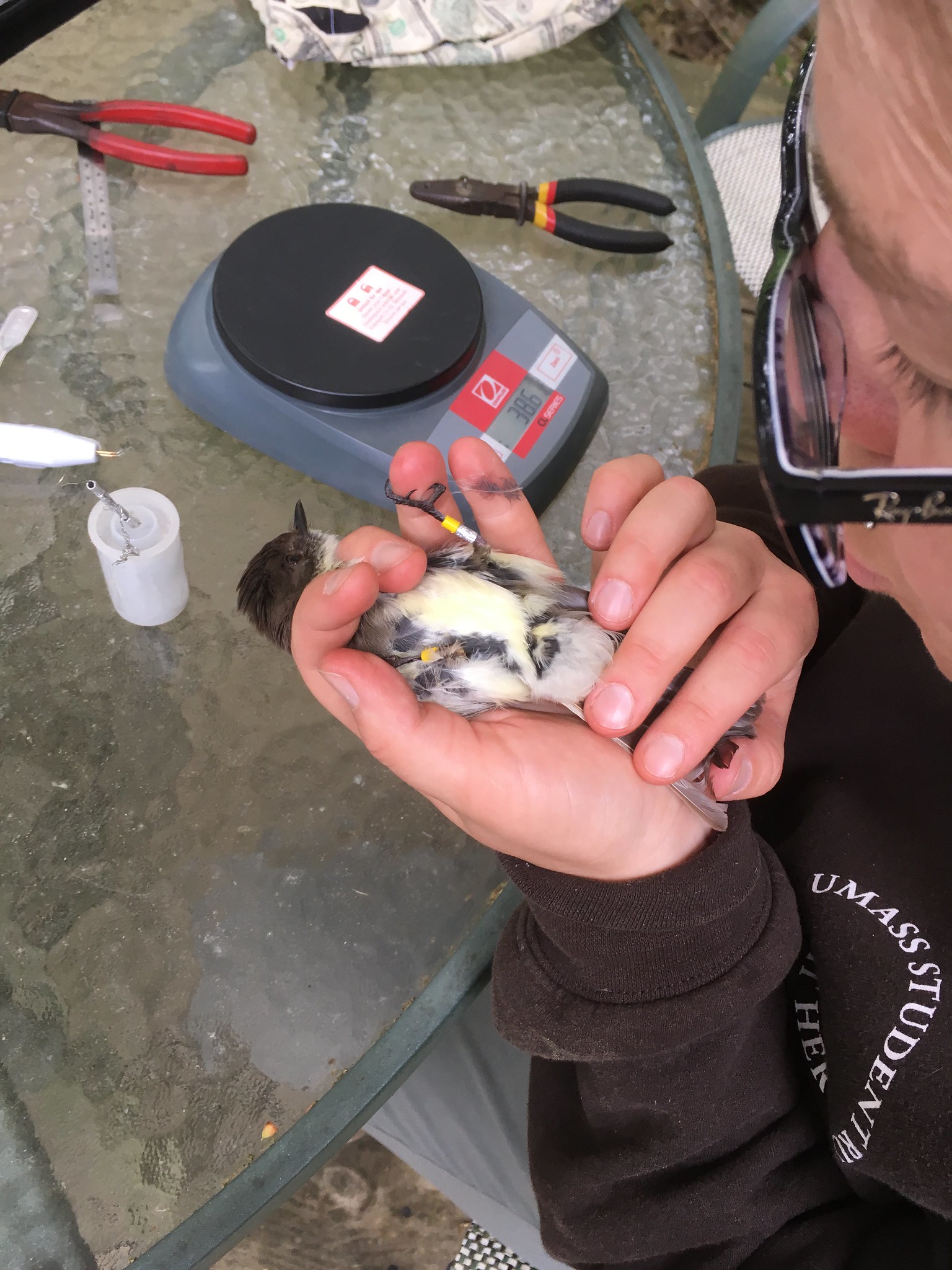
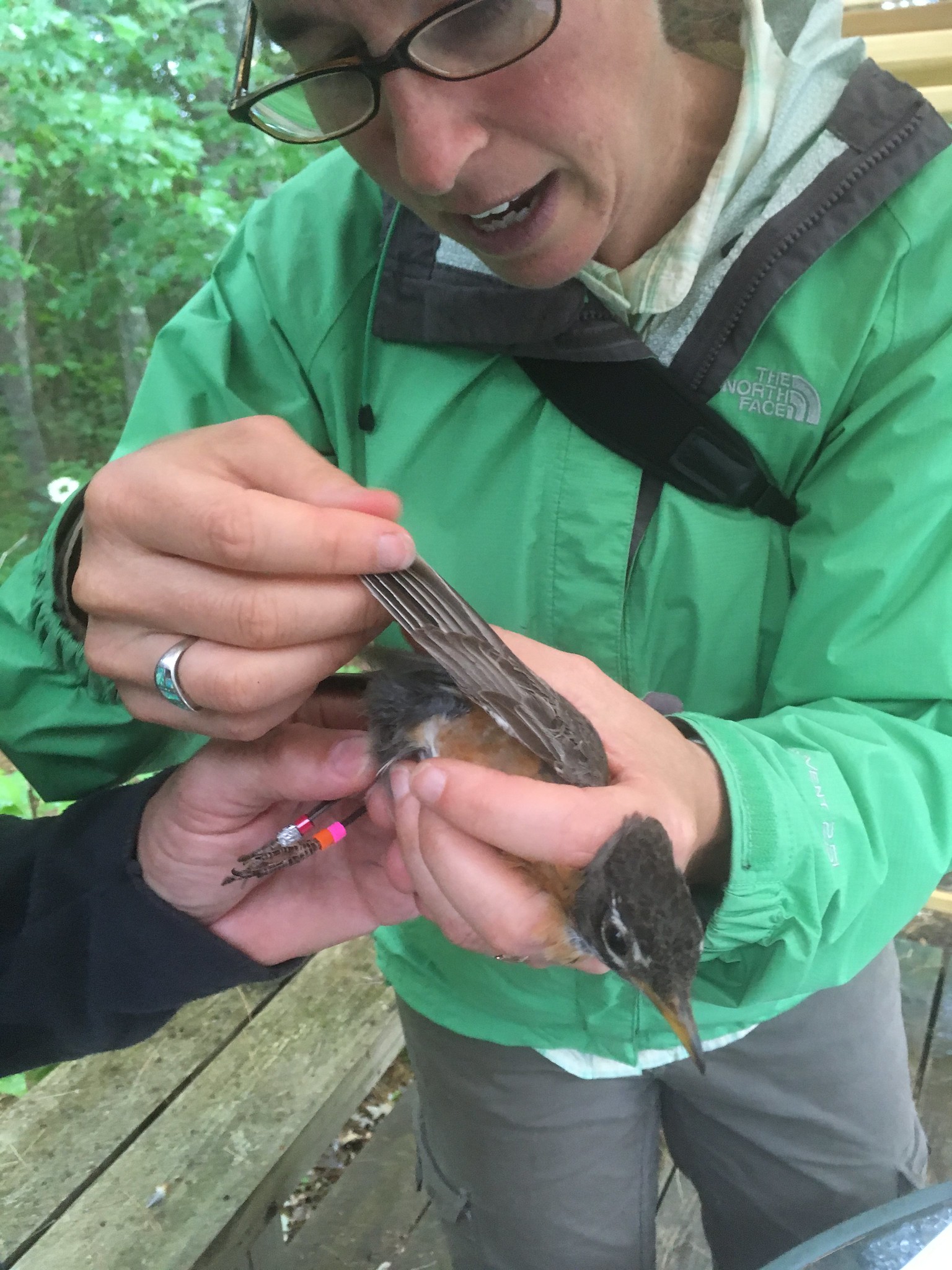
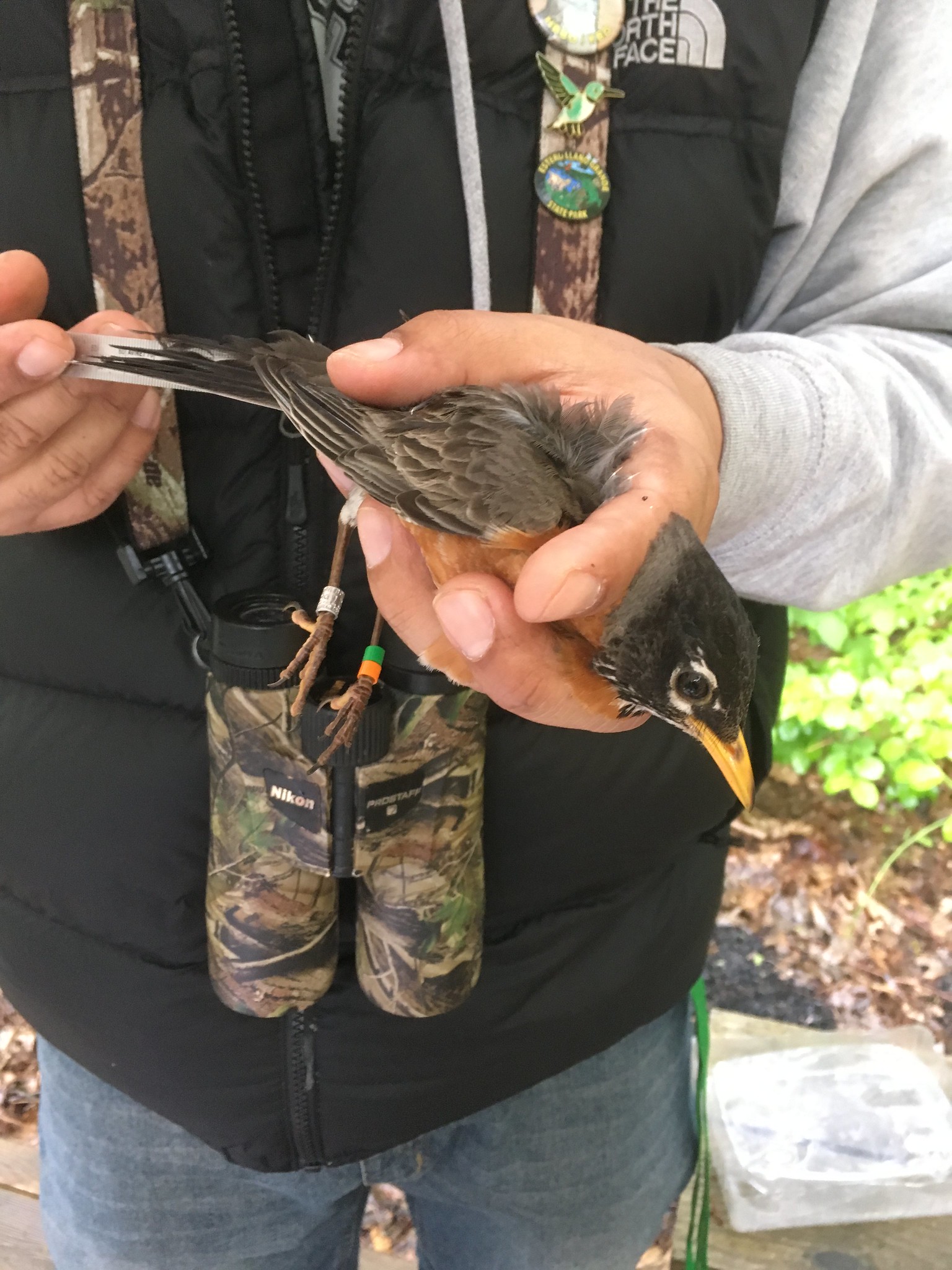
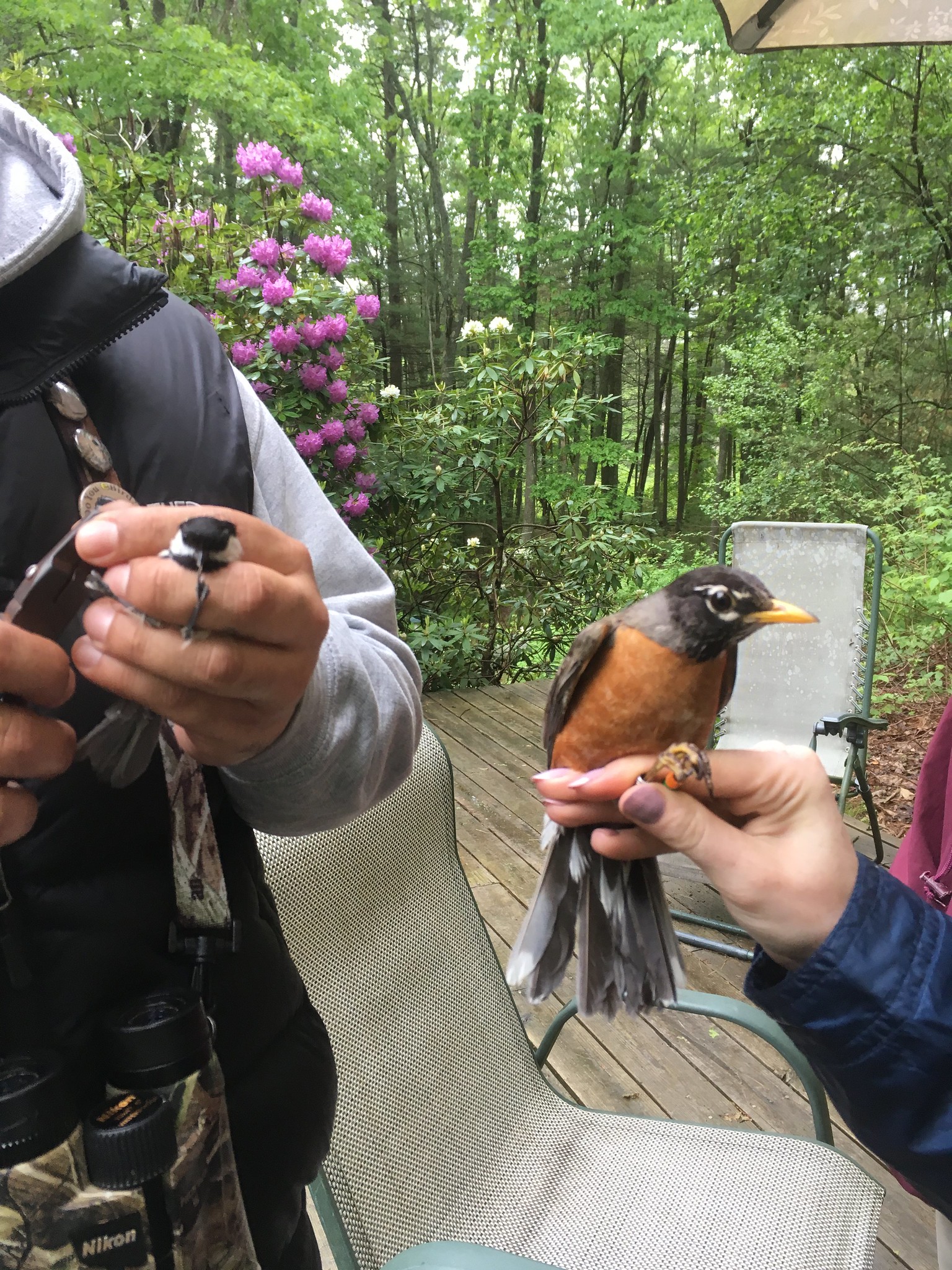
Today marked the fifth year of banding birds in the yard as part of the Neighborhood Nestwatch program. The weather was sunny and breezy which is not the optimal conditions as the birds can see the nets when the sun is shining on them and the breeze moves the nets enough to make them visible. Nonetheless we managed to catch a wide variety of species including five individuals of the target species that are part of the program. The target species caught included a House Wren, a Gray Catbird, two Black capped Chickadees and a Song Sparrow. The target species were all banded with unique color codes so later resigntings can be done without having to recapture the birds. Five individuals of target species was a bit less than we typically get but we made up for it somewhat by capturing a larger than typical number of non target species including a couple of Tufted Titmouse, a Pine Warbler, a Hairy Woodpecker and a Veery. We had never caught a Pine Warbler or Hairy Woodpecker in the past so it was neat to see these two species. There were a number of near misses including an Eastern Phoebe that sat on top of a net, a few more catbirds that came in close as well as a close American Robin (as well as a number of other non target species that came in close). All things considered with the less than optimal weather conditions it turned out to be a fairly good morning of banding.  A thank you to Corey and Sebastian for coming by to conduct the banding operation.  Posts from the previous years of banding can be found here:2018, 2017, 2016, 2015.

Over the past five years we have had the following number of target species plus non target species:

Year            Target species              Non target species        Total
2015            8                                  1                                    9
2016            8                                  1                                    9
2017            8 *                               1                                    9
2018            7                                  1                                    8
2019            5                                  5                                    10   

*additional 3 target bird (American Robins) in 2017 during second visit to place geolocaters on birds

Additional photos in the following flickr album.

Thursday, June 7, 2018

Neighborhood Nestwatch 2018

House Wren being banded, Home, Belchertown, MA, Jun 7, 2018
House Wren, Home, Belchertown, MA, Jun 7, 2018
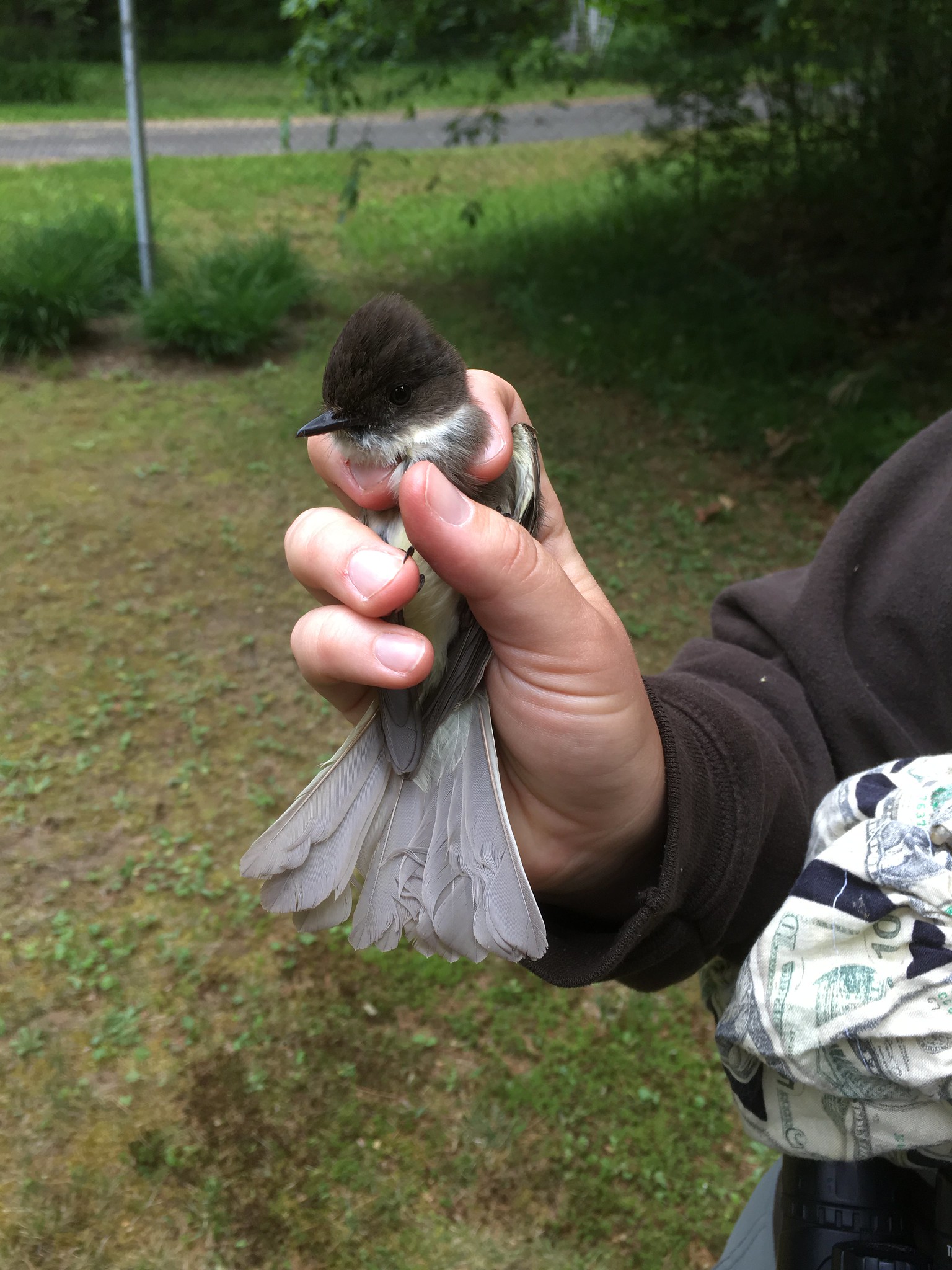
Eastern Phoebe with bands, Home, Belchertown, MA, Jun 7, 2018
Eastern Phoebe, Home, Belchertown, MA, Jun 7, 2018
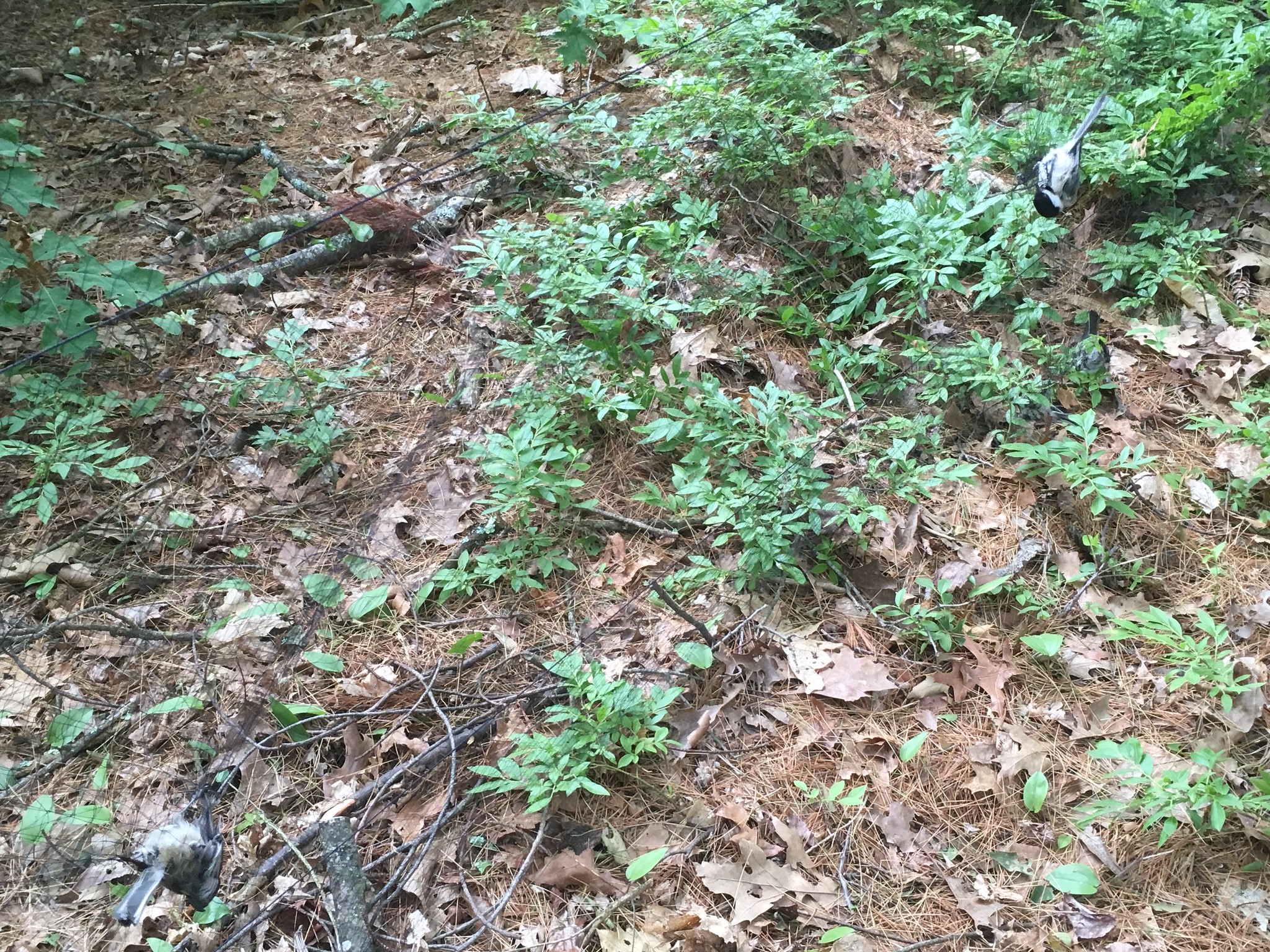
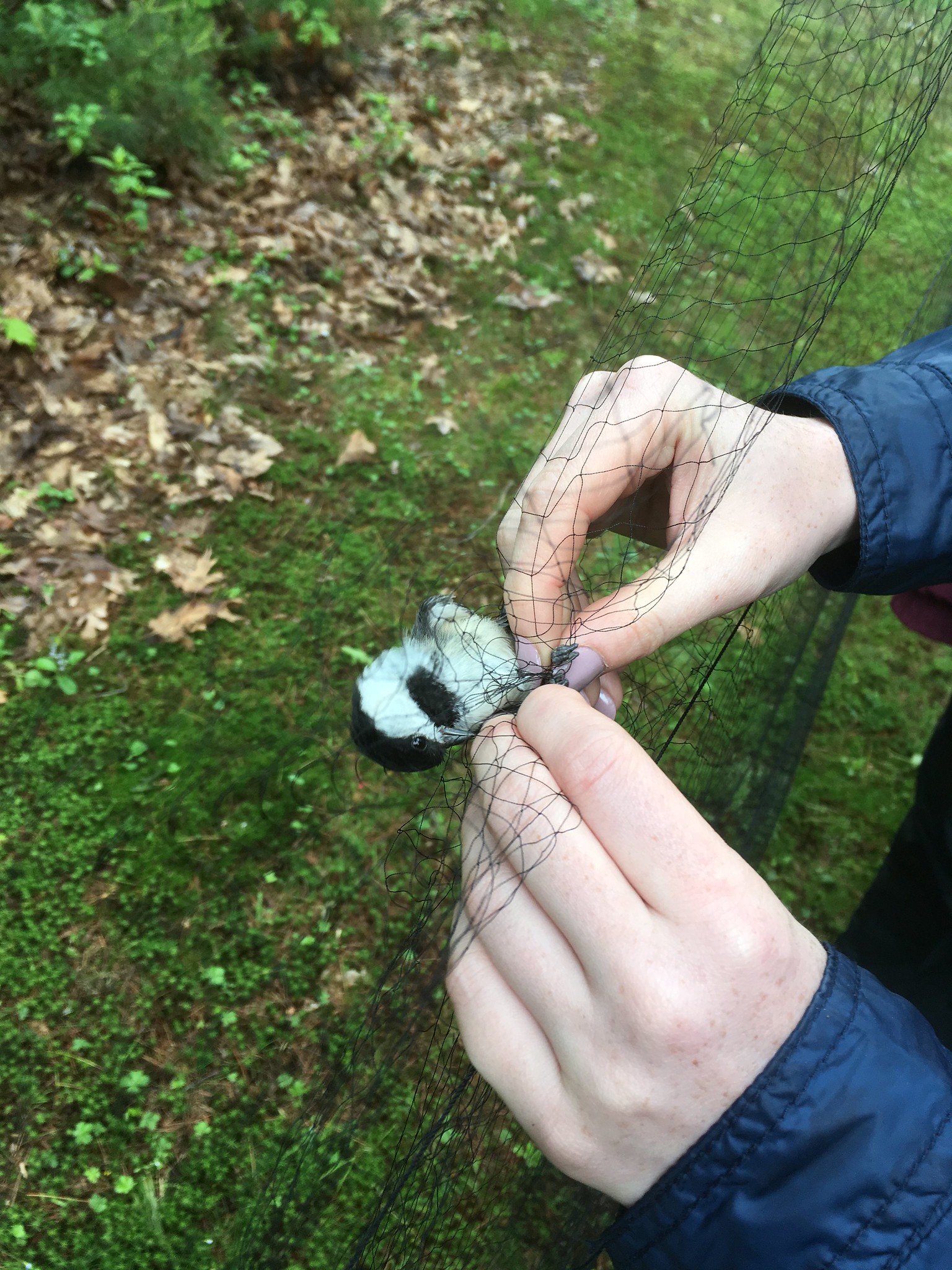
Black capped Chickadees in net, Home, Belchertown, MA, Jun 7, 2018
Black capped Chickadee, Home, Belchertown, MA, Jun 7, 2018
The Neighborhood Nestwatch Program returned to the yard for the fourth year today to band a variety of target birds.  The banders arrived at 7AM and after a quick point count they started setting up the nets.  The first two birds to get captured were the nesting pair of House Wrens (including the female that was banded last year).  The next bird to fly into the nets was a Tufted Titmouse which was quickly released as it was not a target species and then there was a bit of a lull before another House Wren and an Eastern Phoebe eventually made their way to the nets.  There were a number of Gray Catbirds and American Robins (both target species) that just would not fly into the nets.  The most productive single net check turned up four Black capped Chickadees (a male and three females) all captured at the same time.  Overall the morning produced nine birds captured with eight of those target species (three House Wrens, an Eastern Phoebe and four Black capped Chickadees).  The previous three years have each produced eight new birds to be banded so this year was just one below with seven (plus the recapture of the House Wren banded last year).  The nets got closed for the morning around 10 so they could then wander the area around the house in search of previously banded birds for a couple hours. Their effort turned up a Black capped Chickadee and a Gray Catbird with bands in yards nearby.  No luck finding any of the three American Robins with the GPS packs that were captured and outfitted last year.  More about the program and previous years of banding can be found at the following links: 2017, 2016, 2015.
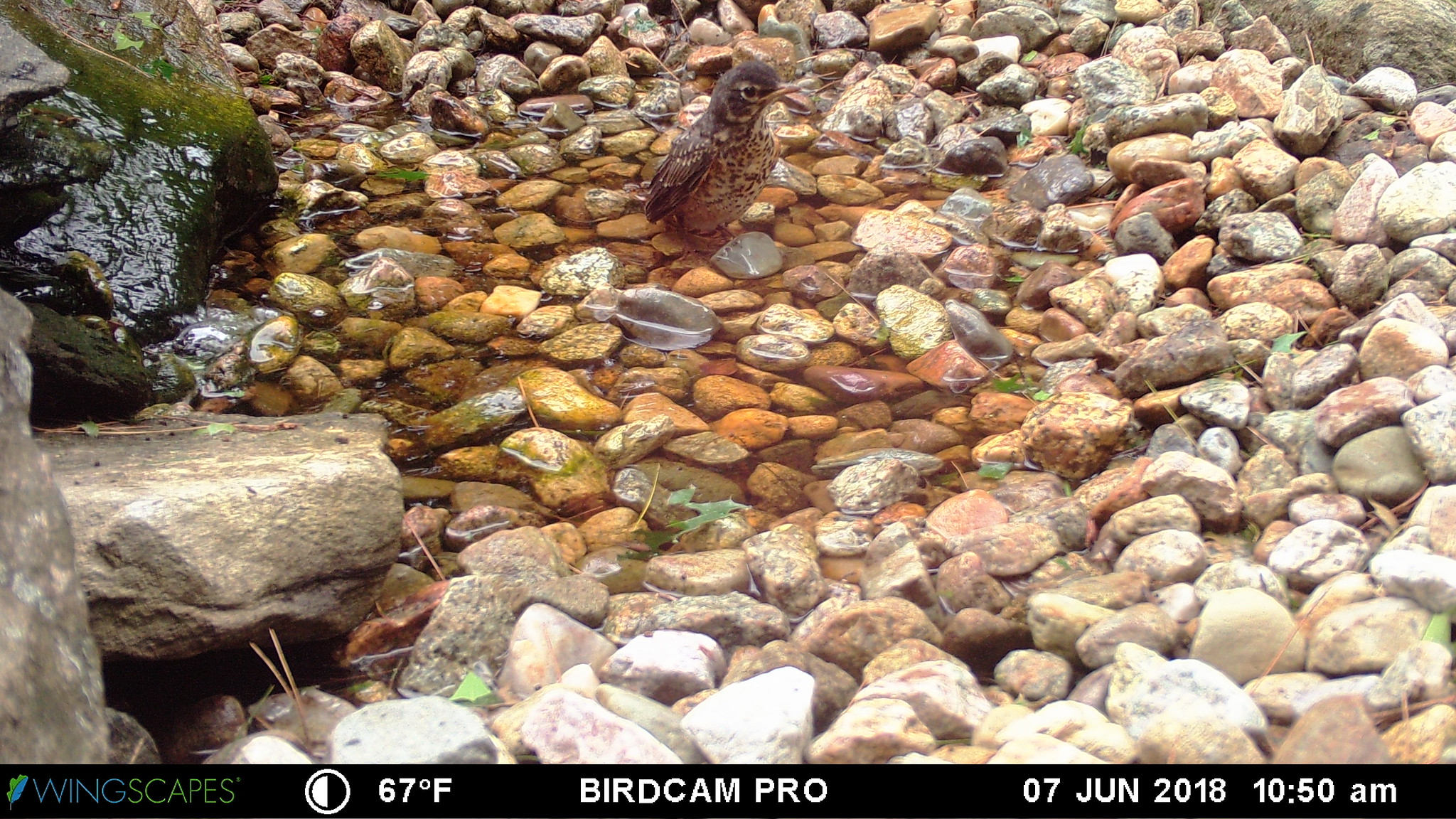
American Robin fledgling, Home, Belchertown, MA, Jun 7, 2018
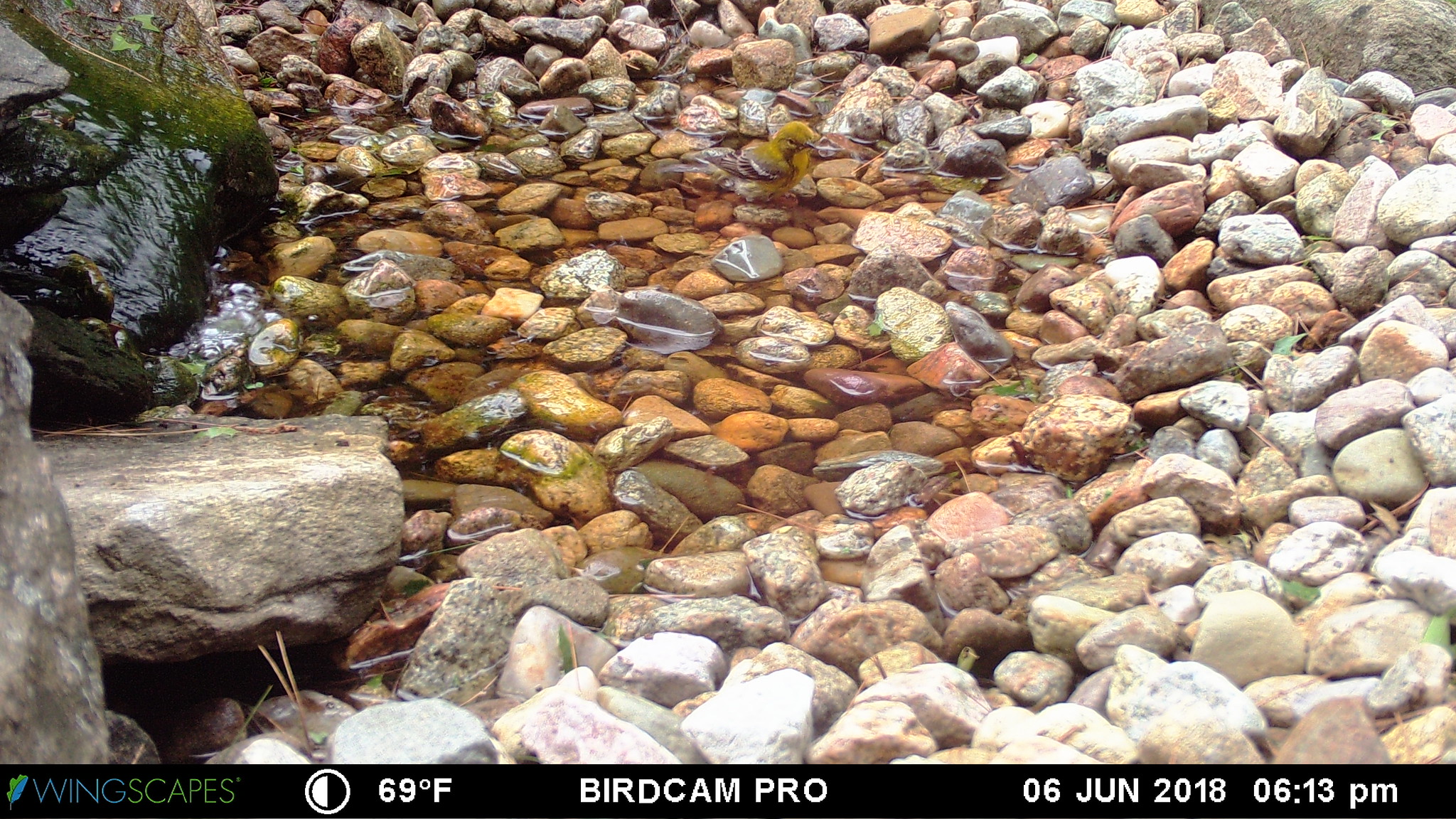
Pine Warbler, Home, Belchertown, MA, Jun 6, 2018
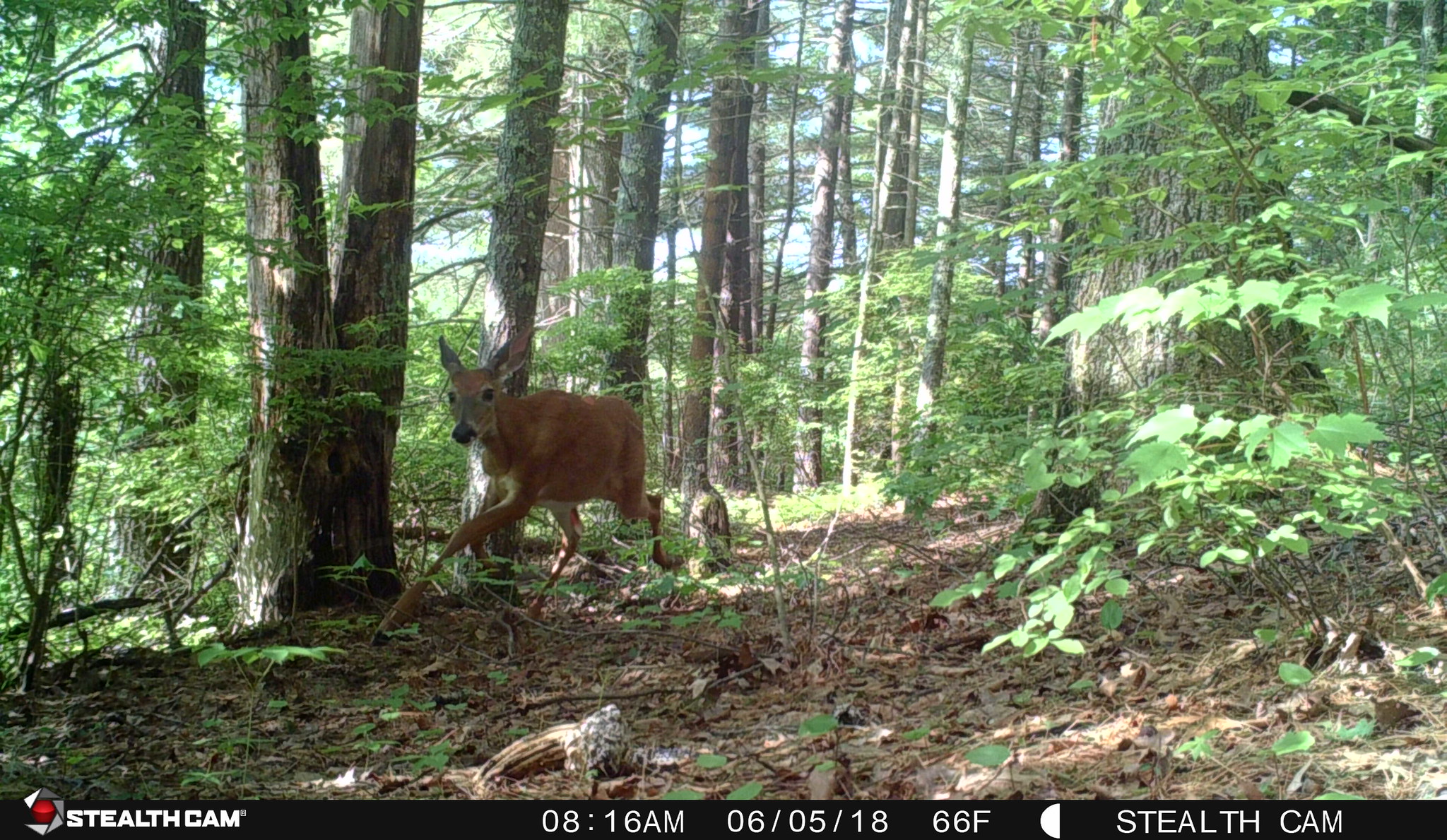
White tailed Deer, Home, Belchertown, MA, Jun 5, 2018
Red Fox, Home, Belchertown, MA, Jun 3, 2018
The cameras around the yard continue to capture a variety of creatures including my first fledgling American Robin of the season and occasionally the Red Fox family plus other stuff.

Friday, July 7, 2017

Capturing American Robins in the yard to attach GPS tags and other odd and ends the last few days

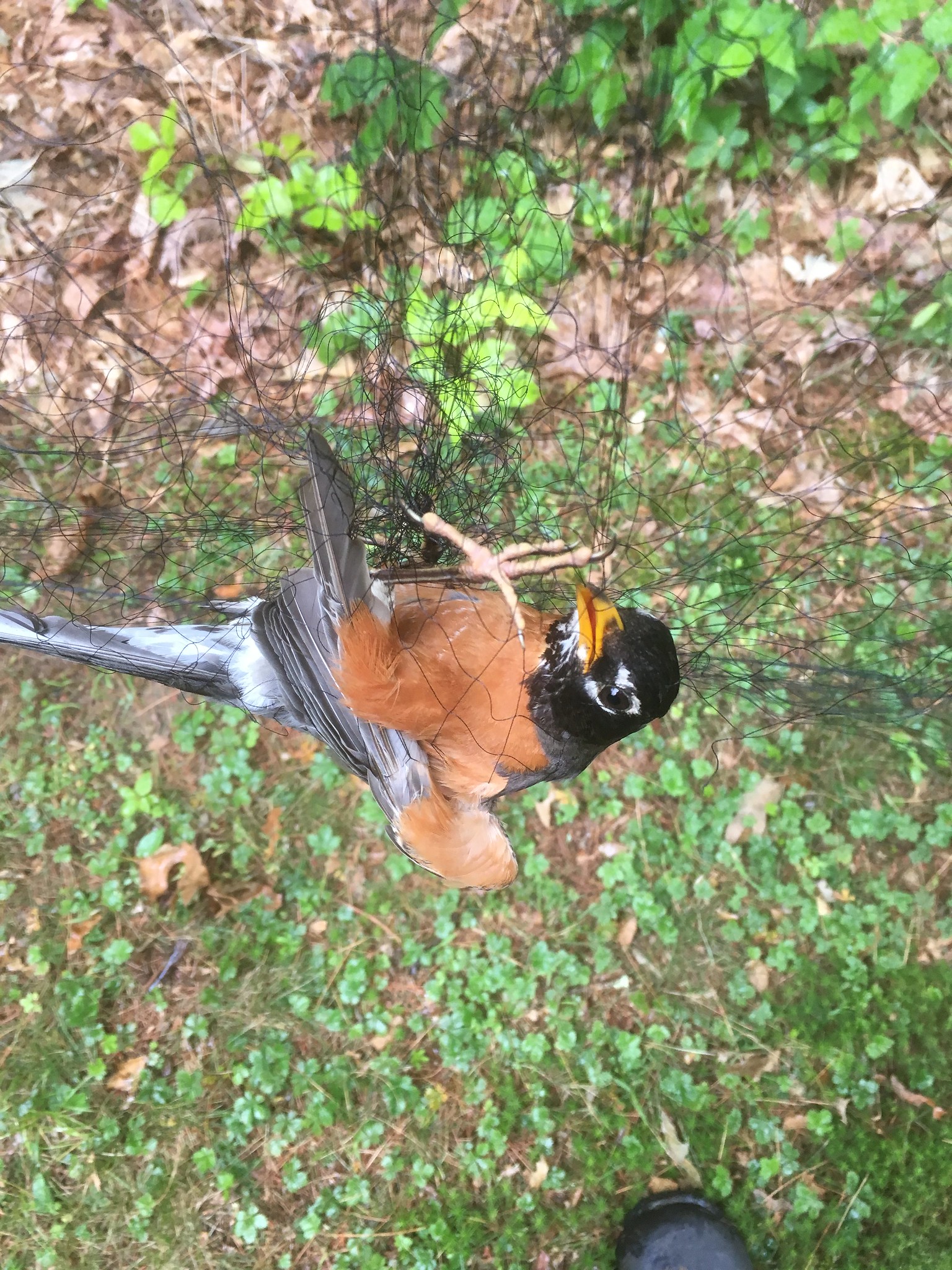
American Robin in net, home, Belchertown, MA, July 7, 2017
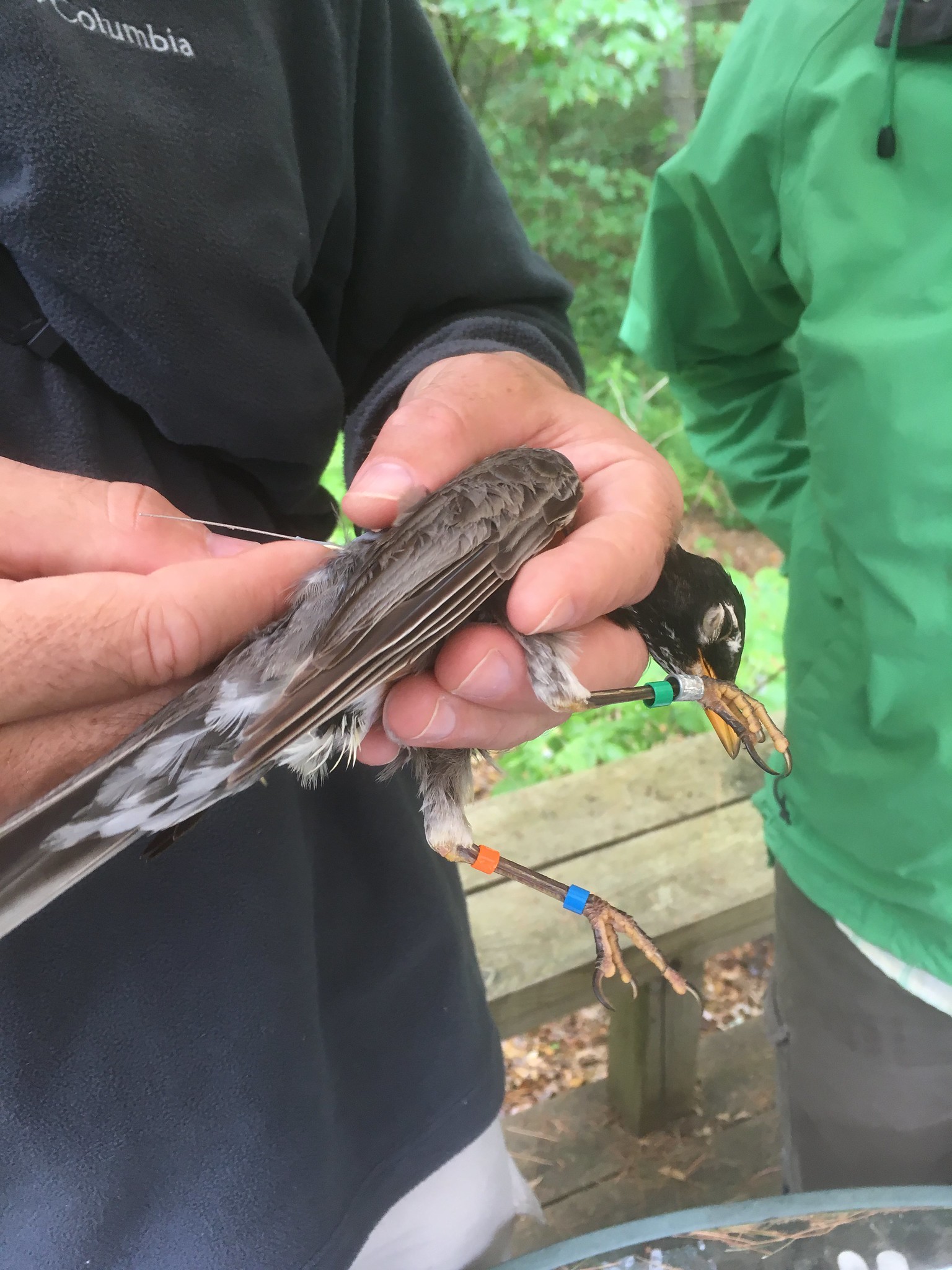
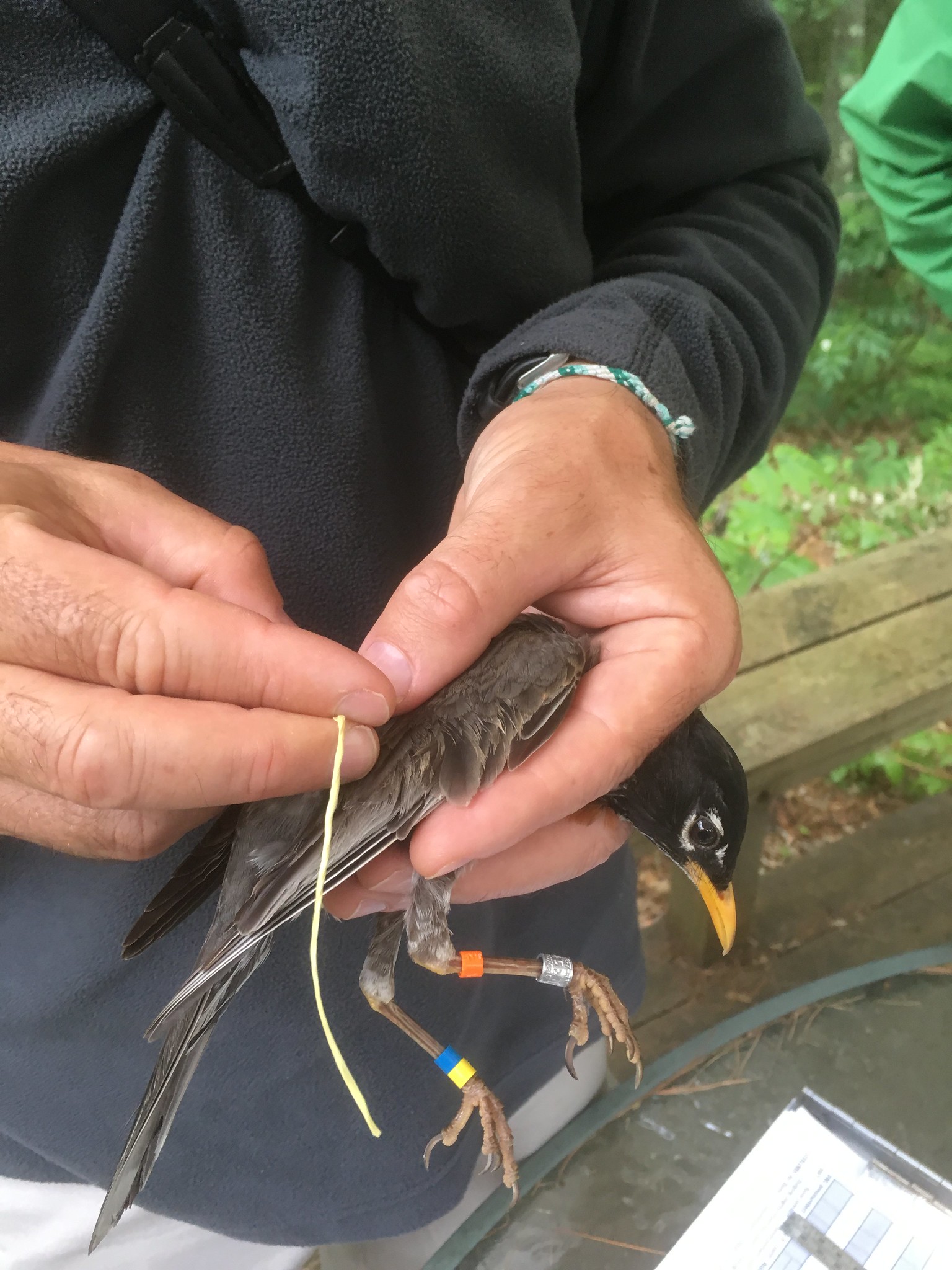
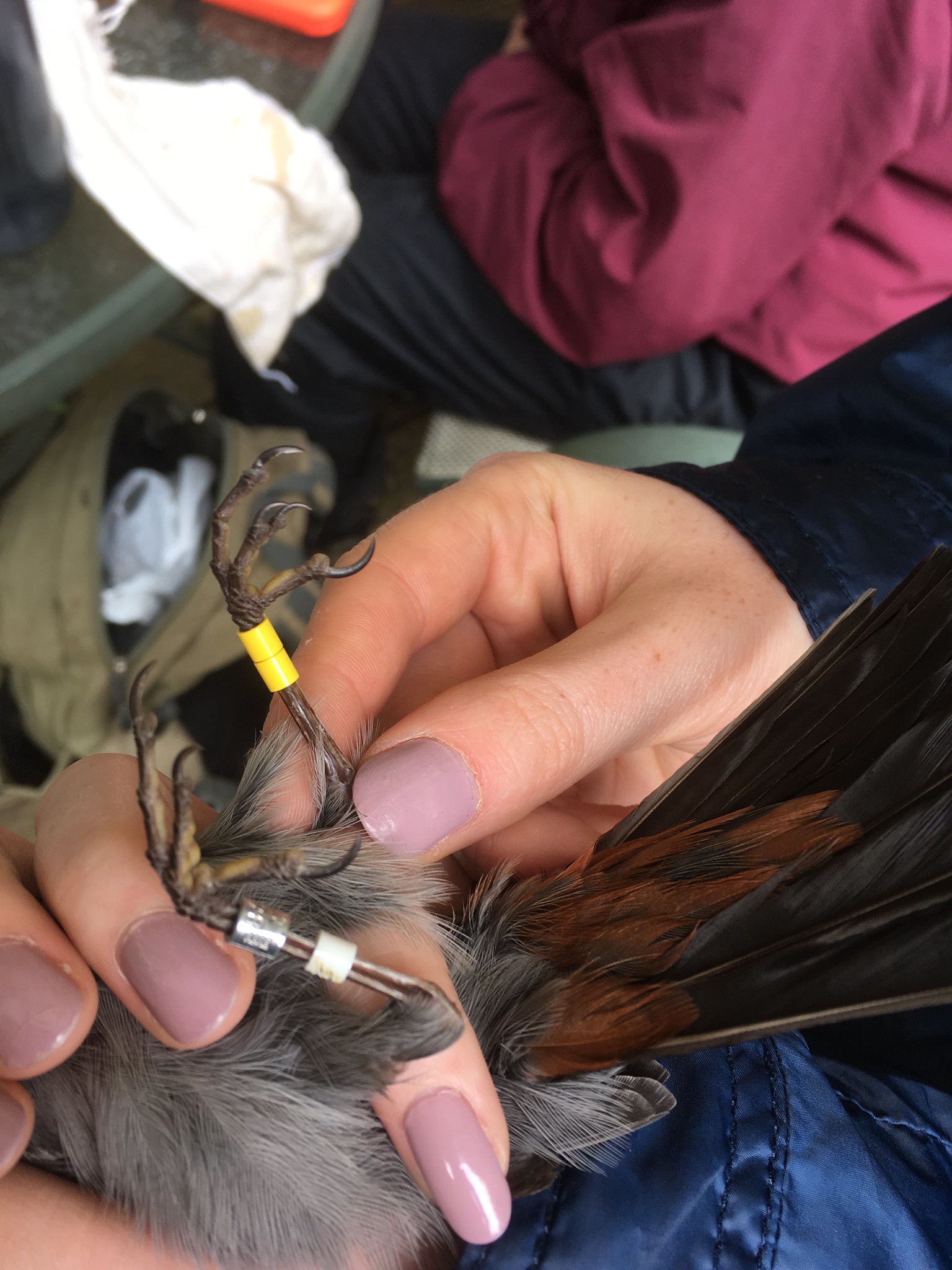
American Robin with leg bands and GPS tag, home, Belchertown, MA, July 7, 2017
American Robin with GPS tag, home, Belchertown, MA, July 7, 2017
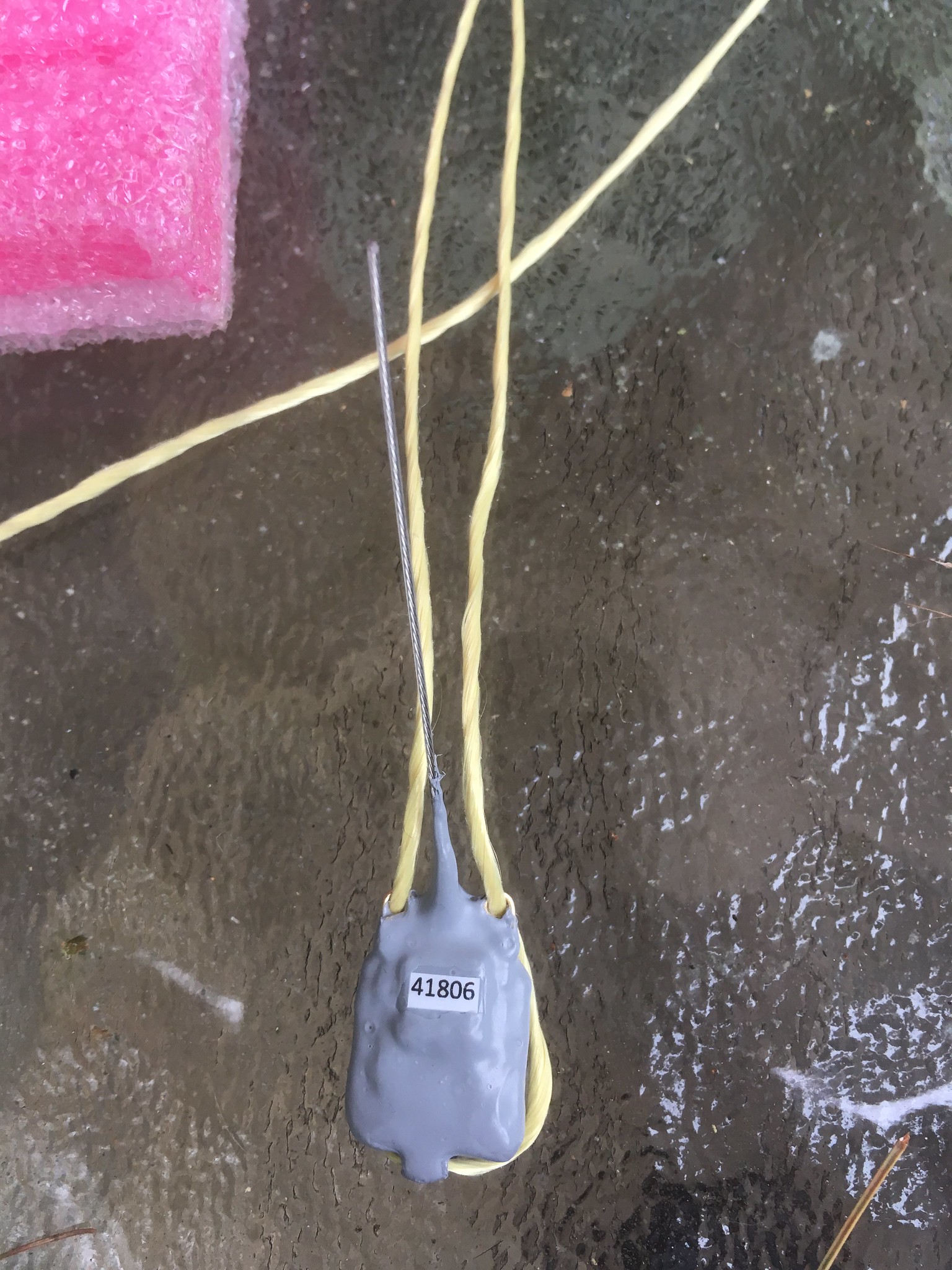
GPS tag ready for a host, home, Belchertown, MA, July 7, 2017
American Robin with leg bands and GPS tag, home, Belchertown, MA, July 7, 2017
This morning Susannah and Alex Jahn stopped by the yard to try to capture some American Robins to attach GPS locators to as part of an ongoing study associated with the Neighborhood Nestwatch program.  Below is a portion of the e-mail I got regarding this study:
"We are expanding our Gray Catbird study and the GPS tags, and hope to place about 10 GPS tags on robins. This is an exciting opportunity to better understand where one of our most iconic backyard bird spends the winter. The GPS tags are about the size of a dime and we attach them to the birds via a little backpack harness. The challenge is that we need to recapture the birds next year to recover the GPS tag and then download all the data. The technology is so cool that we will be able to pinpoint, within about 20 feet, where these birds spend the winter. Thus far, we've recovered 4 out of the 15 GPS tags from the catbirds. It's pretty exciting!
Alex Jahn, a scientist from the Smithsonian Migratory Bird Center in DC, is leading the project."
They arrived around 7AM with the weather conditions overcast with occasional showers but decent enough weather to try to get some birds.  Once the first net was up and an audio lure placed, a male robin as well as a Northern Cardinal were quickly captured and another robin bounced off the nets without being caught. The robin quickly received both leg bands and a GPS tag and was then released.  Before moving the nets two more  robins were caught as was a Blue Jay.  As only one of the two robins caught was an adult only one bird got bands and a GPS tag.  As the weather continued to become more and more rainy they moved the nets to a new location and caught yet another robin but this one was a female.  All three robins caught did not have bands so somehow the two banded individuals I have had regularly around the yard evaded recapture today.  By this point the rain had increased to a near downpour so the banding ended for the morning.  Despite not capturing the previously banded robins we had some good results with three birds receiving the GPS tags.  Now we just have to until next spring to see if they return and recapture them to remove the GPS unit to see where they have been.  Fingers crossed they all have a safe journey over the next several months.
Mourning Warbler, Quabbin Park, MA, July 6, 2017
On my way home from work yesterday morning I stopped by Quabbin Park and found the Mourning Warbler still in the same location (I also had it the morning of July 4th).  I was calling occasionally and flying around a few hundred foot area and even stopped briefly along a guardrail and I got a few shots through the binoculars with my phone.  It has now been in the area since at least July 2.  It is truly unusual for this species to be this far south and east and at such a low elevation in an apparent breeding attempt.
American Woodcock, Prescott Peninsula, New Salem, MA, July 6, 2017
I also made an evening trip onto Prescott Peninsula on the fourth to check a few previously unchecked locations for Eastern Whip Poor Wills and found a few outside the areas covered by my annual survey.  Other nocturnal birds included a couple American Woodcocks and a couple Barred Owls calling back and forth.

Monday, June 5, 2017

Neighborhood Nestwatch banding


American Robin with leg bands, Home, Belchertown, MA, June 5, 2017
Black capped Chickadee with egg, Home, Belchertown, MA, June 5, 2017
Black capped Chickadee in net, Home, Belchertown, MA, June 5, 2017
Gray Catbird with leg bands, Home, Belchertown, MA, June 5, 2017
Black capped Chickadee and American Robin, Home, Belchertown, MA, June 5, 2017
Gray Catbird with leg bands, Home, Belchertown, MA, June 5, 2017
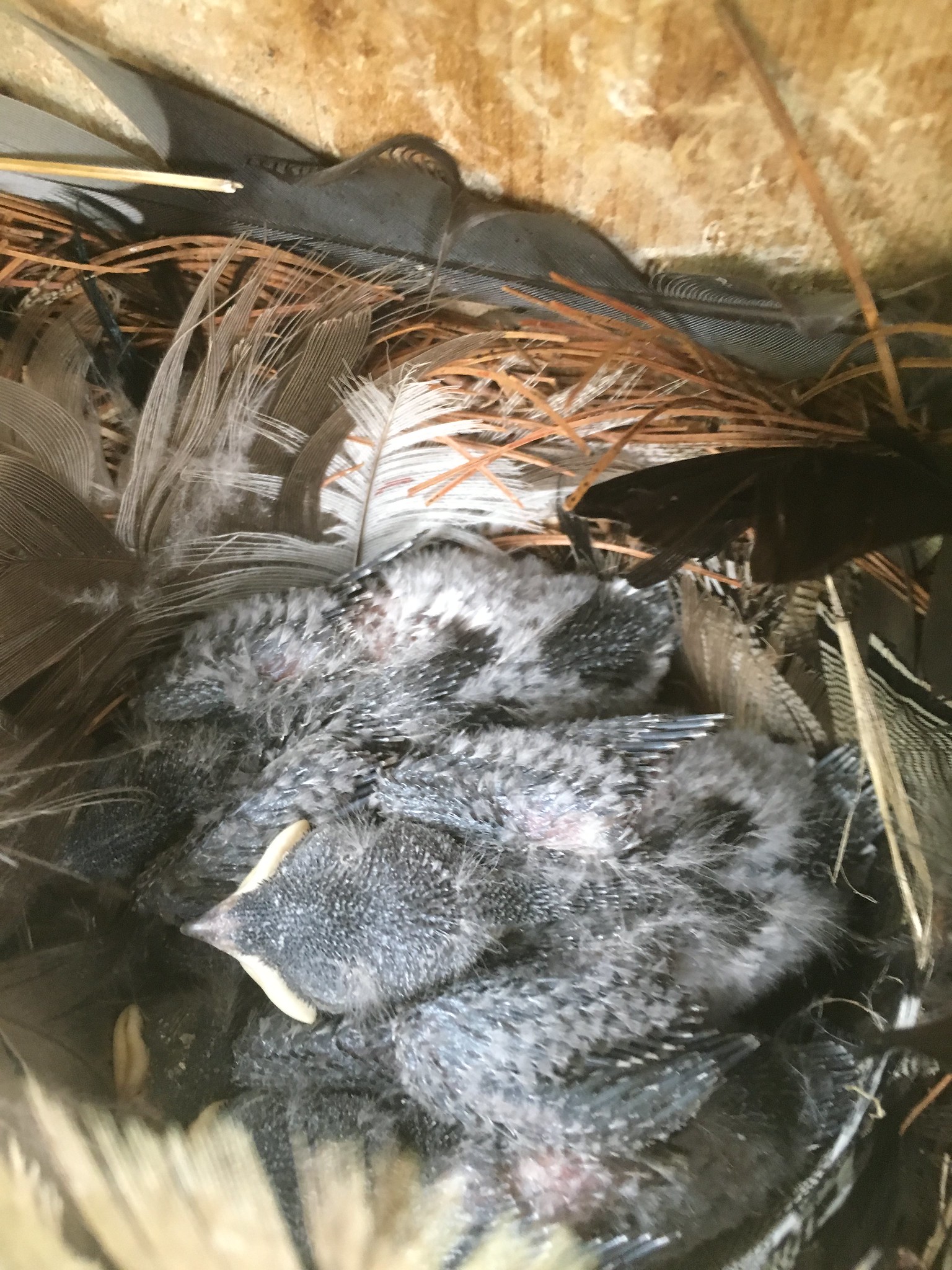
Eastern Phoebe nestlings, Home, Belchertown, MA, June 5, 2017
Tree Swallow nestlings, Home, Belchertown, MA, June 5, 2017
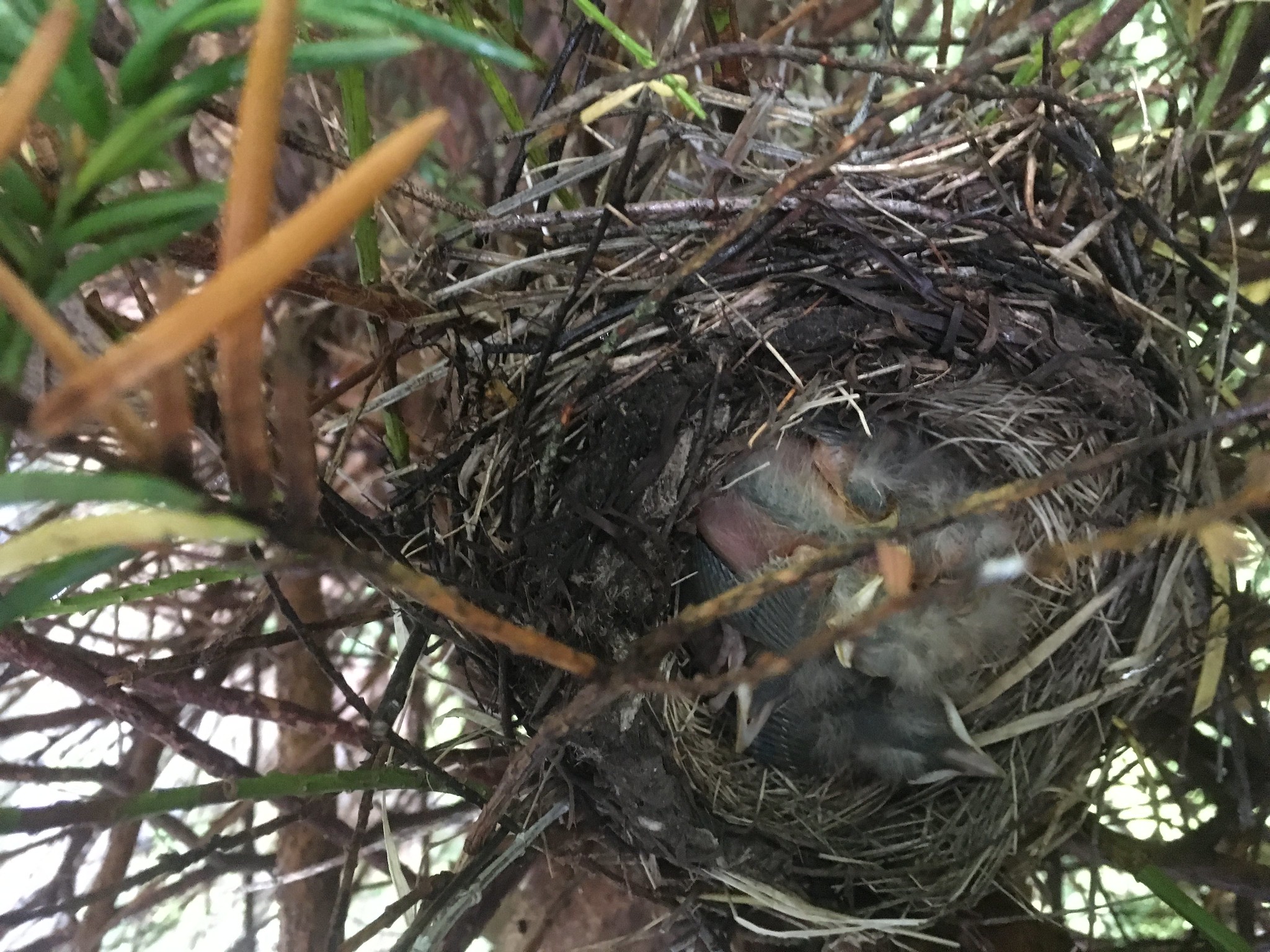
American Robin nestlings, Home, Belchertown, MA, June 5, 2017
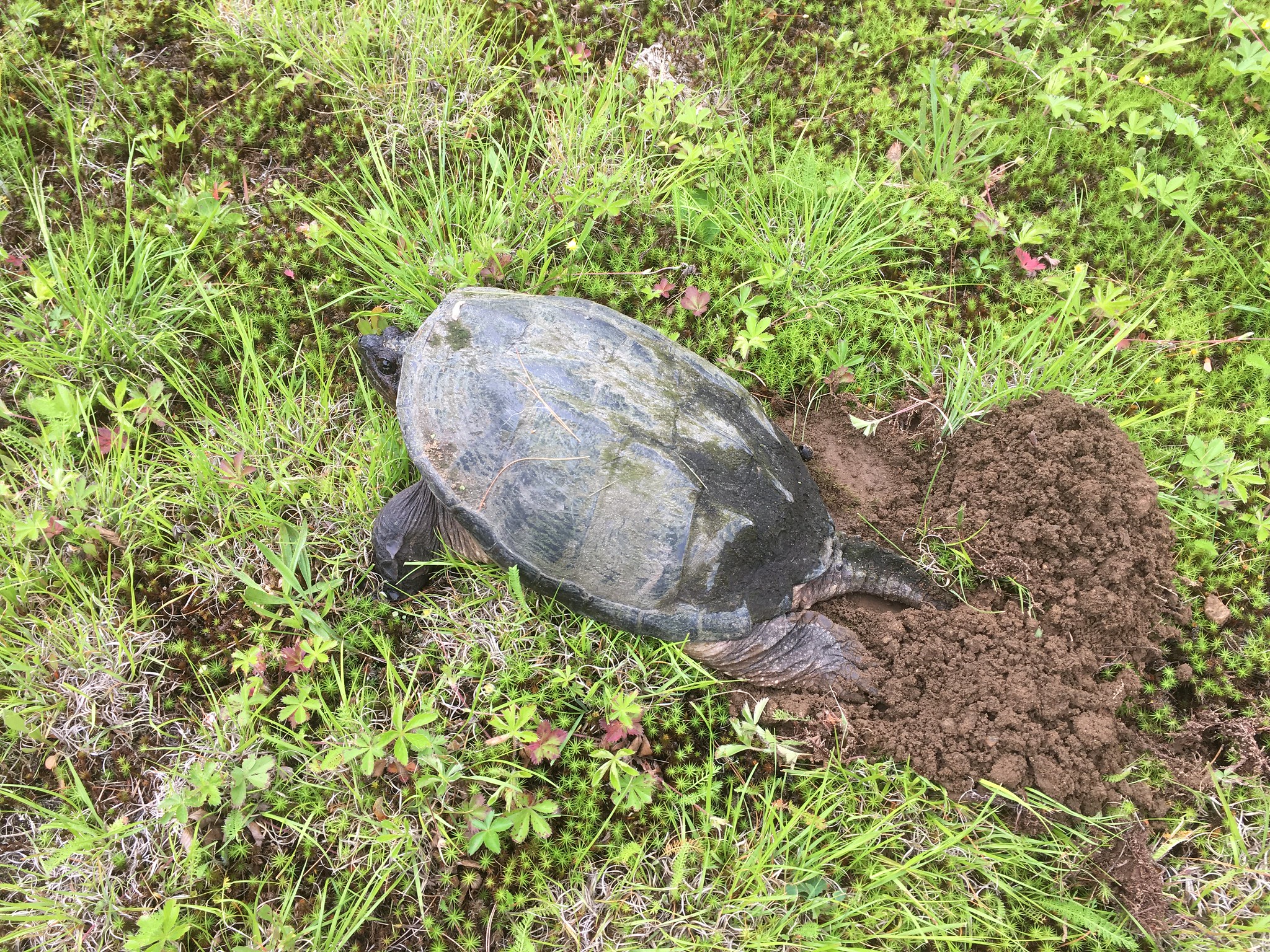
Snapping Turtle laying eggs, Home, Belchertown, June 5, 2017
Despite the less than ideal conditions we had a productive day banding in the yard during our third season of the Neighborhood Nestwatch program. A total of eight birds of four species were banded (three Gray Catbirds, three Black capped Chickadees, an American Robin and an Eastern Phoebe) plus a Tufted Titmouse that didn't get banded. Highlights included an American Robin caught early on with an obvious egg which was caught again later in the morning after she returned to the nest and laid the egg plus a Black capped Chickadee also carrying an egg. We also had a Snapping Turtle wandering around the yard which eventually found a place to lay its eggs. Many thanks to Arthur, Jess and the UMASS intern (I'm blanking on her name) that came by to do the banding.  A few of the nests in the yard were also checked and nestlings were in each nest (American Robin, Eastern Phoebe and Tree Swallow).
Full album on my Flickr page (link below).
https://www.flickr.com/…/54277284@…/albums/72157681661367934
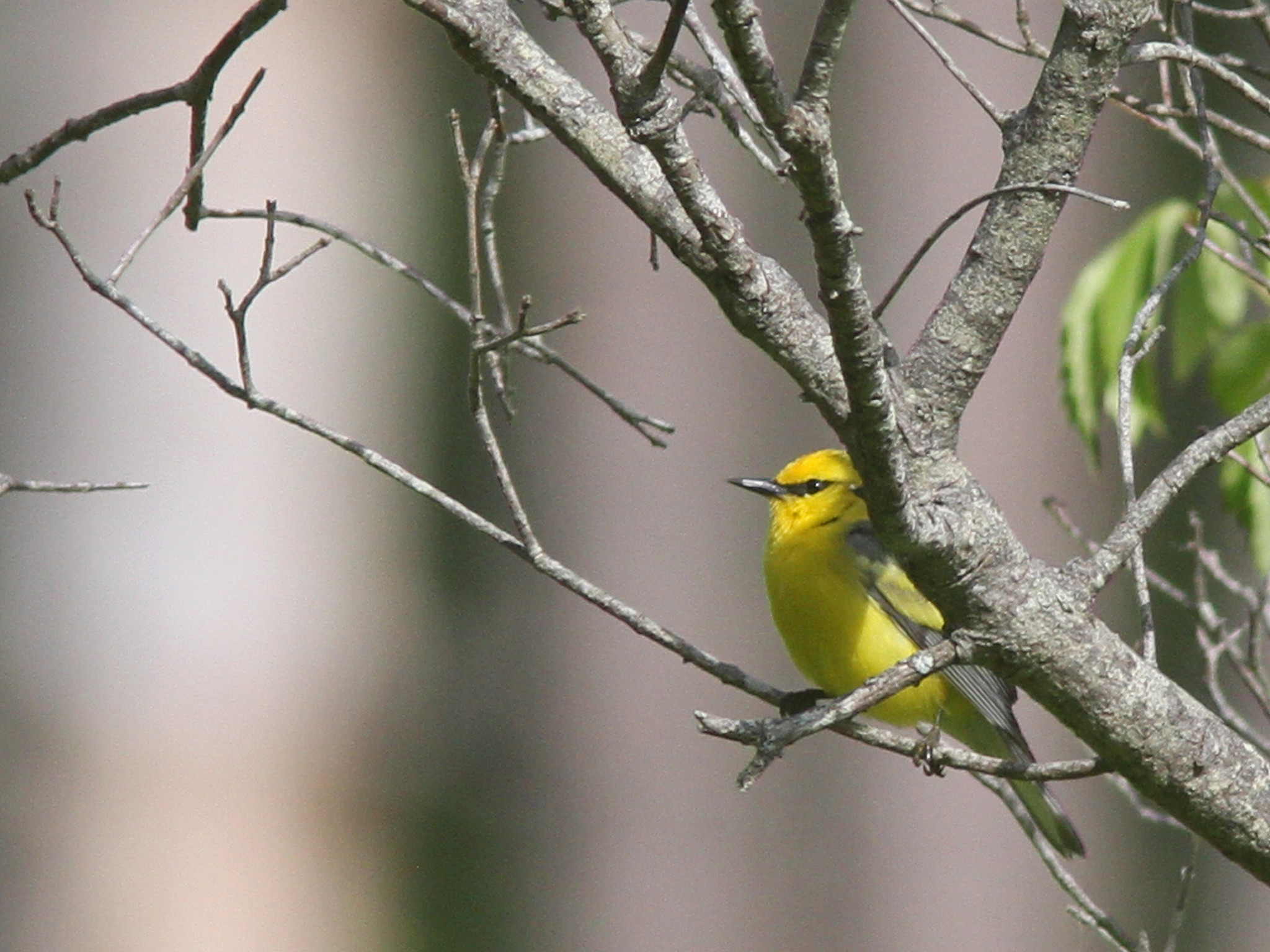
Blue winged x Golden winged Warbler hybrid, Quabbin Park, MA, June 4, 2017
Mourning Warbler, Quabbin Park, MA, June 2, 2017
I also want to update on the Golden winged Warbler I found at Quabbin Park last Wednesday.  The bird was seen for the entire day on Thursday in the same area so I stopped by there after work on Friday morning and the bird was still present along with a number of birders.  It was continuing to call nearly continuously but showing itself very sparingly.  Around 8:30 or so it flew up to the top of trees and then launched itself off to the south and did not return for the remaining hour and half while I was there.  I thought it might have moved to the power line cut off to the south but I didn't have a lot of time to go looking.  Apparently I was right as the bird was reported along the power lines on Saturday but has not been relocated there since.  It could still be in the same general area but the going there can be tough and the ticks are horrible in addition to the weather being cool, rainy and breezy.  A consolation prize on Friday was a Mourning Warbler in the same area which called quite a bit and showed briefly.  It appears this individual is from the Nova Scotia group according to the researcher up in New Hampshire who is studying the different vocal groups of Mourning Warblers.  The hybrid Blue winged x Golden winged Warbler also continues to be seen in the same area it has been for weeks.

Wednesday, June 17, 2015

Neighborhood nestwatch program visits the yard to band birds last week

Gray Catbird in net, Belchertown, MA, June 2015
Gray Catbird banded, Belchertown, MA, June 2015
House Wren banded, Belchertown, MA, June 2015
Black capped Chickadee banded, Belchertown, MA, June 2015
Song Sparrow banded, Belchertown, MA, June 2015
Song Sparrow, Belchertown, MA, June 2015
Veery, Belchertown, MA, June 2015
Gray Catbird banded, Belchertown, MA, June 2015
Northern Cardinal, Belchertown, MA, June 2015
Gray Catbird banded, Belchertown, MA, June 2015
House Wren with bands, Belchertown, June 2015
As part of the neighborhood nestwatch program (sponsored by the Smithsonian Institute) I had a bird bander visit the yard last week.  The program looks at a focus group of several backyard bird species and checks to see how they fare in different settings (urban, suburban and rural). Any individual of the focus species that gets caught are banded with a unique set of color bands that allow tracking of the birds over the course of the year(s). The focus species include Northern Cardinal, Black capped Chickadee, House Wren, Carolina Wren, Gray Catbird, Song Sparrow, Northern Mockingbird, American Robin and Eastern Phoebe. During the course of the morning we managed to capture a total of nine individuals with eight of those being from the focus group that where then banded (a Veery was also caught but not banded). A total of four Gray Catbirds, a House Wren, a Black capped Chickadee, a Song Sparrow and a Northern Cardinal. The majority (all but one catbird) were males, which is not too surprising as most females would be sitting on nests at this point. There were lots of other birds in the general area that we were not lucky enough to have fly into the nets including a Black billed Cuckoo and an Alder Flycatcher (both species I have not heard around the house in a few weeks). As always it was lots of fun to see these birds up close and personal and to release them after banding.  Looking forward to seeing how these eight banded birds fare over the course of the upcoming years.  Thanks to Steph for coming by to band the birds and allowing us to get some great up close looks at the birds (I'm sure we will have even more luck next year!)

If anyone else living in Franklin, Hamden or Hampshire county would be interested in participating in this very interesting program you can e-mail them at springfield.nestwatch@gmail.com.

More information on the neighborhood nestwatch program can be found at this link:
http://nationalzoo.si.edu/scbi/migratorybirds/research/neighborhood_nestwatch/
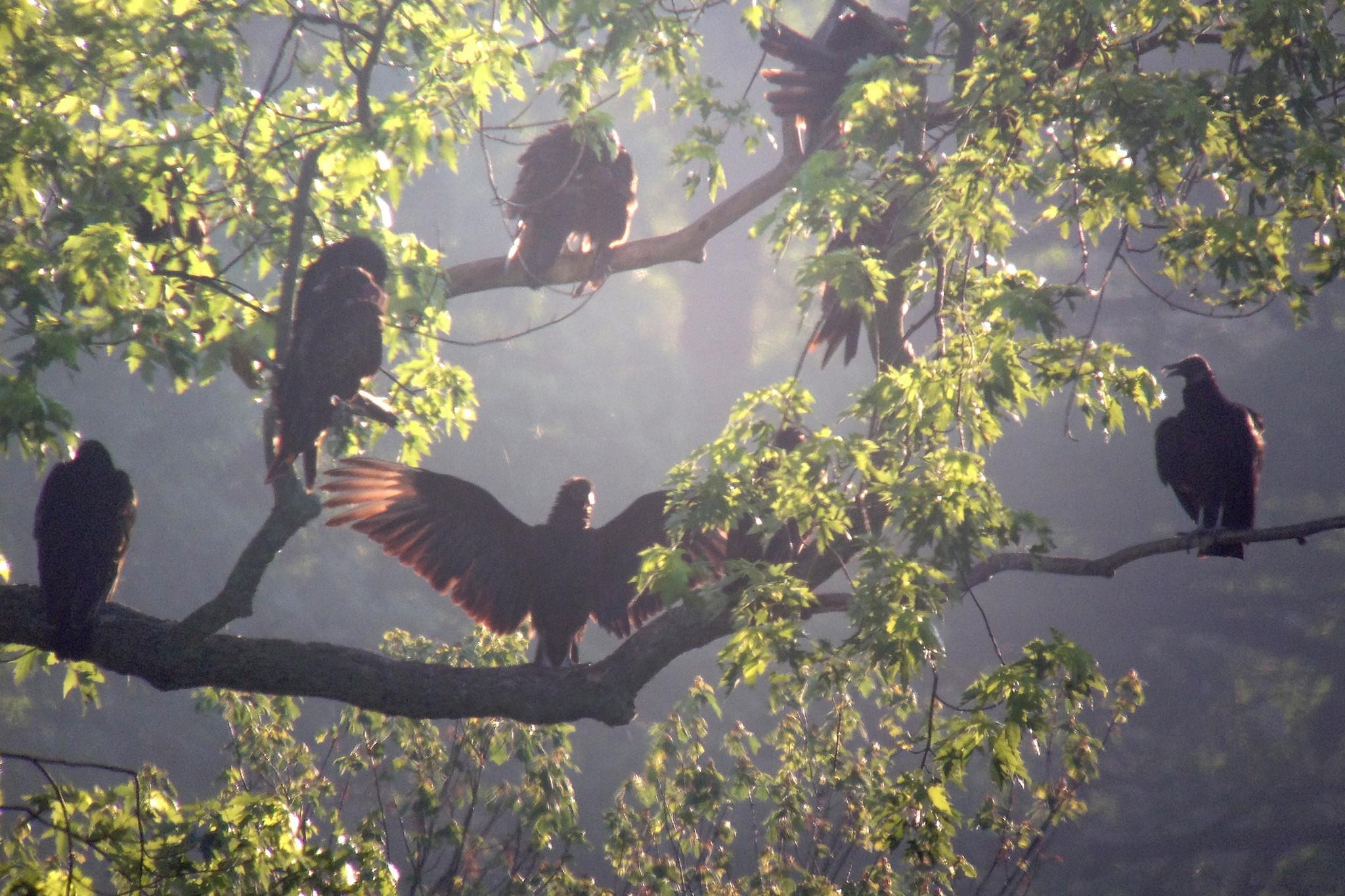
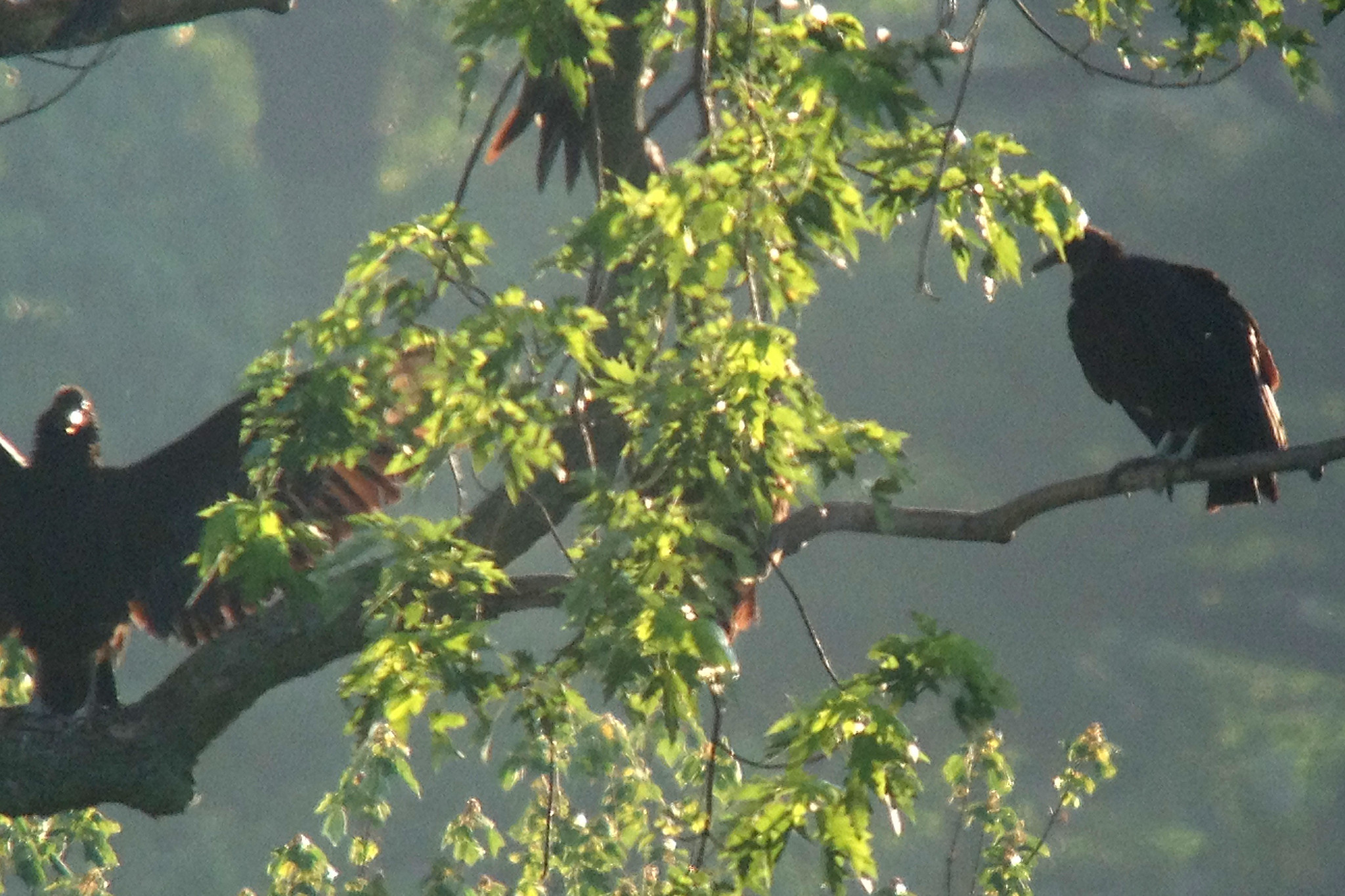
Black Vultures (three in view) with Turkey Vultures, Moody Bridge Rd, Hadley, MA, June 17, 2015
Black Vulture, Moody Bridge Rd, Hadley, MA, June 17, 2015
Black Vultures, Moody Bridge Rd, Hadley, MA, June 17, 2015
I also made early morning stops on Monday and Tuesday to both Lake Wallace and the vulture roost along Moody Bridge Road in Hadley. On Monday I had the Common Gallinule calling but didn't see it during the ten minutes I was there. Other typical stuff around but nothing unexpected. The vulture roost on Monday featured 23 Turkey Vultures plus a calling Black billed Cuckoo. My twenty minute stop at Lake Wallace this morning was the first time I was unable to find a Common Gallinule at this location since June 5 when I first discovered a couple of them there. I have made ten stops there since that day and have had at least one on every visit but today. The vulture roost was a bit more productive and I had at least four Black Vultures plus 39 Turkey Vultures. The four Black Vultures are the most I have ever had together in Hampshire County.