
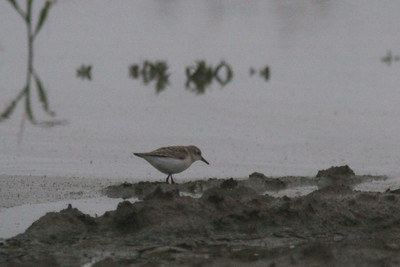
Dunlin, East Meadows, Northampton, MA, May 10, 2025

Dunlin and Spotted Sandpiper, East Meadows, Northampton, MA, May 10, 2025

Short billed Dowitchers, East Meadows, Northampton, MA, May 10, 2025


After another way too busy shift at work I got out this morning and headed out mainly in search of geese and other waterfowl (and whatever else I could find for newly arriving birds). It was still relatively warm for the time of year with light winds but the heavy rain overnight and snow melt made a muddy mess of any dirt road. There was a bit of thick fog in places to start the morning which made viewing tough at times. I hit a few fields and other areas in Hadley and South Hadley as I worked my way toward the Holyoke Dam. Most areas were fairly quiet although I did have at least two very early Tree Swallows below the Holyoke Dam popping in and out of the fog. I also tried for Yellow rumped Warblers in a few locations along the river and came up empty. As I came back north on the west side of the river the fog lifted so I decided to try the very muddy East Meadows for geese and was rewarded with several thousand birds scattered throughout the fields. I immediately noticed a decent sized group of Snow Geese among the hordes of Canada Geese. I then spent the next half hour slowly scanning through the geese in search of unusual species and odd individuals and had success on both endeavors. I found the continued Pink Goose sitting contently at the south end of the meadows as well as the continued pale bodied Canada Goose plus the very uniquely plumaged overall pale Canada Goose that has now shown for a fifth straight winter (I would love to know where this bird stays during the warmer months). I made a post about this really neat looking individual in the fall of 2023. Beyond the geese there were other notables around including 16 Killdeer, two Rough legged Hawks, 280+ Horned Larks, at least two American Pipits and a Lapland Longspur. Around 10:30 the Snow Geese suddenly lifted off followed quickly by all the other geese with large groups heading in various directions. I figured I would stop by the Coolidge Bridge as it looked like some of the geese headed in that direction. I arrived to find hundreds of geese present with more and more arriving over time including my first of the year Greater White fronted Geese as well the individual banded in Greenland.


On my way to work yesterday I stopped off for a bit at the Coolidge Bridge and found 1200+ Canada Geese including the banded bird from Greenland plus the pale bodied bird. I also had a few other birds that had some characteristics of a Cackling Goose but not enough to make me think a pure Cackling Goose.
For those with an interest in the great show of geese check out the post from a a couple days ago that has more unusual geese photos and additional info on the neck banded bird. March is off to a great start for me in Hampshire County with 81 species so far with waterfowl figuring prominently (a big change from last year which featured a horrible waterfowl migration overall). In fact I'm at my highest point for the first week of March ever in the county with one day left (although with high winds tomorrow out of the north I doubt I will find too much new stuff but one never knows!).


I was able to add another unusual shorebird this morning with a Baird's Sandpiper that was originally found by Scott yesterday and it thankfully stayed through the night to be viewed by many today. This adds to numerous shorebirds I ran across yesterday morning during the rain. I thought I saw a Baird's Sandpiper at the location yesterday but the bird flushed before I could see it well and I was never able to relocate it again....certainly glad I could confirm it today. The Short billed Dowitcher was still present along with lots of other shorebirds as well as the four Sandhill Cranes and a flyover Dickcissel. I have now had 16 species of shorebirds for the month in Hampshire County.
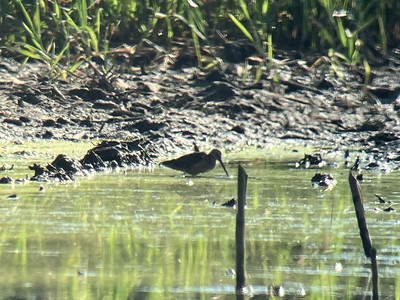
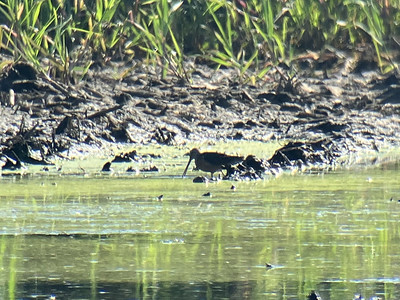


I added a new species for me in Hampshire County today, which is something that has becoming increasingly rare. The story starts yesterday when I was at work and got a text from Theresa letting me know a Long billed Dowitcher was found by David Sibley in the East Meadows. I got more messages over the course of the day about the bird as well as another unusual species including a juvenile Little Blue Heron showed up. Always tough to be stuck at work when some cool birds are so close by. After a busy night at work I headed right over to the East Meadows where I ran across Cory and heard the bird was present earlier but had flown off to a location unknown. I decided to try an area I knew has featured some good shorebird numbers lately and after scanning through the several species present I came up empty as far as a rare bird was concerned. I was walking back to my car and ran across Joe who said he had the dowitcher earlier in the same puddle it was in yesterday, perhaps 15 minutes before. I then headed over to that location and was joined by a handful of others and scanned the area for a bit without any luck. There was at least one Green winged Teal still in the puddle along with a few shorebirds and several herons/egrets. With several people staked out at the original puddle I decided to go back and check where I originally started looking and after a bit I had the bird working the far shore...Hampshire County species #305! (my first new addition to my Hampshire County list this year and my first since the Smith's Longspur in December 2022). I got some distant photos and video through the heat shimmer and then texted a few people I knew were nearby. I also had a (the) juvenile Little Blue Heron flyby in the distance toward the Oxbow in the company of a Great Egret but my focus was on the dowitcher. After watching the dowitcher for awhile and not getting any responses to my texts I started walking back to my car to drive over to the other birders to let them know about the new location for the bird. Apparently as I was walking the bird flew back to the original location of the sighting yesterday and everyone present got to see it. I joined them there and got some more photos. The remaining flooded sections of the meadows still look prime to attract shorebirds and I would not be surprised at all if more rarities show up. I ended up with eight species of shorebirds during my hour and a half plus spent there this morning. I then headed toward home after getting my fill of the birds in the East Meadows with a short stop to check another area for a notable species, with more on that to come at some point. I added three new species for the year in the county in just a couple hours!
Although somewhat expected on the coast, inland records of Long billed Dowitchers are decidedly rare with just a handful of records in western Massachusetts. There are only a couple previous records for the valley in eBird (although there are certainly some older records that have not yet made it into the database).


There were certainly a number of other birds in the meadows as I looked for the dowitcher and figured I might as well add a few of them.

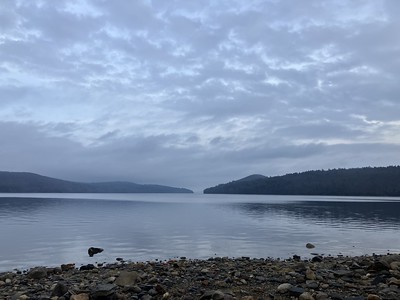

To end 2022 I took part in the Quabbin Christmas Bird Count this morning. I helped cover some areas of Quabbin Park including Winsor Dam. The weather was very unusual for the Quabbin count with temps that started off above freezing and rose to near 50! Usually this count is brutal cold with snow and ice so it was a nice change for sure. I got out listening for owls early and turned up several Great Horned Owls. The rest of my time was spent mainly trying to track down waterfowl and although it was overall fairly slow compared to previous days I still managed eight species of waterfowl with the highlights being all three merganser species including a single Red breasted Merganser in a flock of Common Mergansers, a couple Horned Grebes and a Red necked Grebe. In the bit under two and a half hours I was out helping on the count I found 27 species.


I also did some scouting for count week (three days to either side of the count day) and turned up some waterfowl and other stuff too.

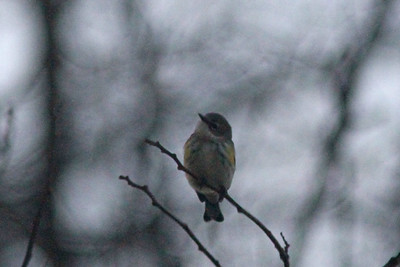


Although I did not set out to break my December record for the county this year I did indeed do so with a large number of rarities for the month, lingering species and some irruptives. My previous best December was back in 2018. I broke the record on the 29th when I spent some time in the East Meadows and then down to South Hadley to an area above the Holyoke Dam where I had species #101 (a female Greater Scaup) that broke my old record. Other rarities around for that morning included a Short eared Owl, Lapland Longspur, Eastern Meadowlark and a Yellow rumped Warbler plus high counts of a number of species. I headed out again on the 30th and hit a variety of areas and found species #102 for the month with an American Kestrel. Other notables for the next to last day of the year included four Black Vultures continuing in Hadley, a returning pale Canada Goose at UMASS (this appears to be the third year for this unique individual as I fist had it in January 2021), the continued Smith's Longspur plus a cooperative Barred Owl at the house. Today brought me to #103 with the above mentioned Red breasted Merganser at Quabbin.




The remnants of Hurricane Ida moved through the area starting on Wednesday and continuing into early Thursday (ending prior to sunrise). Ida came ashore in Louisiana as a Cat 4 hurricane and then headed north and then northeast. We received between 3-5 inches of rain in the local area with much more in areas to the south where major flooding occurred. I hade hopes the weather would ground some migrant shorebirds or entice them to stop following the rain with all the flooded areas. I had to work on Thursday morning so only had a limited amount of time to bird and I debated on where to spend my time and decided on the Honey Pot over the East Meadows as I figured access would be limited in the East Meadows due to muddy conditions. I checked many flooded fields in the Honey Pot that looked perfect for shorebirds but came up totally empty. I had a feeling birds would show up somewhere but without time to check other areas it would be up to others to find them. The first text I got was from Mary letting me know she had an incredible selection of shorebirds including a first county record for Red Knot, Baird's Sandpiper and White rumped Sandpiper. More and more birders arrived and more and more shorebirds showed up with other notables including Buff breasted Sandpiper and American Golden Plover. All of the above mentioned species would be new for me this year with the Red Knot being a potential new species for me in Hampshire County (or for anyone else as it appears to be a first county record). It really killed me to not be able to try to get the Red Knot but I was stuck at work. Typically shorebirds take off after dark if the migration conditions are decent and last night was perfect for the birds to continue their journey south and those trying the next day are usually met with disappointment. Nonetheless I had plans to try my luck this morning after work.
As soon as I got out of work I headed over to the East Meadows with a little bit of hope that at least some of the rarities decided to stick around. I initially tried the area just south of the red barn but the light made viewing tough and there was not too much to see. I noticed a few cars on the opposite side of a large potato field so decided to head in that direction as at least the sun would be behind me and made viewing easier. A note on trying to find shorebirds in the large potato fields in the area...it is damn frustrating and difficult as the keep furrows can retain water (and birds) but make viewing the birds damn near impossible unless they pop up. Moving just a few feet along the farm fields can open up new areas to view and completely block others. It can be really tough to keep moving birds in view as they drop into the dips to feed. I made it over to the eastern side of the field and started scanning and turned up a number of species fairly quickly including Baird's Sandpiper and White rumped Sandpiper (which was really tough to keep track of) as well as multiple Semipalmated Sandpipers and Least Sandpipers. The birds would occasionally flush and some would return with others seeming to head out to other locales. During the two plus hours I spent there birds would drop in and leave from time to time while other stuck around for the duration of my stay. I eventually turned up ten species of shorebirds but I failed to find the rarest birds that apparently took advantage of the great migration conditions overnight. I was certainly happy to turn up at least some Baird's and White rumped Sandpipers but it was tough to miss out on the Red Knot, Buff breasted Sandpiper and American Golden Plover. I have now missed out on at least five species in the last couple weeks due to work that I almost certainly would have had otherwise for the year. Even with these huge misses I still stand at 233 species for the year which is my highest ever total for the year at this point with the closest being a total 223 by September 3rd in 2020, 2018 and 2015. I also checked a few other fields for shorebirds on my way home with the Honey Pot producing just a few Killdeer and a single Lesser Yellowlegs. A nice addition for the year was a flyover Dickcissel.
The question is if the shorebirds were forced down by the weather or if they showed up to take advantage of the decent feeding habitat courtesy of all the rain. I suspect it is a mix with most probably taking advantage of the good habitat which would help explain why more and more birds turned up over the course of the day yesterday. In addition the rain was extremely heavy overnight and started prior to dark on Wednesday night so many birds were likely not airborne to be grounded by the weather.
The tropics continue to be active with two more storms since Ida that made it to tropical storm status before fizzling out in the Atlantic (Julian and Kate). Hurricane Larry is currently about midday between Africa and the Lesser Antilles. The storm is expected to become a major hurricane but should continue northwest before curving harmlessly out to sea although Bermuda could see some impacts.
