Showing posts with label whimbrel. Show all posts

Tuesday, August 24, 2021

Hurricane/Tropical Storm Henri birding

Lesser Black backed Gull, Winsor Dam, Quabbin Park, MA, Aug 22, 2021
Lesser Black backed Gull with Ring billed Gull, Winsor Dam, Quabbin Park, MA, Aug 22, 2021
Winsor Dam (view at 6:30am), Quabbin Park, MA, Aug 22, 2021
Winsor Dam (view at 10:00am), Quabbin Park, MA, Aug 22, 2021
Peregrine Falcon, Winsor Dam, Quabbin Park, MA, Aug 22, 2021
Double crested Cormorant, Winsor Dam, Quabbin Park, MA, Aug 22, 2021

Hurricane Henri turned out to be a bit of a let down as far as birding was concerned with no large influx of pelagic species being deposited inland.  The set up looked perfect for the storm to bring in loads of unusual species but it never occurred.  There were many reasons it looked good including the date of storm in late August with lots of potential rarities out in the Gulf Stream as well as loads of shorebirds (and others) migrating south, the strength of the storm at landfall (forecast to be a Cat 1 hurricane but it actually was a high end tropical storm instead), the forecast to rapidly dissipate over land (making it easier and safer to chase), a track over the gulf stream and an impact to an area with lots of birders looking.  More on the potential of the storm and the tinking behind it can be found at the following link.  Unfortunately the predictions were wrong and the storm way underperformed in regards to displacing birds.  My strategy from the start was to be at Winsor Dam for a large portion of the day and that is exactly were I spent the majority of Sunday.  I arrived at the dam around 5:30 and stayed at the location for nearly five hours before taking a break at home.  Mary was already there when I arrived and the winds were starting to build out of the northeast (the direction they stayed all day).  The rain held off for the first few hours before we started getting some intermittent light rain.  The wind continued to increase and the rain soon did the same but not before we started getting some decent birds with a flyby Black bellied Plover around 7:30 and a Lesser Black backed Gull around 8:15.  It really did look like we were on our way to finding lots of good stuff.  A few more birders joined us as the conditions continued to deteriorate and despite a lot of effort we failed to turn up anything else unusual.  It was fun to watch some Chimney Swifts flying around in the wind (before most quickly returned to their roost in one of the chimneys on the administration building).  A Peregrine Falcon also made a number of passes and effortlessly moved around through the windy conditions.  

Winsor Dam (view at 1:25pm), Quabbin Park, MA, Aug 22, 2021

After an early lunch break at home I returned to Winsor Dam and the weather continued to deteriorate with near horizontal rain at times.  Despite another three hours at the dam the best I could find was an unidentified peep species that zipped by.  As reports from near the coast continued to show little in the way of storm related birds I headed for home for a bit.  After a phone call from Marshall in mid afternoon and some early dinner I once again stopped by the dam for another hour.  Ted was already there and despite our best efforts we failed to turn up anything noteworthy.  Despite a lot of effort by several people on Sunday we failed to turn up much of anything storm related.  Nonetheless it was fun to try although I have to admit I was disappointed as the storm looked so promising to bring in rarities during its arrival.  There was some consolation in seeing that most every other area being watched throughout the northeast also failed to find much from the storm so we were not alone in being disappointed...you have to take the position that even negative data is still data and will hopefully help us figure out the interaction of birds and tropical systems in the future.

Winsor Dam, Quabbin Park, MA, Aug 23, 2021
Wilson's Snipe, Granby, MA, Aug 23, 2021
Solitary Sandpiper, Granby, MA, Aug 23, 2021
Least Sandpipers, Granby, MA, Aug 23, 2021
Killdeer, Granby, MA, Aug 23, 2021
Spotted Sandpiper, Holyoke Dam, South Hadley, MA, Aug 23, 2021
Least Sandpipers, Holyoke Dam, South Hadley, MA, Aug 23, 2021
Northern Parula, Holyoke Dam, South Hadley, MA, Aug 23, 2021

On Monday morning I headed back again at dawn to Winsor Dam in the vain hopes of finding something unusual that dropped in overnight but I once again came up empty at the dam.  There was actually a bit of sun early on as Henri had moved off to our southwest and was centered in New York state on Monday morning. Although I had no luck in turning up any storm related birds I did have two nightjar species during the stop with at least two Eastern Whip Poor Wills still singing and a flyby Common Nighthawk. With little luck at the dam and ample rain during the storm I decided to make a few stops in search of shorebirds before having to return to the house to get a few things cleaned up after the storm. The small puddle in Granby that has featured a few shorebirds with a Wilson's Snipe showing well plus half a dozen Solitary Sandpipers as well as Least Sandpipers and Killdeer. My final stop was down to the Holyoke Dam where I had half a dozen Spotted Sandpipers and 13 Least Sandpipers. I checked multiple times through the roosting gulls in the hopes of finding something unusual but found only Ring billed Gulls.  As I was leaving I came across a small mixed species flock and had yet another early Northern Parula. 

Whimbrel, Oxbow, Northampton, MA, Aug 23, 2021

After arriving home I saw some interesting reports of rare shorebirds show up with the first being a Whimbrel at the Oxbow and then a report of initially 60, which was then revised up to 104, Hudsonian Godwits flying by in a single flock in Longmeadow.  Hudsonian Godwits are exceedingly rare inland many years between sightings.  The count of 104 is almost certainly the highest count ever for the species in western Massachusetts.  I have only seen the species once in the area and that was during Irene when we had a dozen flyby Winsor Dam.  I finally got the work done at the house and decided to try my luck in finding the Whimbrel before I had to head for work. At this point the remains of Henri were starting to pivot back through and the rain was starting to increase once again. I got good looks at the Whimbrel as it fed in a grassy field although it would occasionally disappear from view. I searched around for other stuff and was hopeful that the increasingly heavier rain would force more stuff down but I had no luck and was running short on time. Later in the afternoon I got a report from Steve of a Laughing Gull at the Oxbow and then more rarities started showing up including a Ruddy Turnstone and Black bellied Plover. The gull flew off after only a few people got to see it but the shorebirds stayed around for others to see it (unfortunately I was not one of them). The rain continued into the beginning of the overnight but came to an end around midnight.

Snowy Egret, Holyoke Dam, South Hadley, MA, Aug 24, 2021
Great Blue Heron and Great Egret, Holyoke Dam, South Hadley, MA, Aug 24, 2021

Today dawned clear and that unfortunately meant the unusual species from the day before had probably already left (this typically occurs with storm downed birds...as soon as the weather clears they head out).  Nonetheless sometimes bird do stick around so I headed out after work to check a few spots before having to be in Hadley for an appointment.  I started at Arcadia and the heavy rain of the previous day had raised the water levels in the river to the point where there was almost no sandbar left at the Oxbow.  There were no shorebirds or unusual gulls to be seen so I decided to try my luck at the Holyoke Dam (mainly hoping to relocate the Laughing Gull).  I had no luck finding the gull but I was initially hopeful as among the Ring billed Gulls were two young Herring Gulls that were likely the same individuals I had at Arcadia the day before.  The river was much higher and there was little in the way of habitat for any shorebirds.  While scanning the area I came across a small white egret and after a while it showed itself well enough to determine it was a juvenile Snowy Egret.  It was a tough bird to get good looks at but eventually it came out into the open for a bit.  I also checked a few other puddles and open fields but didn't find anything unusual.  It appears no one else found anything else unusual in the area this morning despite a lot of people looking.

The tropics continue to be active with three more areas of potential development over the next several days including an area off Central America into the southern Gulf of Mexico, an area to the east of Bermuda and another wave coming off of Africa a few hundred miles southwest of the Cabo Verde Islands.  None of these are any threat at all to this area in the foreseeable future but always worth keeping an eye on the tropics as hurricane season peak is approaching.  

Saturday, September 14, 2013

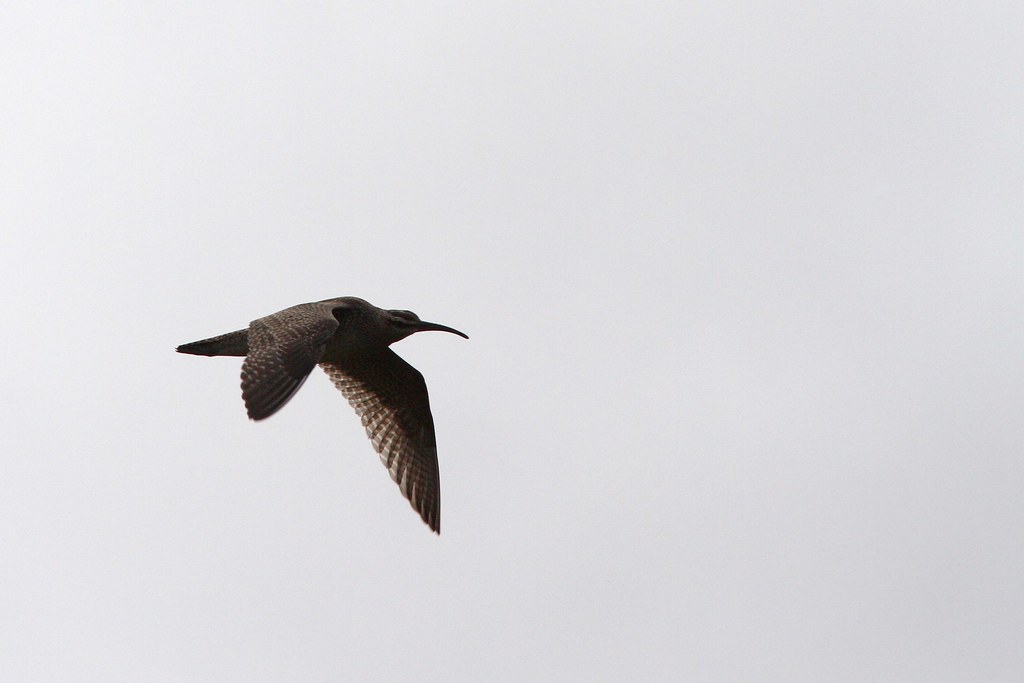
Whimbrel in Hadley and other stuff

Whimbrel, Honeypot, Hadley, Sep 14, 2013
Lincoln's Sparrow, Orchard Hill UMASS Amherst, Sep 14, 2013
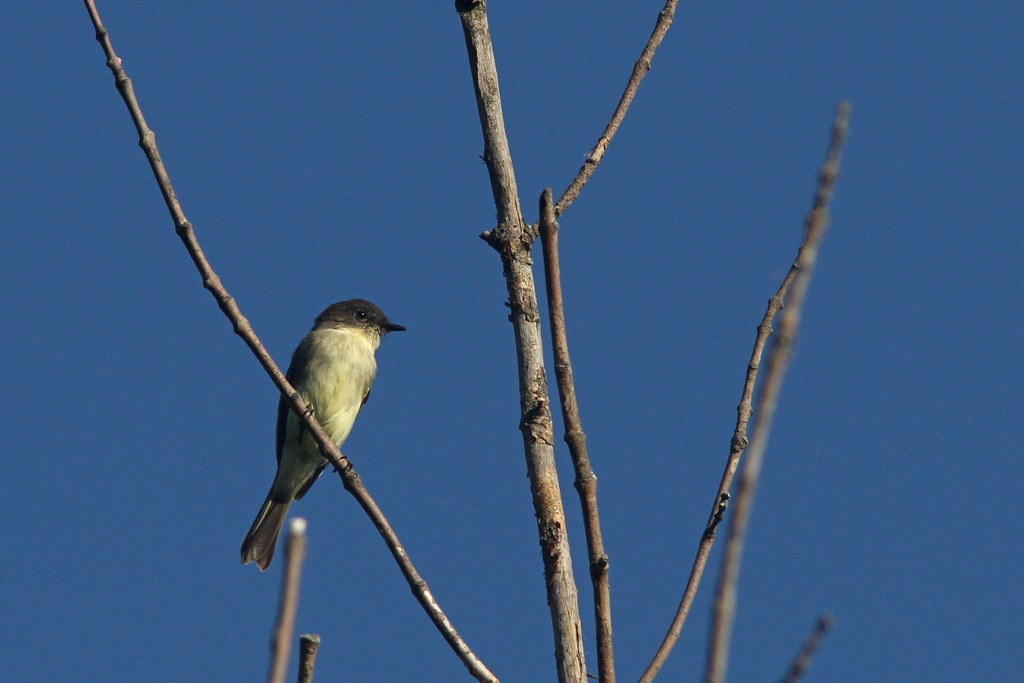
Eastern Phoebe, Orchard Hill UMASS Amherst, Sep 14, 2013
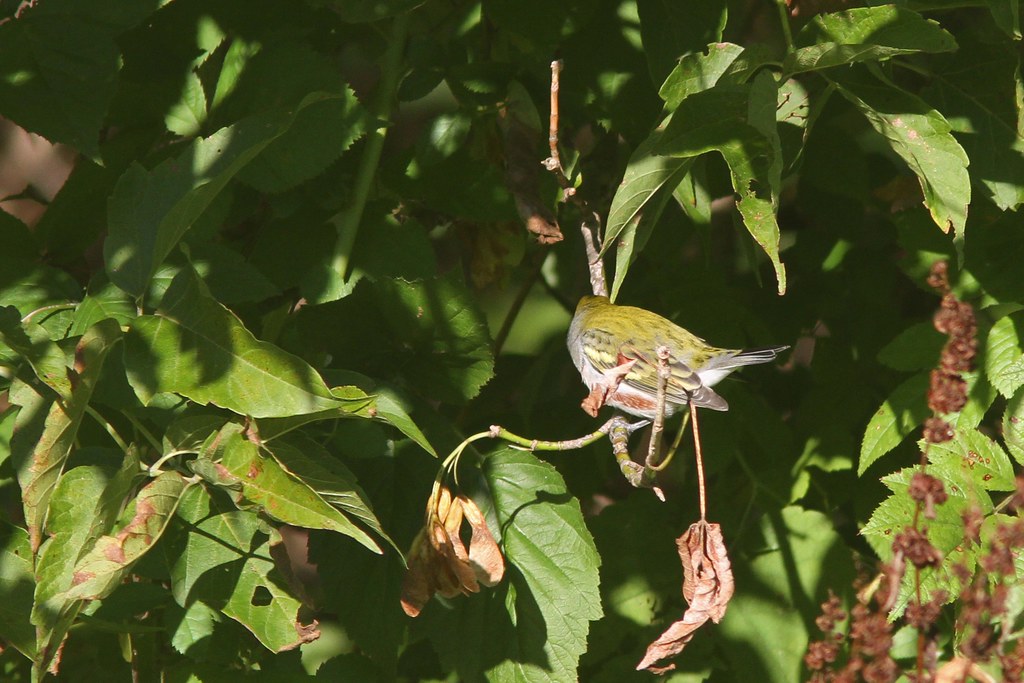
Chestnut sided Warbler, Orchard Hill UMASS Amherst, Sep 14, 2013
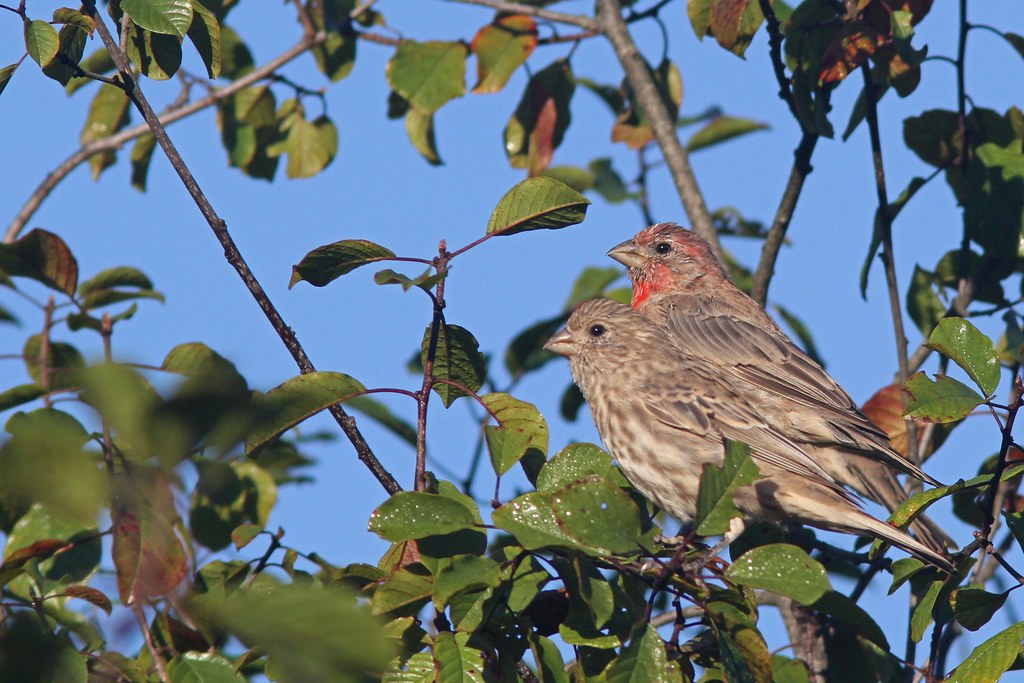
House Finch, Orchard Hill UMASS Amherst, Sep 14, 2013
Blackburnian Warbler, Orchard Hill UMASS Amherst, Sep 14, 2013
House Finch, Orchard Hill UMASS Amherst, Sep 14, 2013
Northern Flicker, Orchard Hill UMASS Amherst, Sep 14, 2013
I woke up well before dawn and did a little listening for flight calls and heard a few so I had high hopes of finding some good stuff. I headed over to Orchard Hill where I spent a few hours in the morning cold waiting for the sun to warm things up. Had at least five Wood Thrush calling before dawn as well as a Veery. One of the best birds up there today was a flyby Dickcissel that called a few times right around 6:30. Had a few small groups of migrants in various spots but a handful of raptors kept activity low in otherwise productive areas. Only had seven species of warbler although more where certainly passing by overhead that were additional species. Other migrants included a bright Philadelphia Vireo, three other vireo species, at least three Scarlet Tanagers, Indigo Bunting and a few sparrow species including a Lincoln's Sparrow. As the hill seemed to be getting even more quiet I headed over to Sylvan Woods where I had a few more species of warbler including a Canada Warbler plus another Lincoln's Sparrow. It had gotten breezy and cloudy at this point so I decided to leave there around 9. I almost headed for home but decided instead to make a stop at the honeypot to see if the late staying swallows were still around (I was certainly happy about that decision later!)

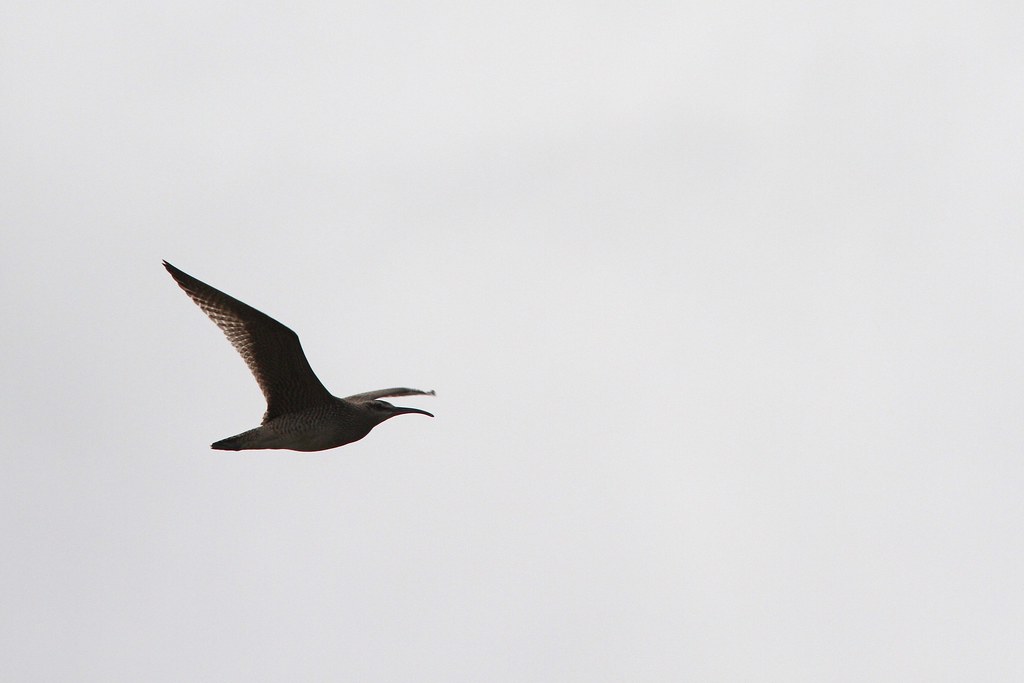
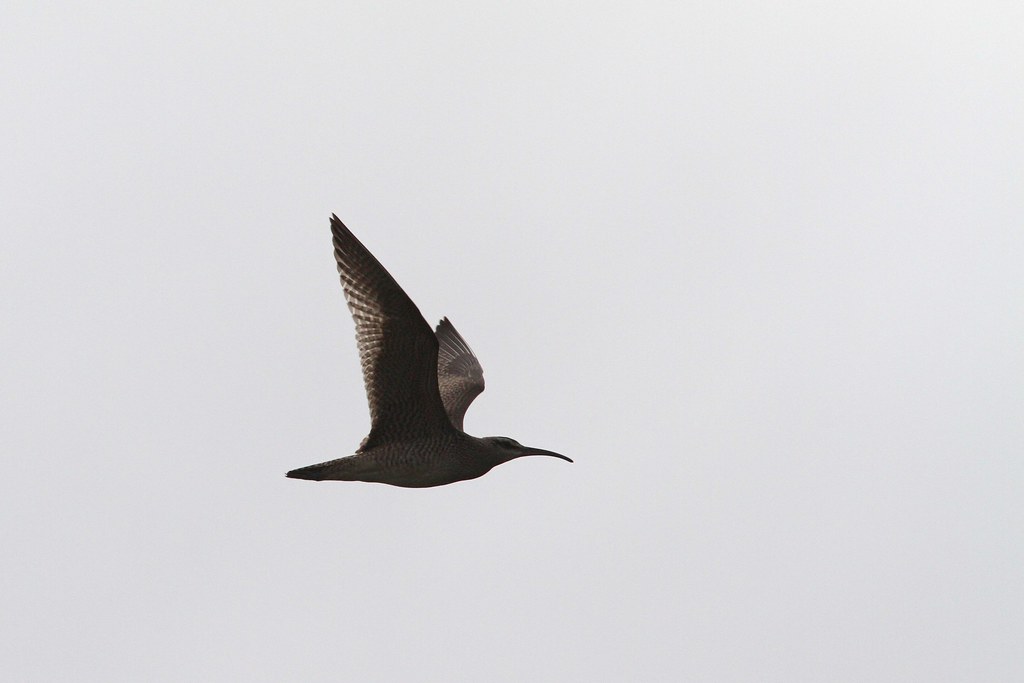
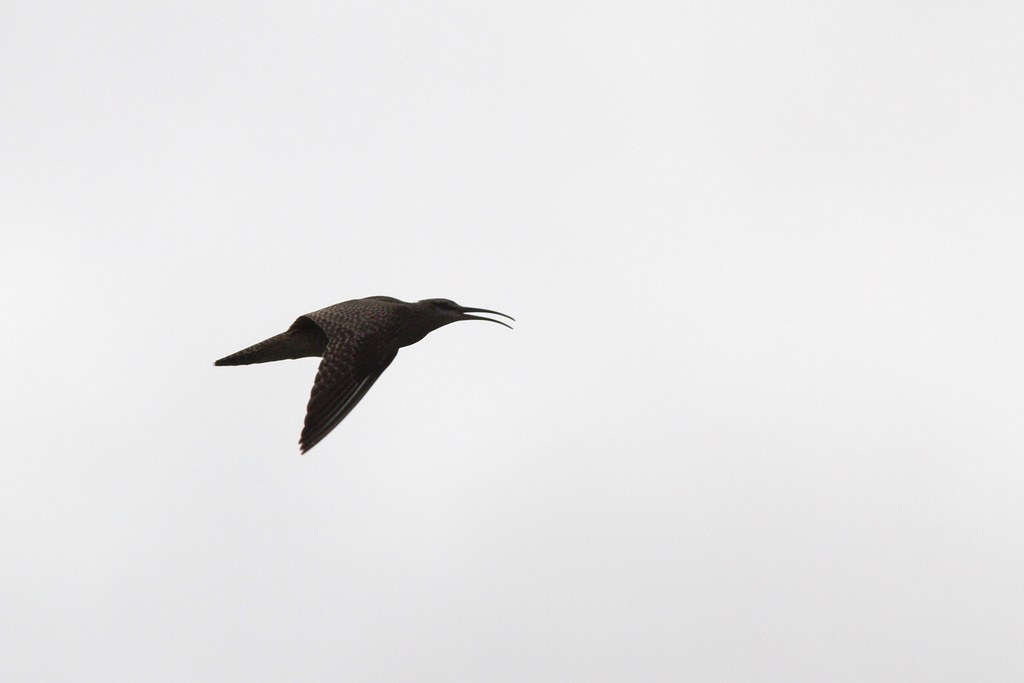
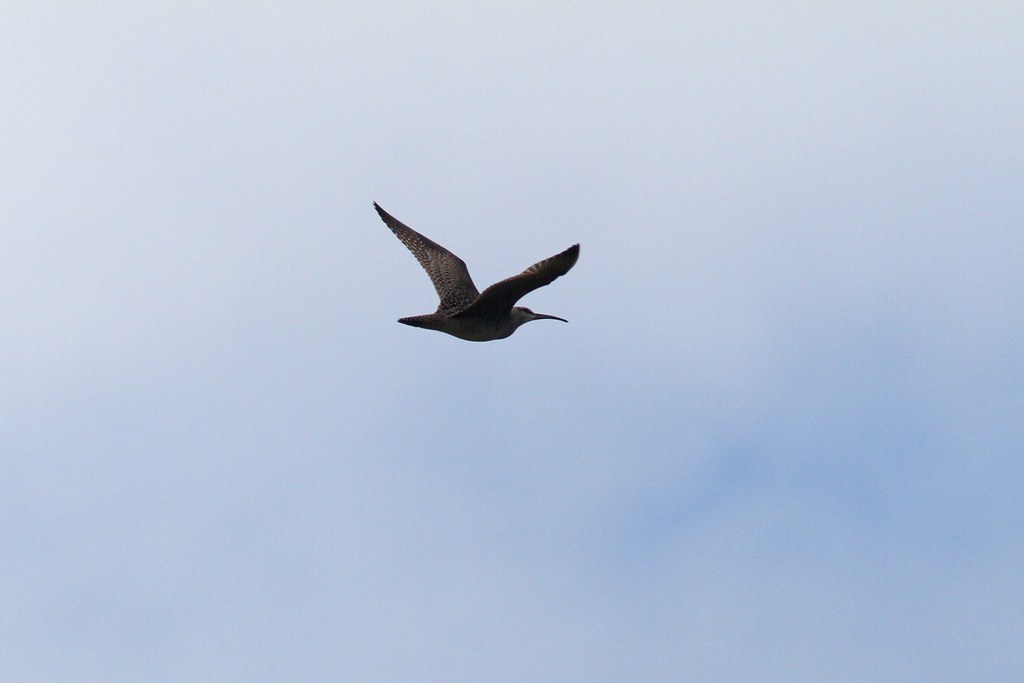
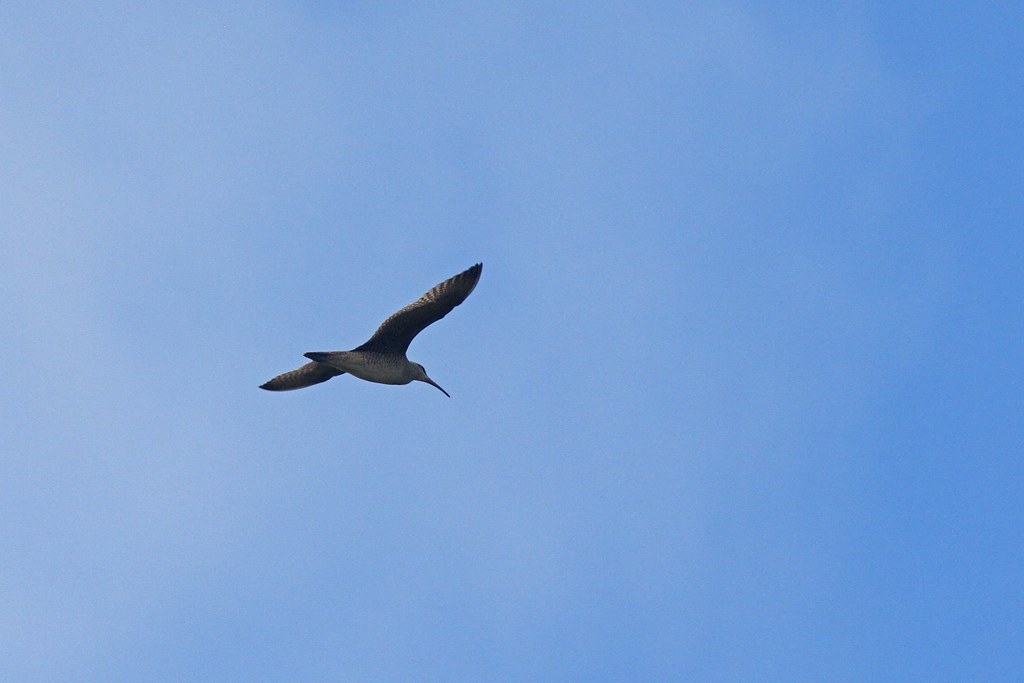
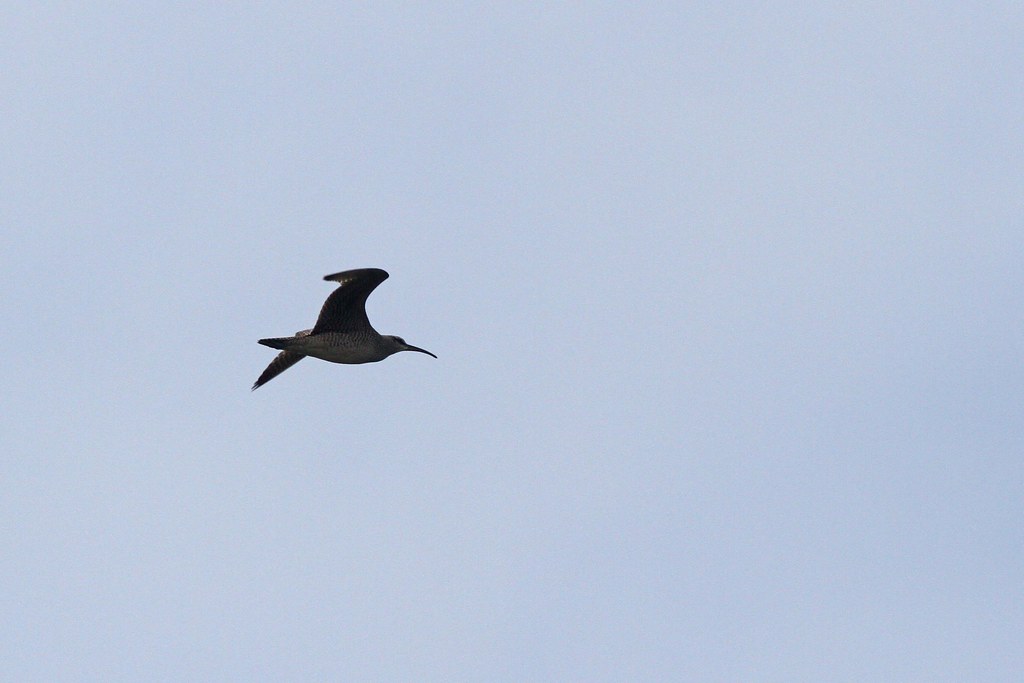
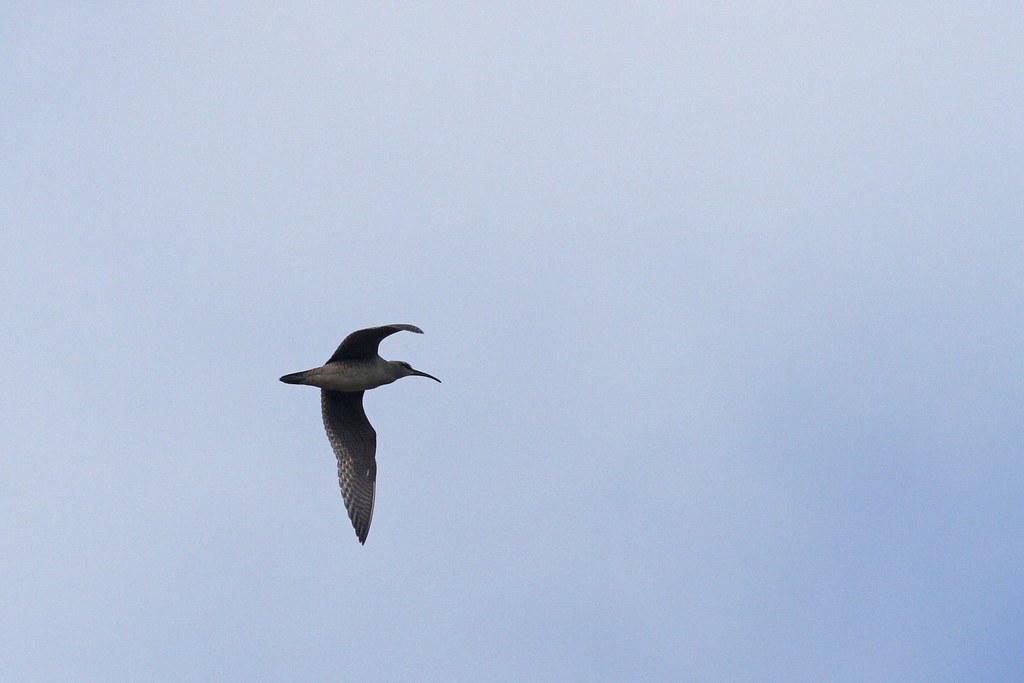
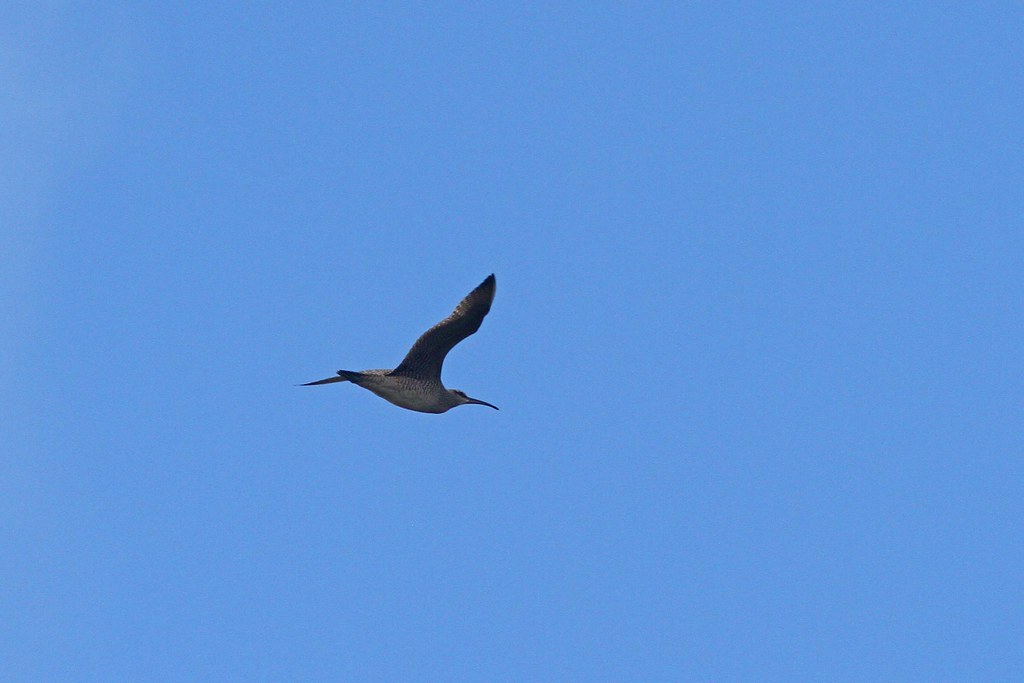
Whimbrel, Honeypot, Hadley, Sep 14, 2013
I arrived at the honeypot around 9:30 and stayed on the dike scoping out the fields and along the river. I picked up a handful of swallows working there way along the river including at least five Bank Swallows, a Cliff Swallow, 11 Barn Swallows, a couple Tree Swallows and others too far out to ID plus at least 14 Chimney Swifts. Although quite a reduction from the hundreds just the other day, I was still happy to find any. The raptor show was also in full swing with nine species including a Peregrine Falcon that kept harassing a pair of Cooper's Hawks, a Merlin that then harassed the peregrine and almost twenty Broad winged Hawks in small kettles. Also still some Bobolinks 'binking' there way overhead. As I was walking back to the car to leave I heard a bird call that grabbed my attention as I noticed a large shorebird heading right at me from the area of the transfer station. I knew immediately it was a Whimbrel and started snapping off photos as it swept past the dike at a height of maybe 25 feet and then gained a little altitude and headed south toward the Coolidge Bridge and perhaps the East Meadows. The bird called over and over as it flew by. Whimbrel is quite an unusual bird inland and I have only had one other record in the county and that occurred in August 2011 at Winsor Dam during Hurricane Irene. Not a bird I was expecting today as the few records of it inland almost always occur with stormy, rainy weather. I'm not sure if the bird was in one of the fields and was flying out when I saw it or if it was just passing through. I had scanned the fields but came up empty just a little earlier but the bird could have been hidden in the grass or in another field further away. I was very excited to see the bird as it was so unexpected.  The Whimbrel added another species to my county list for the year bringing my total to 224, just four shy now of my previous record of 228 from last year.


Friday, August 24, 2012

Birding Plymouth county...life bird #700


Yellow-breasted Chat, Manomet bird banding station, Aug 23, 2012
 
On Thursday I did something I do not normally do and that is take a trip out to the eastern end of the state.  I usually avoid the area as it is too busy for me typically and there are so many good spots closer to home.  However I decided to take up Ian Davies on his offer to show me around the Plymouth area checking on shorebirds and stopping by the Manomet Center for Conservation Science to check out the ongoing banding operation there.  http://www.manomet.org/

Manomet Point view, Aug 23, 2012


I left home predawn to make the two hour trip out to the coast arriving out there around 7am.  I met up with Ian and we were soon on our way for a full day of birding.  Our first stop was at Manomet Point to scan the ocean for birds including the possibility of some storm-petrels.  We scanned the ocean but came up short on any storm-petrels.  We did have at least one Northern Gannet, a few Common Loons and a variety of gulls, terns and cormorants as well as a scattering of shorebirds. 
Blue-gray Gnatcatcher, Manomet bird banding station, Aug 23, 2012

Yellow-breasted Chat, Manomet bird banding station, Aug 23, 2012

Removing Gray Catbird from net, Manomet bird banding station, Aug 23, 2012

Removing Alder Flycatcher from net, Manomet bird banding station, Aug 23, 2012

Tufted Titmouse, Manomet bird banding station, Aug 23, 2012

View from Manomet Center for Conservation Science, Aug 23, 2012

Downy Woodpecker, Manomet bird banding station, Aug 23, 2012


We then went over to check out the bird banding operation arriving there a little before 7:30.  The banding team of five was just finishing up the processing of birds from the first net run of the day at 7am.  There was a handful of Gray Catbirds (the most common species captured here) as well as a first of the season Blue-gray Gnatcatcher.  Between the hourly net runs I got to see some of the history of this long operating banding station.  The variety of rare and unusual birds caught here over years is quite remarkable and would deserve a blog post all on their own.  The various tools, bands, nets etc used in  capturing and processing the birds is quite interesting to see close up.  We joined the banders on three hourly net checks and captured a variety of other birds including several more Gray Catbirds, a Yellow-breasted Chat, Eastern Phoebe, Tufted Titmouse, Northern Cardinal and Alder Flycatcher.  The Alder Flycatcher ID was the most time consuming to make as specific measurements and other criteria was needed to ID a species that is typically identified my call.  After processing the birds from the 10am net check we headed out to our next birding stop.


Yellow crowned Night Heron-adult, Bluefish River, Duxbury, MA, Aug 23, 2012

Yellow crowned Night Herons (adult-right, juvenile upper left), Bluefish River, Duxbury, MA, Aug 23, 2012

Great Egret, Bluefish River, Duxbury, MA, Aug 23, 2012
We took a drive north to Duxbury to check on some Yellow-crowned Night Herons that have been seen along the Bluefish River there.  We got there and scanned quickly and found nothing besides a Green Heron, Great Blue Heron and some Greater Yellowlegs.  We then scanned the trees and found a juvenile well hidden in a tree.  We were about to head out when we stopped to scan the trees one more time and this time we found an even more hidden adult.  Amazing how well they blend in.  A few Great Egrets came into the area as we were leaving.
Blue-winged Teal, Daniel Webster Wildlife Sanctuary, Marshfield, MA, Aug 23, 2012


Daniel Webster Wildlife Sanctuary, Marshfield, MA, Aug 23, 2012

After the Bluefish River we headed even further north to Daniel Webster Wildlife Sanctuary in Marshfield. We wanted to try and catch up with some lingering Purple Martins but they seem to have all left for the season. A brief walk to a few of the blinds produced a group of three Blue-winged Teal, a flyover Osprey carrying a fish, several Eastern Phoebe’s and a variety of other expected birds. By this time it was early afternoon so we headed back to Ian’s house to get a different vehicle to head out to Plymouth Beach.

Snowy Egrets, Damon's Point Road, Marshfield, MA, Aug 24, 2012

Bald Eagle, Damon's Point Road, Marshfield, MA, Aug 24, 2012

Our final stop on our trip north was up to Damon's Point Road in Marshfield.  We had some fairly decent groups of shorebirds here with the vast majority being Semipalmated Plovers and Semipalmated Sandpipers plus a handful of Greater Yellowlegs. The marshes had small groups of waders in them including Great Egret, Snowy Egret and Great Blue Heron. A juvenile Bald Eagle came in and flew off to the west just before we headed out. There was also hundreds of swallows (mainly Tree with a few Barn Swallows) feeding over the marsh.

Piping Plover, Plymouth Beach, Plymouth, MA, Aug 23, 2012

White-rumped Sandpiper with Sanderling, Semipalmated Plover and Semipalmated Sandpipers, Plymouth Beach, Plymouth, MA, Aug 23, 2012


Sanderling with tag "C7Y", Plymouth Beach, Plymouth, MA, Aug 23, 2012
 
Common Tern, Plymouth Beach, Plymouth, MA, Aug 23, 2012

Whimbrel (center), Plymouth Beach, Plymouth, MA, Aug 23, 2012

Sanderling flock, Plymouth Beach, Plymouth, MA, Aug 23, 2012

We ended the day by being at Plymouth Beach for high tide to check on what shorebirds and terns were around.  We arrived around 1:45 or so and drove up to the end of Plymouth Beach.   We walked out onto the beach and immediately had groups of shorebirds numbering into the hundreds.  The most prevalent species were Semipalmated Plover, Semipalmated Sandpipers, Sanderlings and Short-billed Dowitchers.  There were also a number of Black bellied Plovers around with some in near breeding plumage.  Other species of shorebirds included Whimbrel, Red Knot, Dunlin, Piping Plover, Ruddy Turnstone, White-rumped Sandpiper, Least Sandpiper plus a possible Western Sandpiper.  The terns were also present near the tip of the beach with the vast majority being Common Terns with a lesser number of Roseate, Black, Least and Forester’s Terns.  Overall the sight of thousands of shorebirds and terns was very impressive but was actually much reduced from what is normally present according to Ian.  Another note of interest was the number of leg tagged Sanderlings present (I will add more details on these in a future post as I get more info).   There were also hundreds of gulls around including Great Black backed, Ring-billed, Herring and Laughing Gulls.  We stayed there until a little after four when Ian had to leave due to a prior commitment and I made the drive back west.  Overall it was a great day of birding and I managed to reach a milestone in birding on this trip as I found my 700th species when we caught up with some Roseate Terns at Plymouth Beach.  A thank you to Ian and others at the Manomet bird banding station for a fun day of birding 'out east'.