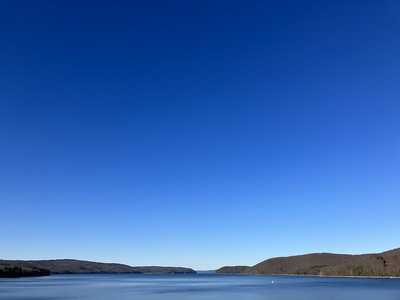
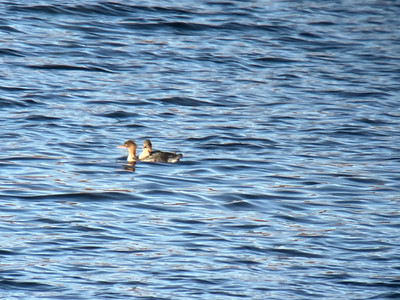
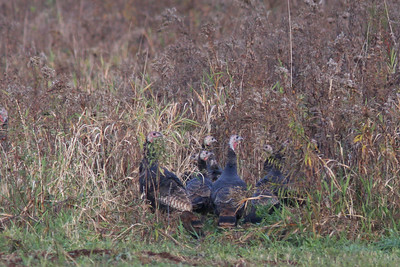
After the epic find yesterday of a Common Eider at Winsor Dam I was not expecting to find another big rarity at the dam but that is indeed what happened. I arrived at Winsor Dam a bit before dawn with the slim hope that the eider would still be around and hopefully closer in. I started scanning the water and had just a few species of waterfowl (Bufflehead, three Long tailed Ducks and a couple Hooded Mergansers). The only gulls were way out and were just a white blob. The gulls lifted off in small groups with most heading off to the southwest but a few came in and landed back on the water a bit closer. As I was scanning through the gull flock I noticed a single Bonaparte's Gull among the Ring billed Gulls. As I continued scanning in the dim light I came across another bird among the Ring billed Gulls that was slightly smaller then they were but larger than the Bonaparte's Gull. I quickly noticed a dark bill, a black smudge behind the eye and a black partial collar...a juvenile Black legged Kittiwake. I tried to get some photos with the phone through the scope but the results turned out to not show much at all. After a few minutes the birds lifted off and I easily picked out the kittiwake by flight style and bold black "M" on the upper wing. I watched it through the scope as it moved around and I shot off photos with the phone through the scope to try to get some documentation. Surprisingly I got a few shots that at least showed some of the field marks. The bird continued to fly around and moved off to the north by itself. I lost track of it so not sure where it finally ended up. I got the word out once again to others but with the bird no longer visible I knew it would be tough for others to enjoy this bird unless it decided to return (which it did not do unfortunately). Given the strong southerly winds overnight and into today and clear conditions I have no idea what induced the kittiwake to drop in today. Black legged Kittiwake is a rare bird here and is almost always associated with rainy weather and strong winds. My other records in Hampshire County include three at Winsor Dam in late October last year, a single at Winsor Dam in early November 2012 in the wake of Hurricane Sandy and a group of five in mid October 2005 at the Oxbow in Northampton. These sightings make up the bulk of sighting ever of this species in Hampshire County. I wonder what tomorrow will bring or perhaps what will show up after the remnants of Hurricane Nicole move through overnight into Saturday. One thing is for sure the temps and humidity will certainly be high tomorrow and through early Saturday with highs in the upper 60's again.
My observations and sightings in nature from both my local area and much further afield. Focus is always on birds but other parts of nature make it on here too.
Thursday, November 10, 2022
Black legged Kittiwake this morning at Winsor Dam
Wednesday, November 9, 2022
COMMON EIDER at Winsor Dam! My Hampshire County species #304
It is a rare event when I add a new species to my Hampshire County list but it happened this morning when I found a female Common Eider at Winsor Dam! I arrived at the dam a little after ten in the morning after visiting a few other spots along the river after getting out of work (more on that below). I set up the scope and started scanning and came across a few birds on the water including a large raft of Black Scoters (totaling a bit over fifty birds) plus a single each of Surf Scoter and Common Goldeneye plus a few Bufflehead. I then caught sight of a somewhat large brown bird on the water swimming almost directly at me. I knew it was something unusual but the distance and the profile of the bird made it tough to figure out but an eider species was certainly on my mind. After looking at the bird for just a few minutes Ted arrived and I got him quickly on the bird and we both concurred on eider (likely common) but views were tough. We alternated between studying the bird, getting crummy distant photos and video and notifying other birders. The bird would occasionally give some side profiles views and we became more confident of it being a Common Eider. The bird continued to get closer (at least for Quabbin) and was out near the large orange buoy at its closest approach. At this point Scott arrived and very shortly thereafter the eider took off and flew further out where it joined a group of Black Scoters. More birders continued to arrive and all present got to see the bird. It was tough to pick out at times within the scoter flock, especially when it had its head tucked in. If we had not seen it when it was closer I don't think we would have been able to identify the bird once it was much further out and with the scoter flock. It is always satisfying to find a rare bird and it is made more satisfying when others get to see it and enjoy it too. This appears to be just the third county record with previous ones being from Oct 8, 1988 at Winsor Dam and April 19, 1997 at the Oxbow, with both previous records coming from Tom Gagnon. Common Eider is an extremely rare species inland overall in the state and not sure why this bird showed up here today as the conditions were sunny and somewhat calm. There certainly were some northerly winds the last two days but the species is not known to stray very far from coast, even in bad weather conditions. The Common Eider becomes Hampshire County species #304 for me and Quabbin species #255 and Winsor Dam species #216 (thanks to eBird for keeping track of of these numbers). I returned to Winsor Dam around 2PM and the Common Eider continued with a group of Black Scoter. Unfortunately it didn't come in any closer and I had to be content with distant views once again. This time of year can be great for rarities and I have had a bit of a track record of turning up stuff at Winsor Dam around this date with two of my four first Hampshire County records occurring at Winsor Dam and both on November 11 (King Eider in 2013 and a Pacific Loon in 2015). I will certainly be keeping my eyes out for more unusual species showing up over the next few days.
Before finding the Common Eider I had visited a few other locations and turned up some more unusual species including a pair of Sandhill Cranes in Hatfield and some flyover Evening Grosbeaks at Arcadia.
This mega rarity comes on the heels of several other unusual species I have had so far this November including a Red Phalarope on the first, Yellow headed Blackbird on the third, a couple late warbler species and a Golden Eagle on the seventh plus some tough to find species like American Coot and Ruddy Duck. In the first nine days of the month I have found a total of 105 species in Hampshire County, which is my second highest total at this point of the month with lots of potential species still to come (my best at this point was 2020 when I had 113 species by the ninth and ended the month with 122...we will see if I can beat this total).
Monday, November 7, 2022
Golden Eagle and some late warblers to end the first week of November
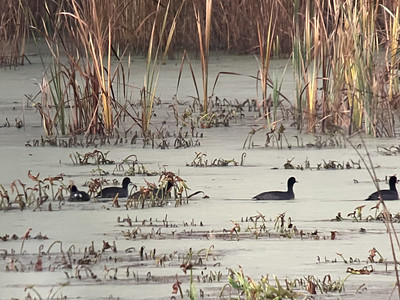
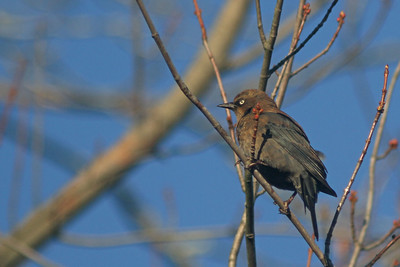
On my way to work yesterday I took advantage of the earlier sunrise to try my luck in relocating the Yellow headed Blackbird I found in Hatfield on Thursday as it left a large roost of blackbirds, grackles, cowbirds and starlings. Unfortunately I did not have any luck finding the Yellow headed Blackbirds but the number of birds using the roost appeared to have dropped substantially from several thousand to perhaps a bit over a thousand and many of the birds did not head due south as had been the case a few days before. The one highlight during my short time out included a high count of American Coots.
Thursday, November 3, 2022
Yellow headed Blackbird, American Coots and other waterfowl for the last two days
After my time at Great Pond I started my way toward home but did stop for a short visit to Silvio Conte NWR-Fort River looking for warblers but finding none at all. It was not a totally unproductive stop as I had three Turkey Vultures and three Evening Grosbeaks that flew by calling and headed off to the southeast...the grosbeaks look to be staging an incursion into the area that is just beginning and hopefully lots more will follow. I also made a brief stop at a dead calm Winsor Dam where I had nine species of waterfowl including a couple Red breasted Mergansers and a distant Red throated Loon.
Tuesday, November 1, 2022
RED PHALAROPE this morning plus other lingering species to start November
I was not expecting to find a Red Phalarope today but sometimes the unexpected occurs. I got out of work on this drizzly morning (and warm) morning and decided to hit a few areas in Hadley on my way home (more on that below). I almost didn't even stop at Winsor Dam as the rain was steadily picking up as I headed for home but I thankfully decided to stop. I arrived just before ten to limited visibility due to the light rain and low clouds and fog. I scanned with binoculars and quickly found a Common Loon and a few gulls loafing out near a large orange buoy. I quickly took out the scope and scanned through the ten gulls present in the hopes of turning up some unusual gull but only had Ring billed Gulls. As I was watching the gulls I had a bird fly in and land on the water right next to them and a immediately identified it as a phalarope of some type. The bird spun around in typical phalarope fashion before it took off and flew around a bit before settling down again. There was no obvious white rump (ruling out Wilson's Phalarope) and the underwings looking mainly light (ruling out Red necked Phalarope) so I concluded it was a Red Phalarope. The bird would settle on the water for a few minutes and then take off and fly a bit before settling again on the water again. It did this several times during the time I was watching it. I got the word out to as many people as I could but unfortunately no one else was able to relocate the bird again. Red Phalarope is a very rare bird inland in western Massachusetts and this becomes just my third individual for me in Hampshire County (with all my previous records occurring at Quabbin Park in May of 2011 and September 2020). My attempts at photos through the scope were abysmal but some video turned out a bit better and I have links to the videos attached below:
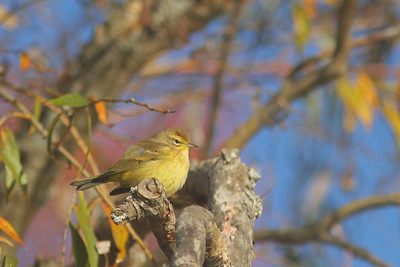
Before I found the phalarope I visited a few other areas in Hadley on my way home, mainly looking for some late warblers and finding three species (with a Common Yellowthroat and a couple Palm Warblers being a bit late). In addition to the warblers I found a few other late species including two Eastern Meadowlarks at Silvio Conte NWR-Fort River and an Eastern Phoebe at Hickory Ridge. I ended the day with 53 species to start out the month. The forecast for the next week looks to feature above normal temperatures with sunny conditions so hopefully I will turn up some more lingering species.
Sunday, October 30, 2022
October comes to an end
I ended the month with a few stops on my way home on a chilly morning mainly looking for warblers and I found three species including a late Common Yellowthroat and a few late Palm Warblers. I also added my first Snow Bunting for the fall, bringing my total for the month in Hampshire County to a slightly above average 151. The forecast for the next week or so looks to feature above normal temperatures continuing with no really cold weather in the immediate future.
I added a more waterfowl for the month on the 28th following a big night of migration (the biggest night of the fall for overall numbers according to Birdcast with an estimated 4.28 million birds passing over the county). I thought Arcadia would be the place to be but the area turned out to be quite quiet with little in the way of passerine migration evident. I did have woodcocks still flying around in the morning plus continued decent numbers of Purple Finches flying over but sparrow numbers were very low and the only warblers around were some Yellow rumped Warblers. A group of four Black Scoters in the Oxbow were a bit unusual for the location but not totally unexpected given the large number of the species being reported elsewhere on larger bodies of water. After running some errands in Northampton I headed over to Winsor Dam and found large numbers of Black Scoters continuing with at least 266 present in a few groups. There were also a couple Red necked Grebes way out. I then headed home to take Wilson for a walk and do stuff around the house. Late in the afternoon I headed back to Winsor Dam and the waterfowl were even more impressive with 316 Black Scoters, 3 Surf Scoters, 17 White winged Scoters, 5 Long tailed Ducks, four Red breasted Mergansers among some eleven species of waterfowl. There were also three Bonaparte's Gulls mixed in among the Ring billed Gulls.