Friday, May 24, 2013

Winsor Dam and predictions for the upcoming hurricane season


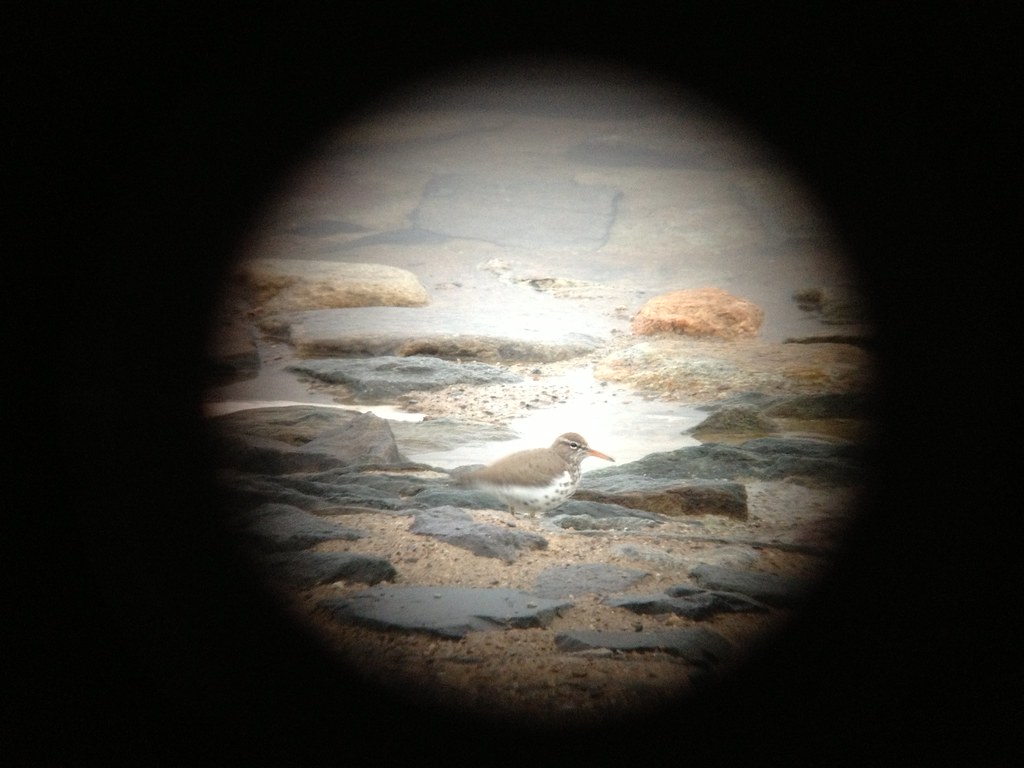
Spotted Sandpiper, Winsor Dam, May 24, 2013
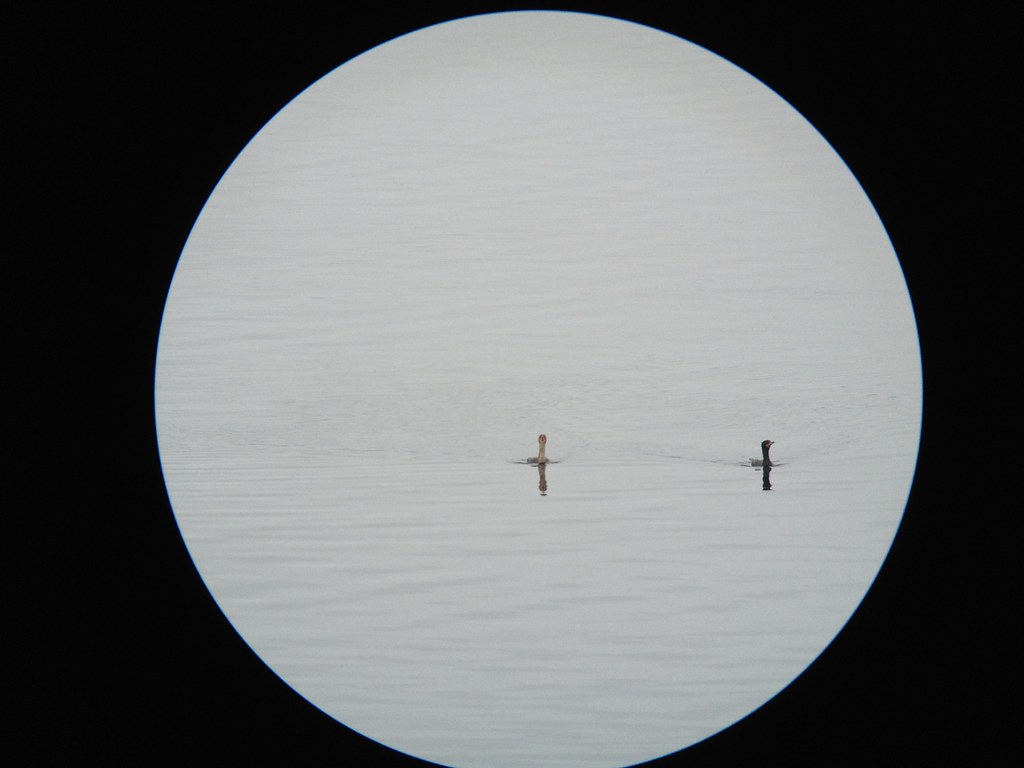
Double crested Cormorant (distant group of nine), Winsor Dam, May 24, 2013
I took advantage of the brief respite in the rain this morning to check out Winsor Dam before work.  With heavy rain yesterday and overnight bringing us a few inches of rain I thought I would check to see if anything of interest was put down by the storms.  I had 28 Double crested Cormorants (groups of 17, 9 and 2) plus three pairs of Common Loons but not much else of note.  I also made a quick walk down to the water at Gate 5 to get better looks at some of the birds but most had left by the time I walked down there.  The rest of the day brought more scattered showers and Saturday is suppose to be windy, rainy and cool with temperatures perhaps just making it to 50.With the coming arrival of June 1st comes the official arrival of hurricane season for 2013.  What will the next year bring as far as storms that could impact the area?  No one knows for sure but the predictions from a variety of sources points toward an active hurricane season for the Atlantic.  The last two years have featured storms impacting the local area with Irene in 2011 and Sandy in 2012.  Each of these storms brought their own oddities as far as birds go to the local area.  Irene featured a treasure trove of storm driven birds to the local area: http://quabbinbirdingandbeyond.blogspot.com/2011/08/amazing-hurricane-birds.html .   In addition a few days after Irene I had a sighting of a large swift species that was almost certainly related to the storm: (http://quabbinbirdingandbeyond.blogspot.com/2011/09/more-on-large-swift-species.html ).  Sandy hit later in the season and much further south than Irene and the main feature from that storm around here was downed waterfowl with scoters and long tailed ducks among others.  The most unusual sighting of that storm was several days after it hit when I had a Black legged Kittiwake at Quabbin.  (http://quabbinbirdingandbeyond.blogspot.com/2012/11/black-legged-kittiwake-at-quabbin-and.html ).  Here is the official word from NOAA on the 2013 hurricane season as of May 23:

In its 2013 Atlantic hurricane season outlook issued today, NOAA’s Climate Prediction Center is forecasting an active or extremely active season this year.

For the six-month hurricane season, which begins June 1, NOAA’s Atlantic Hurricane Season Outlook says there is a 70 percent likelihood of 13 to 20 named storms (winds of 39 mph or higher), of which 7 to 11 could become hurricanes (winds of 74 mph or higher), including 3 to 6 major hurricanes (Category 3, 4 or 5; winds of 111 mph or higher).

These ranges are well above the seasonal average of 12 named storms, 6 hurricanes and 3 major hurricanes.

“With the devastation of Sandy fresh in our minds, and another active season predicted, everyone at NOAA is committed to providing life-saving forecasts in the face of these storms and ensuring that Americans are prepared and ready ahead of time.” said
Kathryn Sullivan, Ph.D., NOAA acting administrator. “As we saw first-hand with Sandy, it’s important to remember that tropical storm and hurricane impacts are not limited to the coastline. Strong winds, torrential rain, flooding, and tornadoes often threaten inland areas far from where the storm first makes landfall.”

Three climate factors that strongly control Atlantic hurricane activity are expected to come together to produce an active or extremely active 2013 hurricane season. These are:

  • A continuation of the atmospheric climate pattern, which includes a strong west African monsoon, that is responsible for the ongoing era of high activity for Atlantic hurricanes that began in 1995;
  • Warmer-than-average water temperatures in the tropical Atlantic Ocean and Caribbean Sea; and
  • El NiƱo is not expected to develop and suppress hurricane formation.

“This year, oceanic and atmospheric conditions in the Atlantic basin are expected to produce more and stronger hurricanes,” said Gerry Bell, Ph.D., lead seasonal hurricane forecaster with NOAA’s Climate Prediction Center. “These conditions include weaker wind shear, warmer Atlantic waters and conducive winds patterns coming from Africa."

The next several months could prove interesting and I will update as storms develop that could potential have an impact here.

Thursday, May 23, 2013

Black Scoter, Snow Goose and Bonaparte's Gull on a rainy day


Black Scoter, Winsor Dam, May 23, 2013
 
Bonaparte's Gull, Winsor Dam, May 23, 2013
 
Bonaparte's Gull, Winsor Dam, May 23, 2013
Gulls in the air, Winsor Dam, May 23, 2013
Bonaparte's Gull, Winsor Dam, May 23, 2013
 
After yet another night of southerly winds and rain showers scattered around I started my morning at Winsor Dam where low clouds and fog made viewing a bit of a challenge at times.  I scanned the water and noticed a duck way out on the water that appeared interesting.  After a lot of looking and a slight improvement in viewing conditions I was able to ID the bird.  It was a male Black Scoter, which is very rare in spring inland.  It is actually the first record I have had of the species in spring in western Massachusetts.  The Black Scoter became county species #204 for the year.  The unusual birds did not end with the scoter as I found a Bonaparte’s Gull in among nearly seventy Ring billed Gulls near the dam.  It took a bit of time to get a really good look at the bird to confirm it wasn’t something more unusual.  I had a handful of other species around including several Common Mergansers, a couple Spotted Sandpipers, Bald Eagles at the nest and a variety of other species.  The radar last night showed a decent movement of birds and I heard several flight calls when I stepped outside around ten (plus had an Ovenbird singing then too).  After the dam I headed over to the rail trail off Station Rd in Amherst and made a quick walk up to the horseshoe dam.  Nothing too unusual but did have a Black billed Cuckoo, Blackpoll Warblers and Virginia Rails among the 43 species in about a half hour.  I also heard several other Blackpoll Warblers at various spots throughout the day.
Snow Goose, Hadley, MA, May 23, 2013
The remainder of the day featured heavy rain that continued past sunset.  I stopped briefly at Winsor Dam to check for anything unusual but only had a loon and cormorant.  A bit later I got a call from Tom G. that Scott had a late Snow Goose along Mill Valley Road in Hadley.  After a quick bite to eat I headed out the door and after a little searching I found the bird in among some Canada Geese and Mallards.  Certainly a late date for this species.  The Snow Goose became species #205.  Very happy to add two more species today.
 

Wednesday, May 22, 2013

A few brief stops this morning


The winds last night continued out of the south slightly and with on and off thunderstorms and showers.  I hoped that something (terns or shorebirds) tried to move through but then got caught in bad weather and set down.  With this in mind I checked Winsor Dam at dawn but nothing unusual there.  I then headed toward Northampton with brief stops along the rail trail and a few fields in Hadley.  Again nothing unusual was found.  Perhaps someone did find something of note today but that someone was not me this morning.
The evening featured a nice Common Nighthawk show with at least 21 over the house late in the evening.  I also had a Barred Owl hooting and a Virginia Rail sounding off at home.  I had thoughts of trying to conduct the Quabbin Park area Whip-poor-will survey this evening but the weather made that impossible to do.  Perhaps this weekend or early next week?

Tuesday, May 21, 2013

Arcadia and an unexpected find later

Spotted Sandpiper, Arcadia, May 21, 2013

Killdeer, Arcadia, May 21, 2013
Spotted Sandpiper and Killdeer, Arcadia, May 21, 2013


The morning started off warm and muggy and once the low clouds and fog burned off it became hazy with a summer like feel with a high around 90.  With just a little time before work I decided to try my luck at Arcadia checking out the marsh area in the hopes of finding something odd (a Sandhill Crane and a pair of Northern Shovelers had been present there several days ago).  The mosquitoes were bad but not quite horrible yet....perhaps a 5 or 6 on the 'mosquito annoyance scale'.  A scan of the marsh revealed several each of Wood Duck and Mallard but nothing else for waterfowl.  There were a handful of sandpipers including a few Least Sandpipers, four (or more) Spotted Sandpipers and a couple Killdeer.   The nearby oxbow held at least ten Double crested Cormorants.  Although the radar last night showed some good movement I didn’t have the time to search too much for new arrivals but I did hear at least one Blackpoll Warbler calling as I headed out.
The best bird of the day came when I was at work and had no binoculars or camera.  I was at Smith College and heard an unusual bird along a large hedgerow near the Mill River.  After a bit of effort I was able to see naked eye a Mourning Warbler working its way through the underbrush and singing.  Not what I was expecting to find today!  This became species #203 for the county this year.

This evening he had some thunderstorms and the next few days feature more of the same with warm weather and the chance of storms.  Not likely there will be much of an influx the next couple of nights.

Monday, May 20, 2013

A few stops on a foggy morning

Pileated Woodpecker (iPhone shot through binoculars), Rail Trail, Amherst, MA, May 20, 2013

Green Heron, (iPhone shot through binoculars), Rail Trail, Amherst, MA, May 20, 2013
Snapping Turtle laying eggs on beaver lodge, (iPhone shot through binoculars), Rail Trail, Amherst, MA, May 20, 2013

I set out today with the goal of catching up with a few species I have not yet seen this spring but have a reasonable chance of finding with a little (or perhaps a lot of) luck.  The main targets were Olive sided Flycatcher, Acadian Flycatcher, Lincoln's Sparrow, Mourning Warbler and Hooded Warbler.  Although I didn't have any luck finding any of these species it was fun trying and the search for them allowed me to run across lots of other species.  Also decided to experiment today (in poor light with fog and clouds) with taking photos with my iPhone through my binoculars and with a little practice, patience and luck, it can work in a pinch.  I started off at the rail trail in Amherst and the highlights there included five species of swallows, a male Orchard Oriole and lots of other species on nests or building them.  Also had a Snapping Turtle burying eggs atop a beaver lodge. 

Ruby throated Hummingbird, (iPhone shot through binoculars), Quabbin Gate 10, MA, May 20, 2013
Northern Watersnake, Land trust trail, Belchertown, MA, May 20, 2013
After the rail trail I headed to a few different gates on the west side of Quabbin walking a few miles and coming across quite a few resident birds and a few migrants.  I later picked up Wilson and went for a long walk along the land trust trail but again nothing too unusual.  A brief stop early afternoon at Lake Wallace also failed to produce an Olive sided Flycatcher there but it was worth a try anyway.

Sunday, May 19, 2013

Another new species and other stuff around the Quabbin

Canada Geese (goslings tucked under the wings of the top bird), Covey WMA, May 19, 2013

Porcupine, Covey WMA, May 19, 2013

With the winds out of the south last night and the radar showing some good movement around 10:30 last night I dragged myself out of bed with too little sleep to head out to see what may have shown up. I started at Covey WMA and had a nice selection of local breeders as well as a few probable migrants. Nothing out of the ordinary for this date but still some good stuff. As I scanned through one of the marshes I noticed a pair of Canada Geese with one looking rather rotund. Further examination revealed a bunch of goslings keeping warm underneath her wings. On my way back out of there I had Porcupine feeding about 40 feet up on a branch that just seemed way too small to support his or her weight. After watching for several minutes I cautiously passed by ever mindful of the ability of an angry Porcupine to throw its quills 50 feet or more (or so I have heard other people say).
View from Gate 52 looking north, Quabbin Park, May 19, 2013
Double crested Cormorants, Quabbin Park, May 19, 2013
I next headed through Quabbin Park making a few stops along the way but skipping some areas as I wanted to make sure to have enough time to visit a few other areas too. Given my more limited time there today I got just 60 species or so but certainly got some good ones including 17 species of warbler (highlights of Tennessee and Blackpoll), a group of six Double crested Cormorants together, Swainson's Thrush and best of all a Yellow billed Cuckoo calling and seen distantly across from Gate 52. The Yellow billed Cuckoo became species #202.

I then made a few stops at gates along the west side of Quabbin with the main focus being trying to find either Olive sided Flycatcher, Hooded Warbler or Acadian Flycatcher. No luck with any of these target birds but still got some fantastic looks at various other species. Later in the morning I got a call from Bob about a certain species I have been looking for but have been unable to find so far.  I made a trip back out to the west part of Quabbin but despite a valiant effort I came up empty again. Perhaps next time?

The next several days will feature occasional showers and thunderstorms. With the right timing, the right winds and a little luck some of these rain events could down some migrants (typically shorebirds at this point in migration but anything is possible). I will be keeping my eye out at first light the next week to see if anything unusual does show up.  Two years ago tomorrow I had a Red Phalarope (perhaps a few) at Quabbin Park.  Maybe history will repeat itself?

As mentioned in a previous post I will be conducting a couple of Eastern Whip-poor-will surveys this year. Despite less than ideal conditions last night I was able to complete the Prescott route for the second year. As in previous surveys the lower part of the peninsula contained all the whips with none noted past the mid point of the peninsula. Managed to find a total of nine Eastern Whip-poor-wills with seven of those at one of the ten survey points (the other two were between the points)
I hope to conduct a new survey route through Quabbin Park and nearby areas this coming week but the weather may not cooperate. 

Saturday, May 18, 2013

Species #200 for Hampshire County in 2013 (and #201)....plus Birdathon

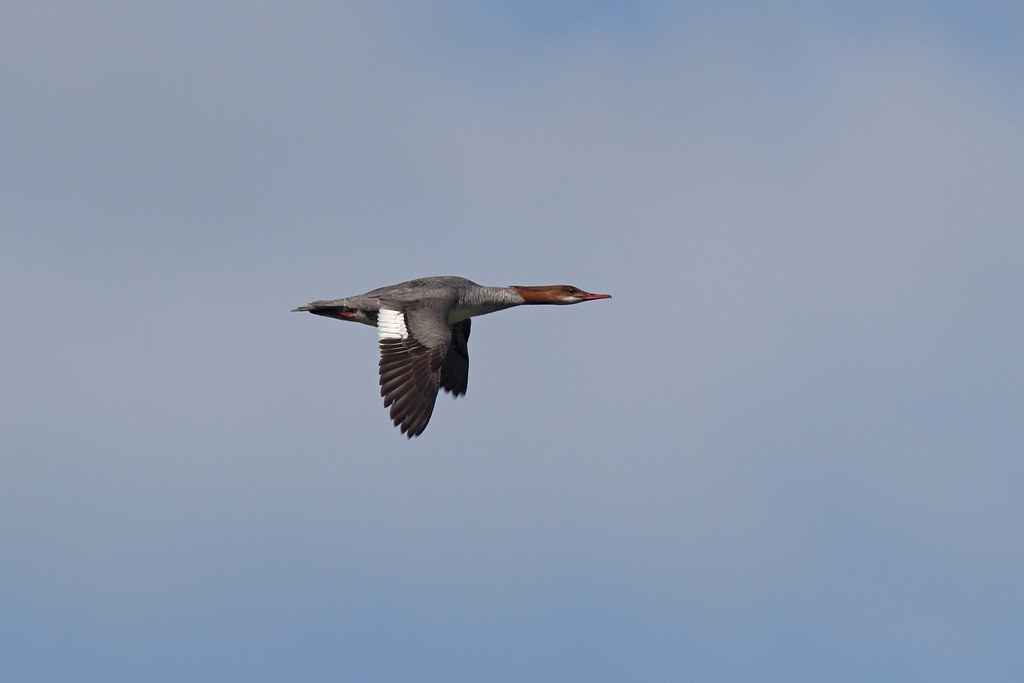
Common Merganser, Quabbin Park, May 18, 2013
Eastern Whip-poor-will, Covey WMA, May 18, 2013
 
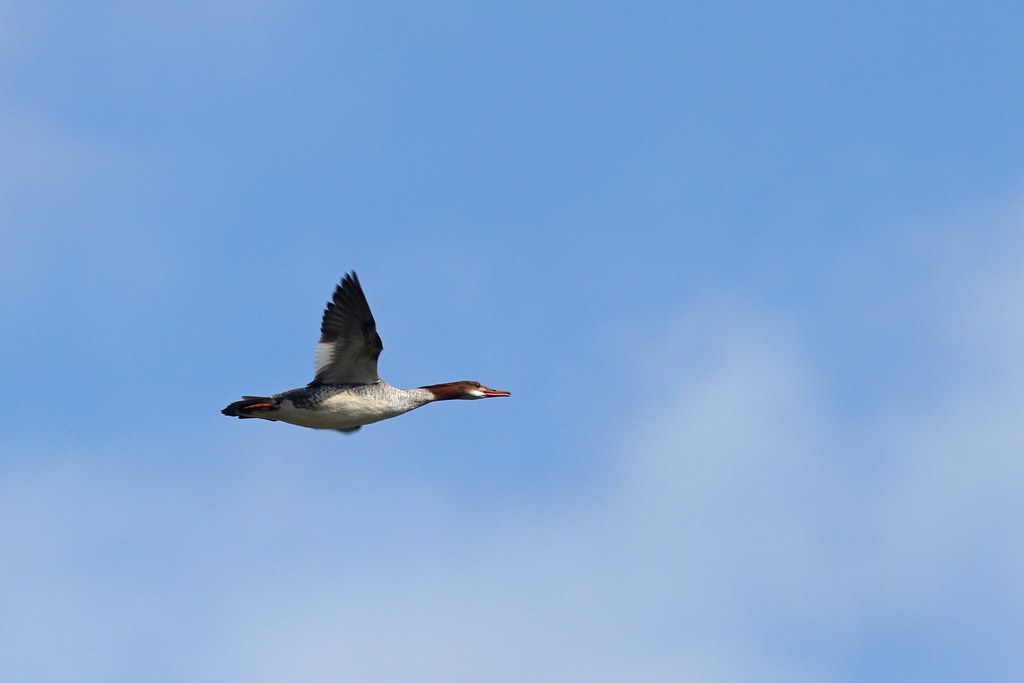
Common Merganser, Quabbin Park, May 18, 2013
I managed to reach the 200 species mark for the year in Hampshire County today when I found a calling Black billed Cuckoo but more about that later. Today continued the annual Mass Audubon Birdathon fund raiser and I spent the day covering areas around Quabbin. I planned on starting at Covey WMA to look for marsh birds, owls and others but after seeing several hunters at various parking areas I changed plans to try to keep myself from ending up with any bullet holes today! However, before I did head over to Quabbin Park I had a great view (and photographed) an Eastern Whip-poor-will at Covey. It was really neat to see it close up and calling...one of the best views I have ever had of this species. I then headed over to Quabbin Park where I spent the next three plus hours and managed 20 species of warbler and 80+ species overall. There were many highlights here including a few mixed species flocks migrating through, four Spotted Sandpipers, six species of flycatcher, four vireo species, and lots of migrant and resident birds.
Common Loon swimming with deer, Quabbin Park, May 18, 2013
 
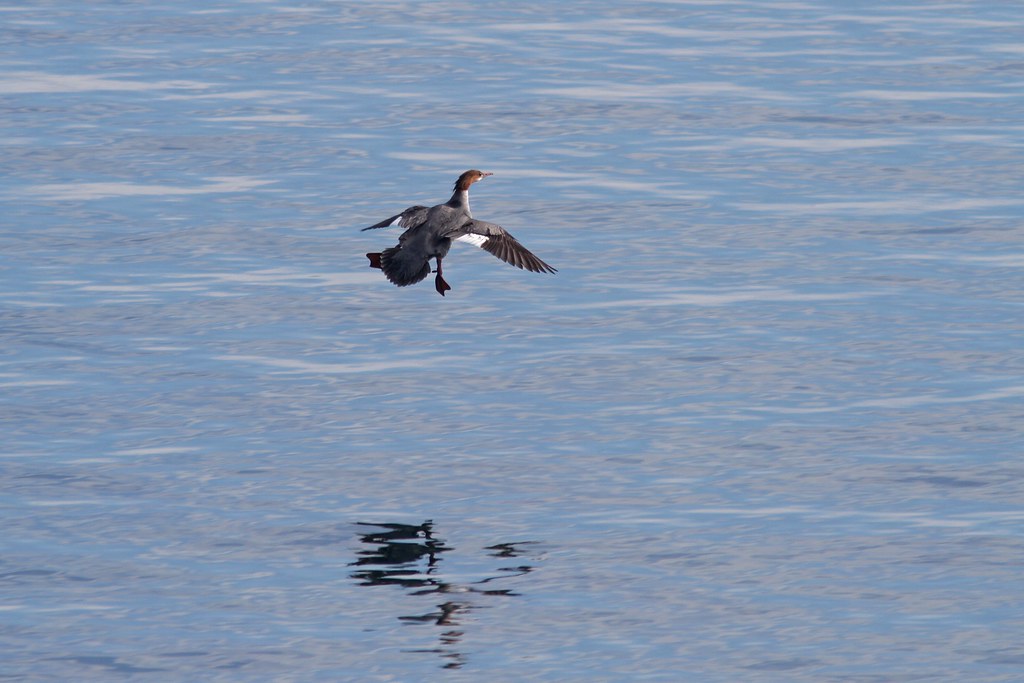
Perhaps the oddest sighting there this morning (one I have never seen before) was a Common Loon swimming along with a White-tailed Deer at Gate 52...very odd. One other unusual sighting was a female Common Merganser that flew around and around the headquarters building and tried several times to land on one of the chimneys before finally giving up and landing on the water.
 
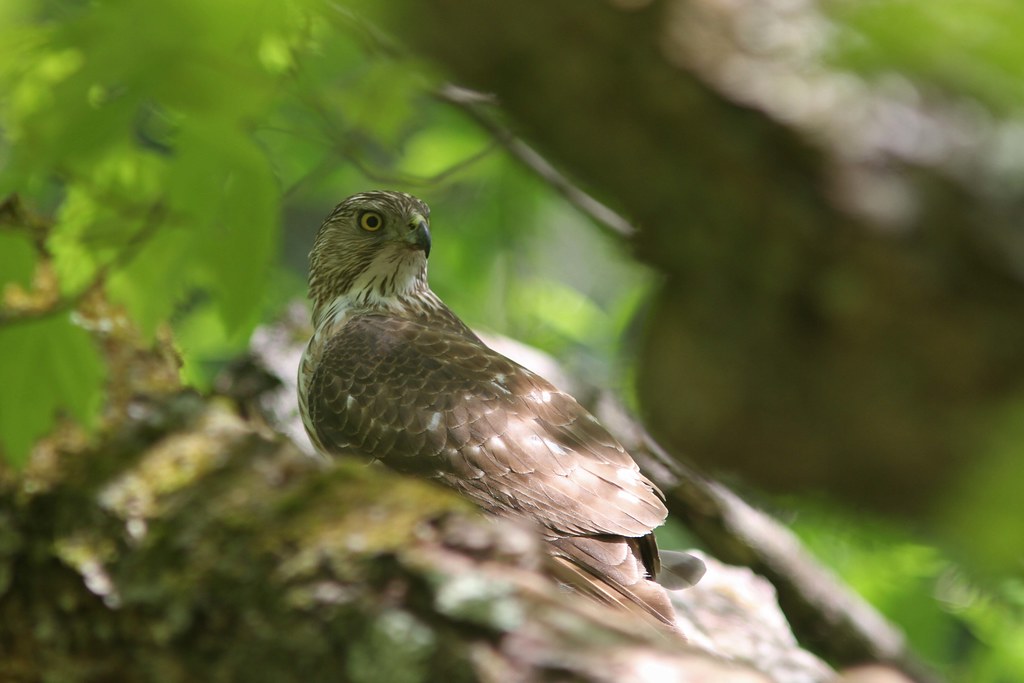
Cooper's Hawk, Quabbin Gate 5, May 18, 2013
 
Black billed Cuckoo (species #200 for the county year), Quabbin Gate 5, May 18, 2013
After Quabbin Park I made a few other stops including Lake Wallace and Piper Farm Conservation Area before heading back to Quabbin with a stop a Gate 5. As I was heading in another person was heading out and warned me of a Black Bear along the road down to the water. I never did run into the bear but I did have some good stuff nonetheless. Highlights included a good look at a Copper's Hawk, a flyover Evening Grosbeak (heard only so maybe more than one) and flyover Pine Siskin. The best bird was a calling Black billed Cuckoo which became species #200 for the year in Hampshire County. I had set a goal to try to reach 200 before the end of May and I was able to reach the goal just over half way through the month. As a comparison to my previous best year (last year) I reached the 200 mark on the 7th of September. At this point last year (May 18) I was at 183 so obviously I'm a bit ahead of last year. I still have a few species I will hopefully pick up in the next week or two before I have to really start hoping for rarities to push up my totals. There certainly have been rarities around lately so perhaps more will show up soon.
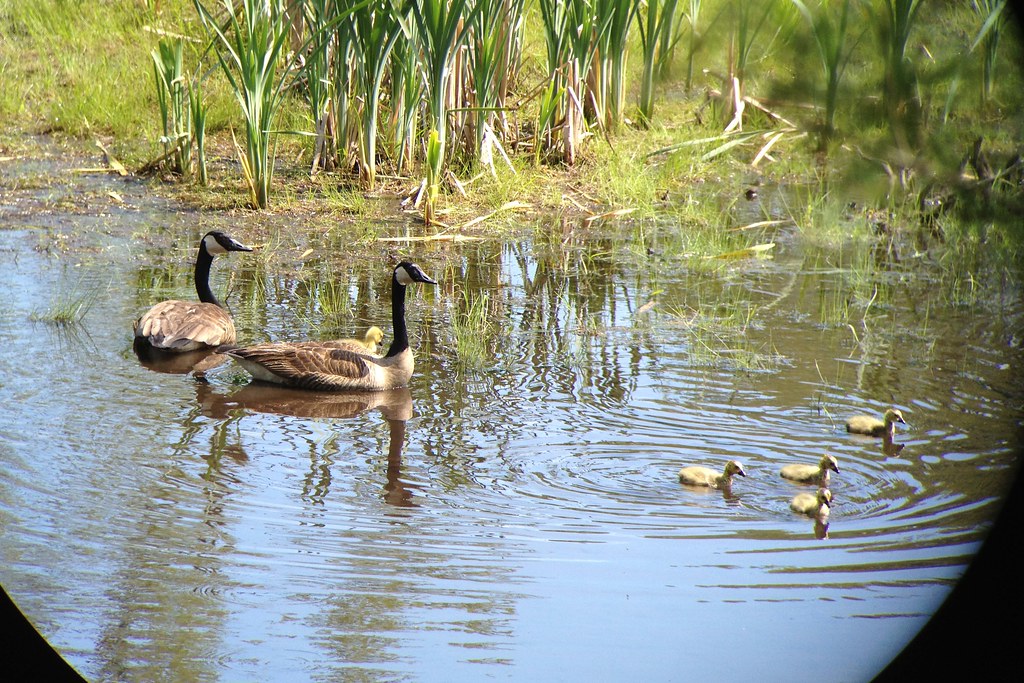
Canada Geese (photo through binos), Belchertown Land Trust trail, May 18, 2013
Late in the morning found me along the land trust trail in Belchertown where I caught up with a few more new species for Birdathon. The Prairie Warblers, Field Sparrow and Eastern Kingbird were busy collecting nesting material. The small marsh held a Solitary Sandpiper and Killdeer. I thought I might have found an unusual bird when I had a Blue winged Warbler call coming from the same field area I had a Lawrence's Warbler in last year around this time of year but the bird was indeed a typical looking Blue winged Warbler.

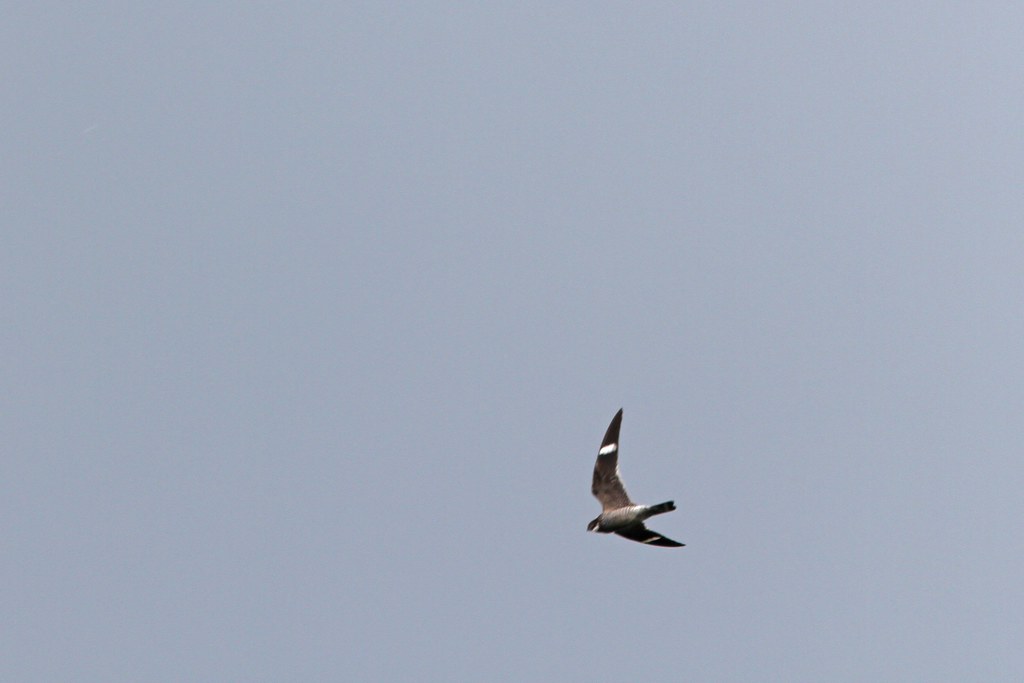
Common Nighthawk, Belchertown, MA, May 18, 2013
I spent a lot of the afternoon at the house catching up with more species and getting some yard work done at the same time. Late in the afternoon I had at least eight Common Nighthawks (#201) feeding and calling over the house.  Always fun to see and photograph two nightjars in one day here around home.  Overall for the day I managed a total of 108 species today with a total of 21 species of warbler. (UPDATE-With my Prescott Peninsula whip poor will survey I added American Woodcock for the day so ended the day with 109 species...makes me wonder how many I could get with a concerted 24 hour effort...perhaps foreshadowing for another time?)

Today also opens up the first window for my two whip-poor-will surveys.  I will attempt my first survey this evening on the Prescott Peninsula as long as the weather cooperates.  Stay tuned!